Planning a trip from Canada to Vietnam is exciting, but figuring out the entry requirements can quickly become confusing. If you have searched for a “Vietnam ETA for Canadians,” you …

Last updated October 21, 2026
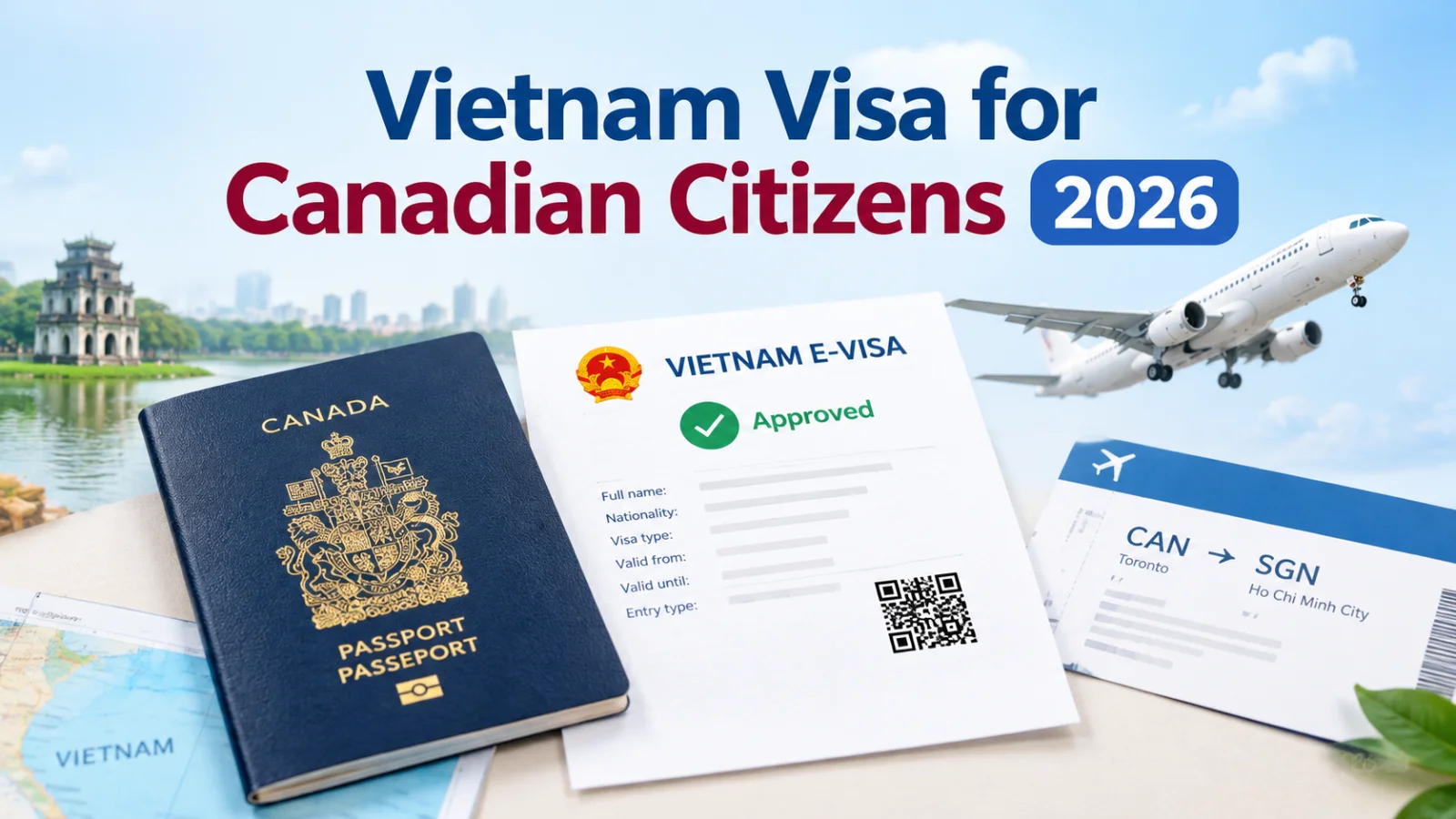
A Vietnam visa for Canadian citizens is something to sort out before you fly: Canada isn’t on Vietnam’s exemption list, and airlines in Canada won’t let you board without one. For most trips the e-visa is the easiest route, since you apply online and the PDF lands in your inbox a few days later. Below we cover costs, common mistakes and 2026 changes, and you can check your Vietnam visa eligibility before you start.
Quick answer: which visa should a Canadian choose?
| Option | Best for | Government fee | Where you get it | Typical time |
| E-visa | Most tourists and business travellers, entry by air, land or sea | USD 25 (single) / USD 50 (multiple), about CAD 35 / CAD 71 | Online, PDF by email | About 3–5 working days |
| Visa on arrival (approval letter) | Air travellers who want a flexible or last-minute option | USD 25 (single) / USD 50 (multiple) stamping fee, about CAD 35 / CAD 71, paid in US cash at the airport | Approval letter online, sticker at the Vietnamese airport | 4 hours to 5 working days for the letter |
| Embassy or consulate sticker visa | Special visa categories or longer stays | Varies by visa type | Ottawa or Vancouver | Varies |
What’s new for Canadian travellers (October 2026):
Whichever visa you end up choosing, these are the entry rules every Canadian passport holder faces.
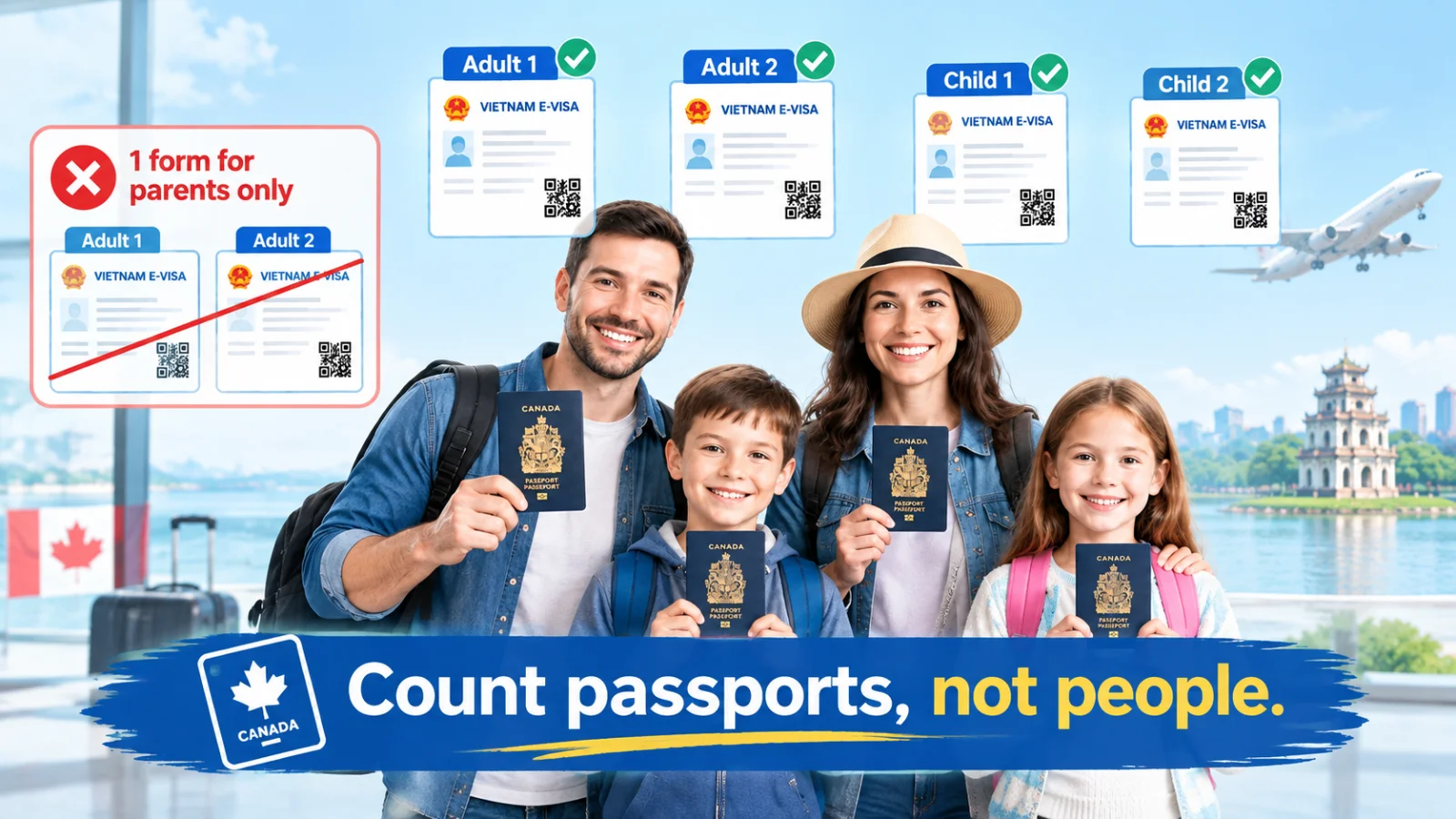
Yes. A Vietnam visa for Canadians is compulsory for every visit, whatever the reason for travel: Vietnam’s visa-free list covers specific nationalities, and Canada isn’t on it. Each traveller needs their own visa, and that includes children. A child with their own passport needs a separate application, and cannot be added to a parent’s form. If you want the full rules, read our guide on whether Canadians need a visa to enter Vietnam.
Real case: the family that left the kids off the form. A Canadian family flying Vancouver–Seoul–Ho Chi Minh City filled in one e-visa application and assumed their children were covered along with the parents. When the approvals came back, the children’s names weren’t on them, and that was when they got in touch with us. We confirmed that every child with their own passport needs a separate visa, and the family submitted the children’s applications in time to have every visa in hand before the flight. The lesson: count passports, not people.
The core requirements are the same whichever option you choose:
The visa category matters too. Tourism, business and visiting family are all covered by the e-visa. Longer stays, work and other special categories usually require an embassy application. Not sure which route suits you? Find out which visa suits your trip in a minute.
There is one exception to the “visa required” rule. Phu Quoc Island offers a special 30-day visa exemption to foreign visitors of all nationalities, including Canadians, who arrive from abroad and stay on the island.
Canadian visitors should keep these conditions in mind:
If your itinerary includes both Phu Quoc and the mainland, apply for an e-visa in advance. It covers your whole trip and removes any risk of being turned away at the airport.
Vietnam is introducing a Digital Pre-Arrival Declaration for international visitors. It is not yet rolled out at every airport, but several airports, including Tan Son Nhat in Ho Chi Minh City, are already piloting it.
What Canadian travellers need to know:
The declaration is separate from your visa. You still need a valid e-visa or visa on arrival approval.
Canadians have three official ways of getting a visa for Vietnam. The e-visa is the most popular, visa on arrival suits air travellers who need flexibility, and the embassy route is for special cases. Whichever you choose, you can apply yourself or let a visa service handle the paperwork, and both routes are explained below.
The Vietnam e-visa is an electronic visa issued by Vietnam’s Immigration Department. Since August 2023 it has been available to citizens of all countries, including Canada. Key facts for Canadians:
If you plan to leave Vietnam and come back, for example a side trip to Cambodia or Laos, choose the multiple entry option.
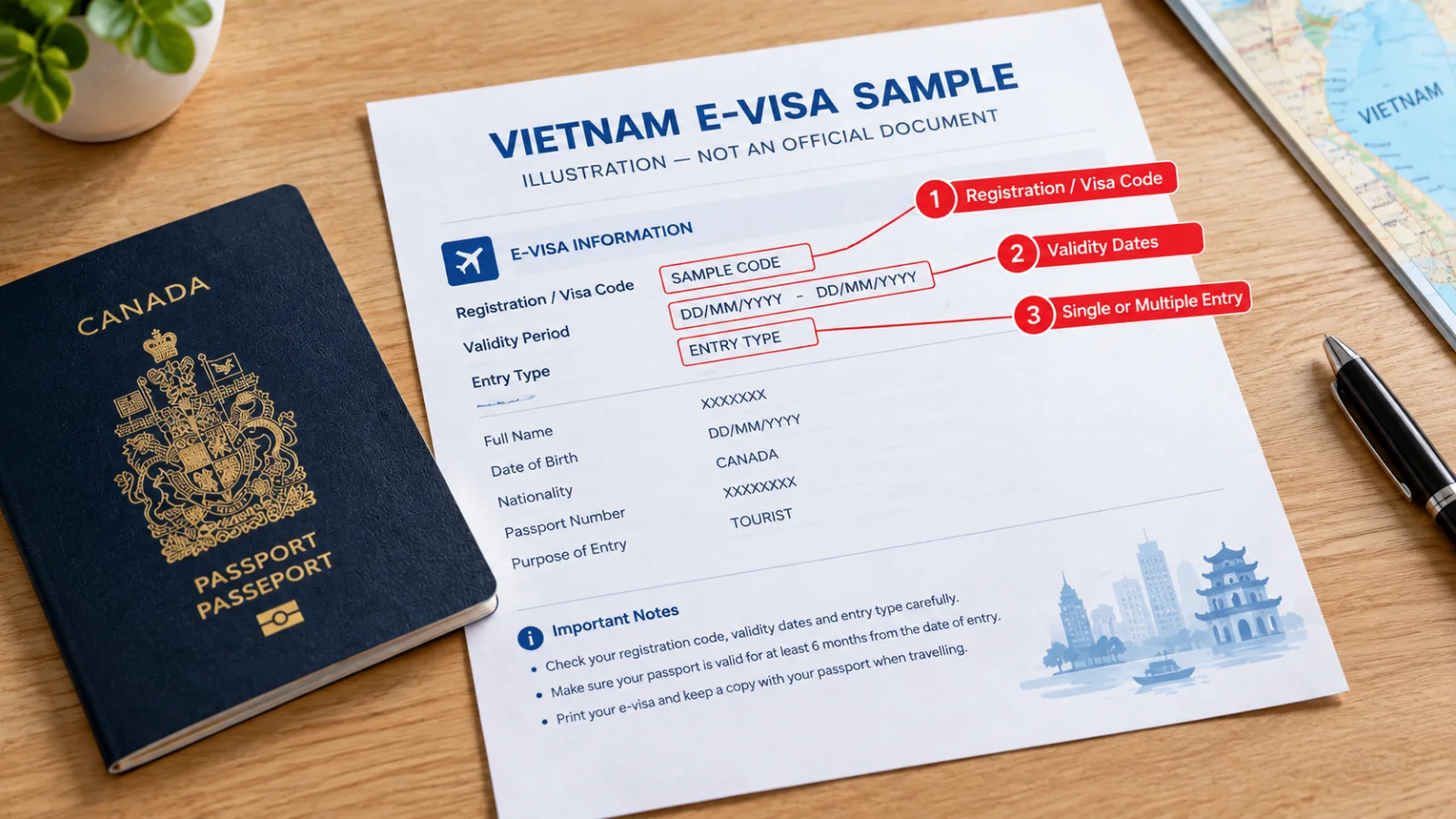
Prepare these before you start. The application takes about 10 minutes when you have everything ready.
Most delays we see come down to small, avoidable slips: a blurry passport scan, a name that doesn’t match the passport exactly, or one wrong digit in the passport number. Spend two minutes comparing every field with your passport before you pay, because the government fee isn’t refunded if the application is refused.
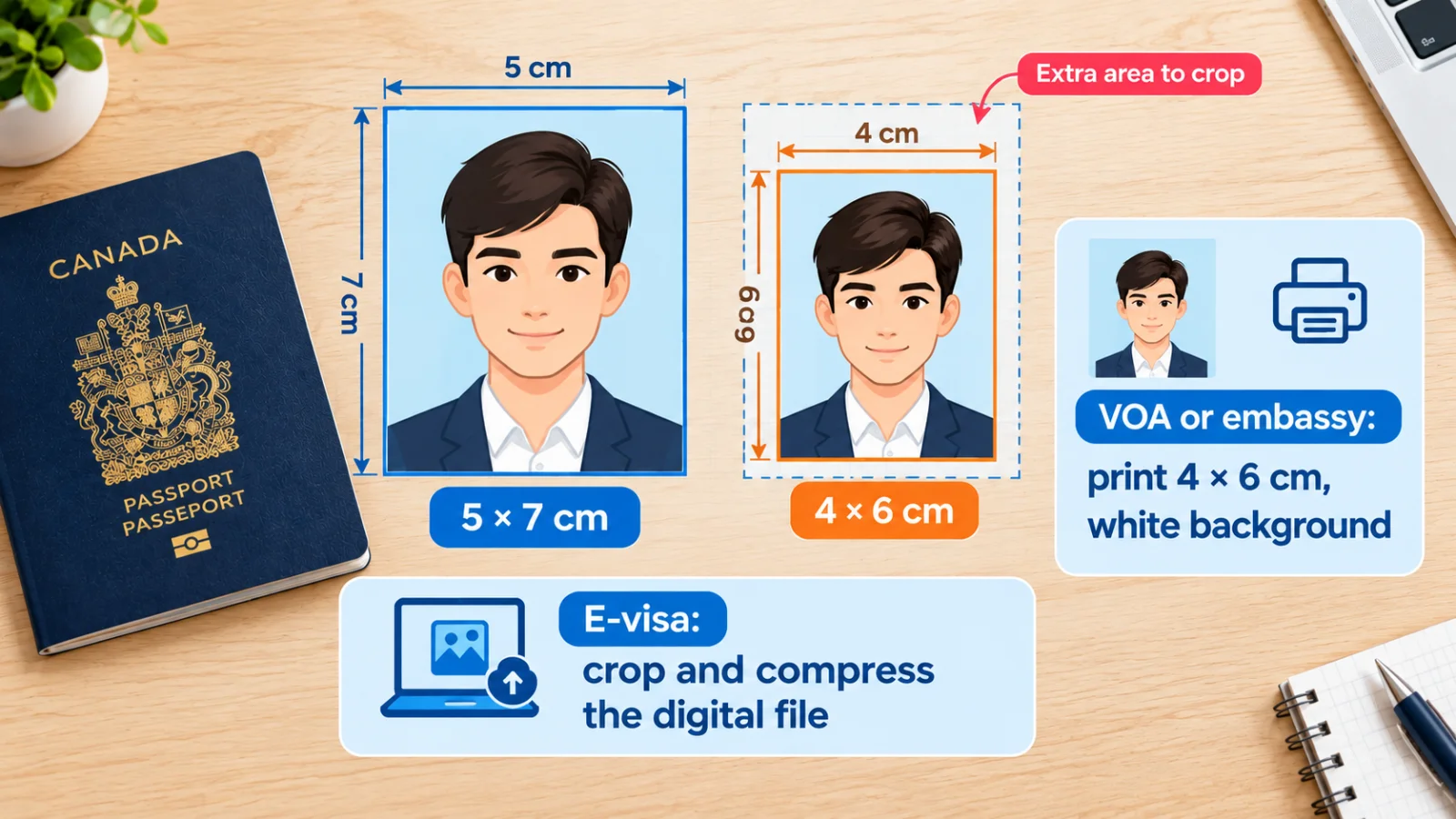
Canadian tip: resize your passport photo. A Canadian passport photo is 5 × 7 cm, while Vietnam’s forms ask for 4 × 6 cm. For an e-visa that isn’t a problem: just crop and compress the digital photo to meet the requirements. For visa on arrival or an embassy visa, though, you need a printed 4 × 6 cm photo on a white background, so have it printed properly before you travel.
The government fee is the same for everyone: USD 25 for single entry and USD 50 for multiple entry. At September 2026 exchange rates that is roughly CAD 35 and CAD 71, before any foreign transaction fee charged by your card. You can compare every option in our guide to Vietnam visa fees.
If you prefer to have specialists check your documents and handle the submission, our service fees are in the table below, with the government fee charged on top (USD 25 single entry or USD 50 multiple entry). CAD amounts are estimates at roughly 1.41 CAD per USD (September 2026). Your card issuer sets the real rate and may add a foreign transaction fee, so expect your statement to differ slightly.
| Processing time | Our service fee (USD) | Approx. in CAD |
| 5 working days | 55 | about 78 |
| 3 working days | 85 | about 120 |
| 2 working days | 105 | about 149 |
| 1 working day | 135 | about 191 |
| 4 working hours | 175 | about 248 |
One thing to watch: some sites look official but add service charges that only show up at checkout. If you can’t see the total price on the first page, close the tab.
The official processing time is about 3 working days, but delays happen, so plan for 3 to 5 working days. Weekends and Vietnamese public holidays do not count. The Tet (Lunar New Year) holiday in early February 2027 is the busiest period, so apply earlier if you are travelling around then.
A safe rule is to apply at least 1–2 weeks before departure. If your trip is closer, rush processing is available through our service: from 4 working hours up to 2 working days, depending on the option you choose.
Real case: a 7:30 p.m. flight and a 10 a.m. phone call (Vietnam time). One traveller had a flight leaving Canada at 7:30 p.m. Vietnam time, which is 8:30 a.m. in Toronto in September, when Toronto is 11 hours behind Vietnam. They only contacted us at 10 a.m. Vietnam time, or 11 p.m. the night before in Toronto. We explained that only the 4-working-hour rush package could work, and that the immigration office would approve it that afternoon. The traveller chose it and paid at 11 a.m. (midnight in Toronto), and the e-visa arrived at 4:30 p.m. (5:30 a.m. in Toronto), leaving about three hours to check in and make the flight. It worked, but with almost no margin, so treat the rush option as a safety net, not a plan.
There are two ways to apply.
Option 1: Apply on the official government portal (evisa.gov.vn).
Option 2: Apply through a visa service. With our e-visa application form, you choose your visa type and speed, upload your documents, and our team checks everything against the government’s strict requirements and fills in the form for you. The approved e-visa arrives by email.
One thing to be clear about: we’re a private visa service, not the Vietnamese government. You can always apply yourself on the official portal and pay only the government fee.
We’ve been processing visas for international travellers, including many Canadians, for over 15 years, so we know where applications usually trip up. Besides e-visas, we also arrange visa on arrival and airport fast track. Our team checks your documents against the government’s requirements, fills in the form, and is reachable 24/7 if your plans change before the flight. Standard processing is typically 3–5 working days, and if you’re cutting it close we can rush it from 4 hours to 2 working days. If a visa is ever refused, usually because of a blacklist or past violations, we refund our service fee in full.
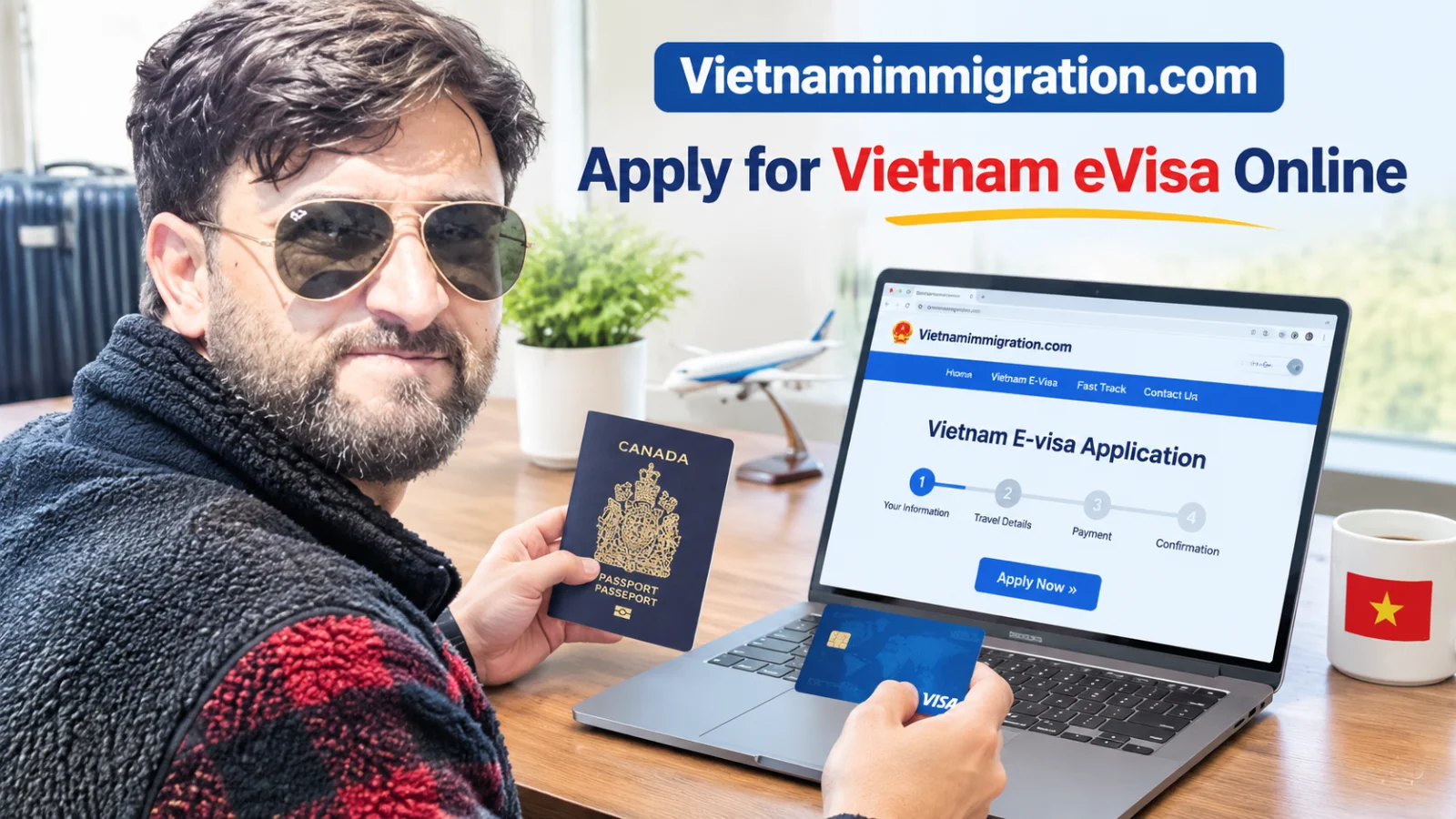
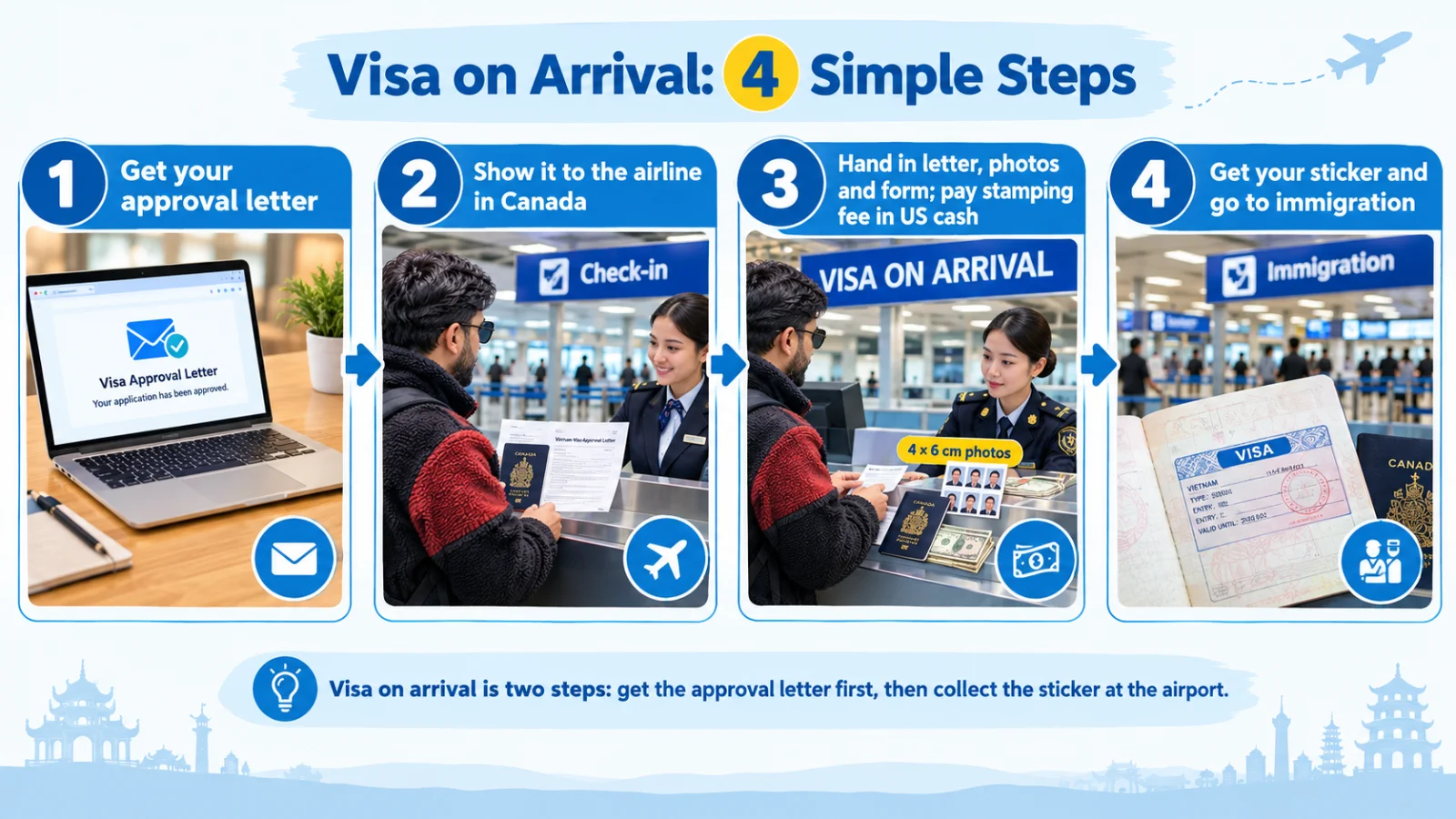
Visa on arrival (VOA) is a two-step process. First you obtain an approval letter online. Then you collect the visa sticker at a Vietnamese international airport on arrival. The name is misleading: you do not apply at the airport, and you cannot fly without the approval letter.
Key facts:
VOA is also a useful backup if you have a tight schedule. A letter can be issued in as little as 4 working hours.
Canadian tip: a standard Canadian passport photo is 5 × 7 cm, but the airport counter wants printed 4 × 6 cm photos on a white background. Have them printed properly before you fly rather than hoping to sort it out in Vietnam.
VOA has two costs: the approval letter fee paid online, and the stamping fee paid in cash, in US dollars, at the airport: USD 25 for single entry or USD 50 for multiple entry (roughly CAD 35 or CAD 71). See the full fee breakdown for a side-by-side view.
Our approval letter fees are in the table below, with the airport stamping fee charged on top. CAD amounts are estimates at roughly 1.41 CAD per USD (September 2026), and your card issuer may add a foreign transaction fee.
| Processing time | Our service fee (USD) | Approx. in CAD |
| 5 working days | 45 | about 64 |
| 3 working days | 80 | about 113 |
| 2 working days | 100 | about 142 |
| 1 working day | 130 | about 184 |
| 4 working hours | 160 | about 226 |
In our experience the e-visa usually works out cheaper and skips the airport counter. Visa on arrival earns its place when your plans might still shift.
Canadian tip: order your US dollars early. The stamping fee is paid in US cash, and some bank branches need a few days’ notice to supply foreign currency, so ask well before your flight.
The approval letter takes from 4 working hours to 5 working days, depending on the speed you choose. Most travellers use the 3- to 5-working-day options.
The airport step is the unpredictable part. Getting the sticker can take anywhere from a few minutes to over an hour at peak arrival times, particularly at Tan Son Nhat and Noi Bai when several long-haul flights land together. Our airport fast track service helps you skip the queue and go straight through immigration.
The Embassy of Vietnam in Ottawa is Vietnam’s main diplomatic mission in Canada. It handles Vietnam visa applications for Canadian citizens, as well as passports and consular services for Vietnamese nationals. If you prefer a traditional passport sticker, or need a visa category that the e-visa does not cover, this is the office to contact.
Contact details, as listed on the Vietnamese Ministry of Foreign Affairs portal in October 2026:
Opening hours. The embassy’s public visiting hours are limited, close on Vietnamese and Canadian holidays, and have changed over the years, so published schedules differ between sources. Call or email before you travel, especially if you plan to drop off documents in person.
How to apply at the embassy:
A sticker visa from the embassy is valid for entry by air, land and sea. Fees and processing times depend on the visa type and the embassy’s workload.
Mailing your passport? Use a tracked service such as Canada Post or Purolator in both directions. If you can, collect your passport in person: it’s the lowest-risk option.
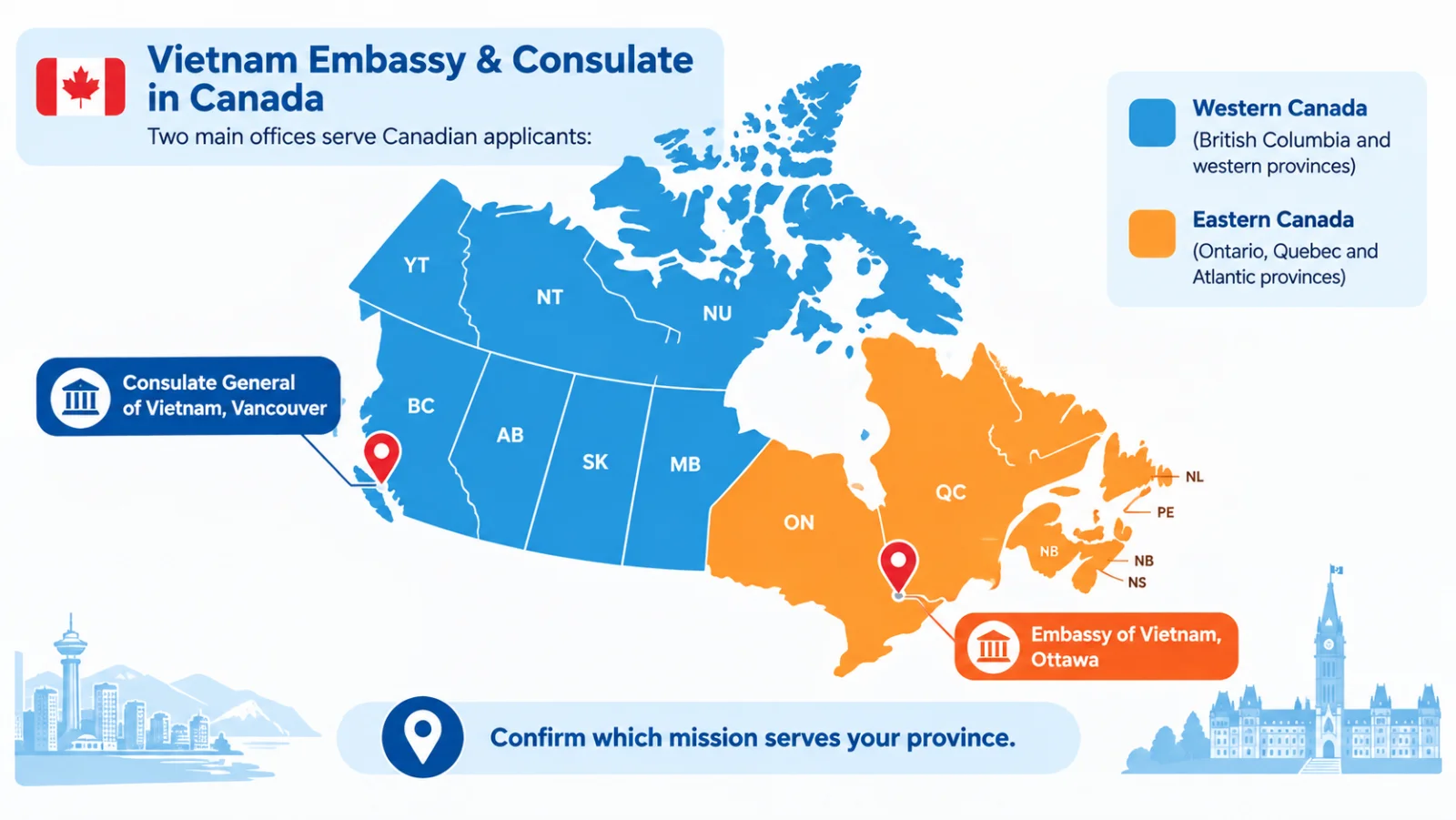
The Consulate General of Vietnam in Vancouver serves travellers in British Columbia and Western Canada and offers similar visa services to the embassy. It is a practical choice if you live on the West Coast, which is also where many flights to Vietnam depart.
Contact details, as listed on the consulate’s official website:
Opening hours. The consulate generally works on weekdays during daytime hours and closes on Vietnamese and Canadian public holidays. Hours and walk-in rules can change, so contact the consulate before visiting.
Which office should you contact? Applicants in British Columbia and Western Canada typically use Vancouver, while Ontario, Quebec and Atlantic Canada typically use Ottawa. Confirm which mission handles your province on the mission’s website. Documents and steps are similar to those listed for Ottawa above.
Embassy visa or e-visa: which is better for Canadians?
| Factor | Embassy or consulate sticker visa | E-visa |
| How you apply | In person or by mail | Online, in about 10 minutes |
| Entry by air, land and sea | Yes | Yes |
| Cost | Set by the mission, varies by visa type and duration | USD 25 (single) / USD 50 (multiple) government fee, about CAD 35 / CAD 71 |
| Speed | Depends on the mission’s workload plus postage | About 3–5 working days |
| Best for | Special categories, long stays, travellers who want a sticker | Most tourist and business trips |
For a standard holiday, applying online is quicker and simpler than visiting an office or mailing your passport.
Your Vietnam visa for Canadian travellers is only one part of the trip. These three topics come up most often among Canadian visitors.
Global Affairs Canada’s Travel Advice and Advisories rates Vietnam at the lowest risk level (“take normal security precautions”), following a full review around October 20, 2026. Politically the country is stable, people are welcoming, and violent crime against tourists is rare. What catches visitors out is the everyday stuff.
Traffic will be the biggest culture shock. Crossing a street in Ho Chi Minh City or Hanoi is nothing like a Canadian crosswalk: nobody stops for you, so walk at a steady pace and let the motorbikes flow around you instead of darting or freezing. Skip renting a motorbike unless you hold the right licence and insurance, and keep your phone on the side away from the road, since snatch theft from passing bikes does happen in big cities.
Check your health coverage. Provincial health plans such as OHIP or MSP generally don’t cover medical costs when you travel abroad, so buy private travel insurance with medical coverage before you go.
The rainy season no longer follows the old calendar. Central Vietnam (Hue, Da Nang, Hoi An) used to be the October–November flood risk, but this year heavy rain started in September and even Ho Chi Minh City and Dong Nai saw flooding. In Ho Chi Minh City, rain plus high tides plus slow drainage can leave streets deeply flooded and stall motorbikes. Build a spare day into the end of your trip, book changeable hotels for central Vietnam, check that your travel insurance covers weather disruption, and use a ride-hailing app instead of wading through water.
There’s no nonstop flight yet. Canada and Vietnam expanded their air services agreement in September 2026, and Air Canada is preparing a nonstop route to Ho Chi Minh City, expected in 2027, but for now you’ll connect somewhere. The whole trip usually runs 17–22 hours. Vancouver is typically the cheapest and easiest place to start, with options from Toronto and Montreal too.
Popular connecting hubs:
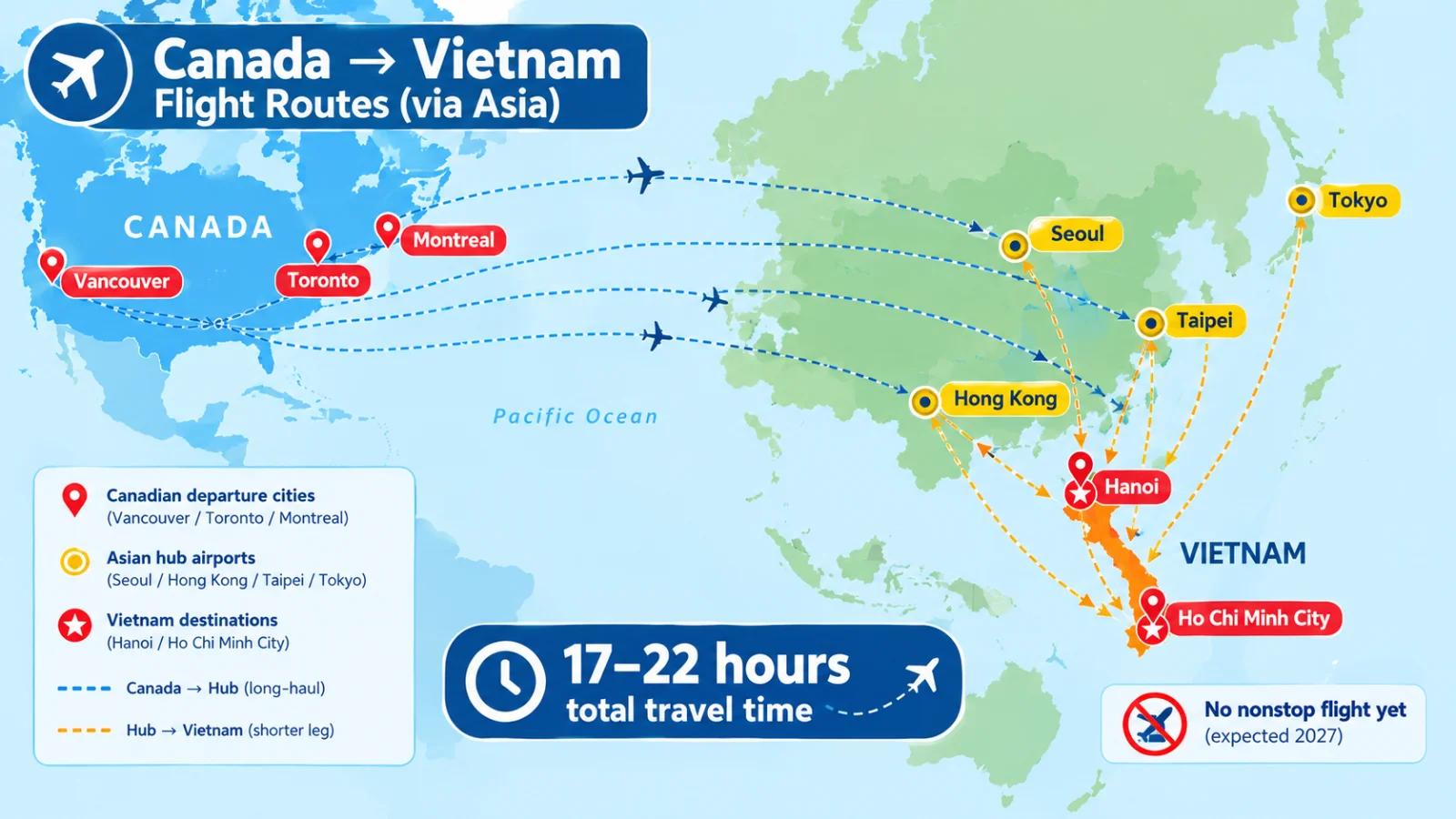
We’d aim for a 2–4 hour layover: enough to transit without sprinting, not so long that you’re stuck in a terminal. Book on one airline or alliance so your bags are checked through to Vietnam, and check whether your transit country wants a visa, then pick routes that don’t. Remember too that the airline in Canada, not the one at your connecting airport, is the one that will ask to see your visa or approval letter.
Save these numbers in your phone before you leave. They are as listed by Global Affairs Canada on Travel.gc.ca, so check them again shortly before your trip.
For local emergencies in Vietnam, dial 113 for police, 114 for fire and 115 for an ambulance.
Getting a Vietnam visa for Canadian citizens comes down to timing: apply for your e-visa a week or two before you fly, print it, and keep it handy for the check-in desk in Canada. Everything else, from the pre-arrival declaration to flood season, is easier once the visa is in hand. If you’d rather have someone double-check the details, apply with our team today.
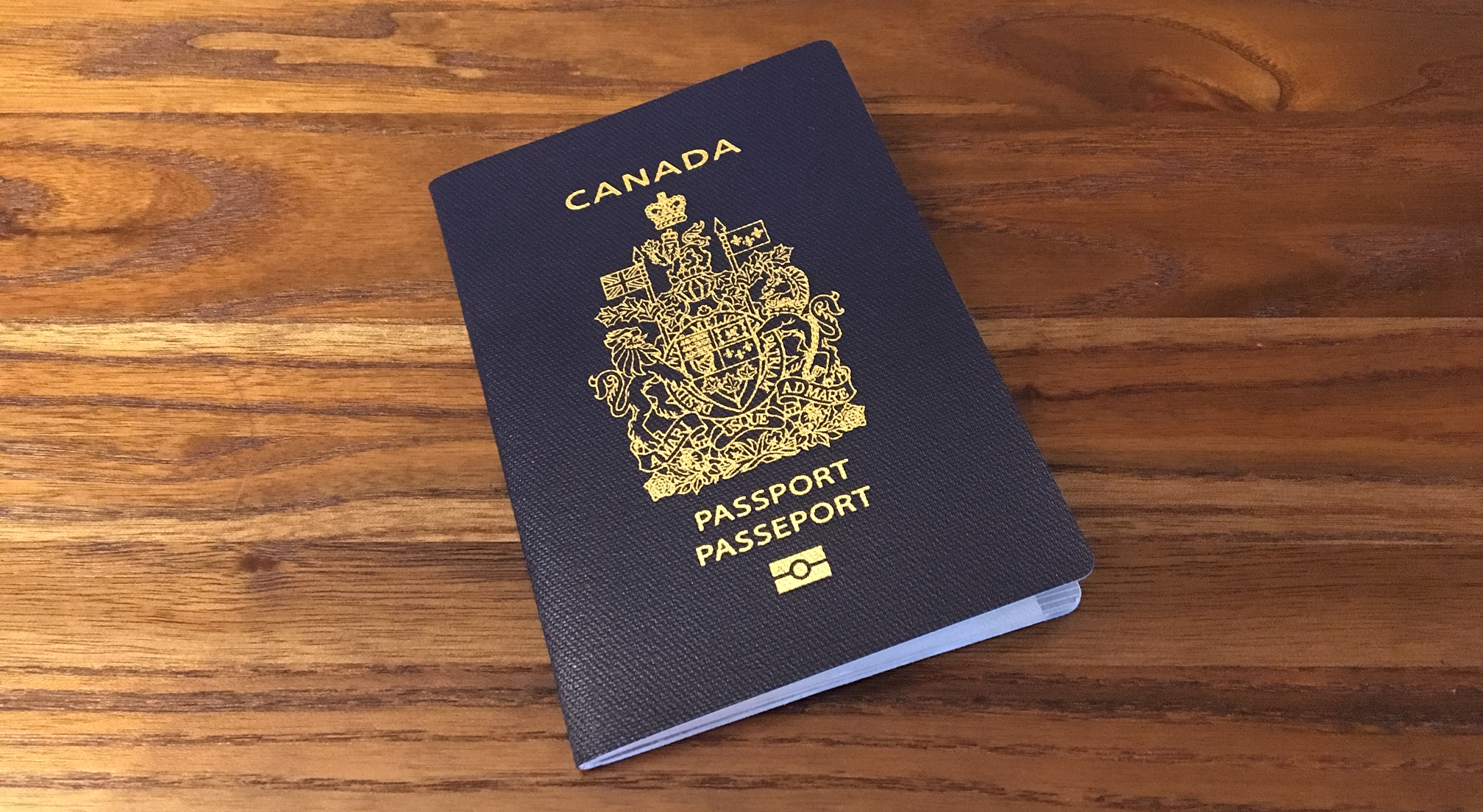
Planning a trip from Canada to Vietnam is exciting, but figuring out the entry requirements can quickly become confusing. If you have searched for a “Vietnam ETA for Canadians,” you …
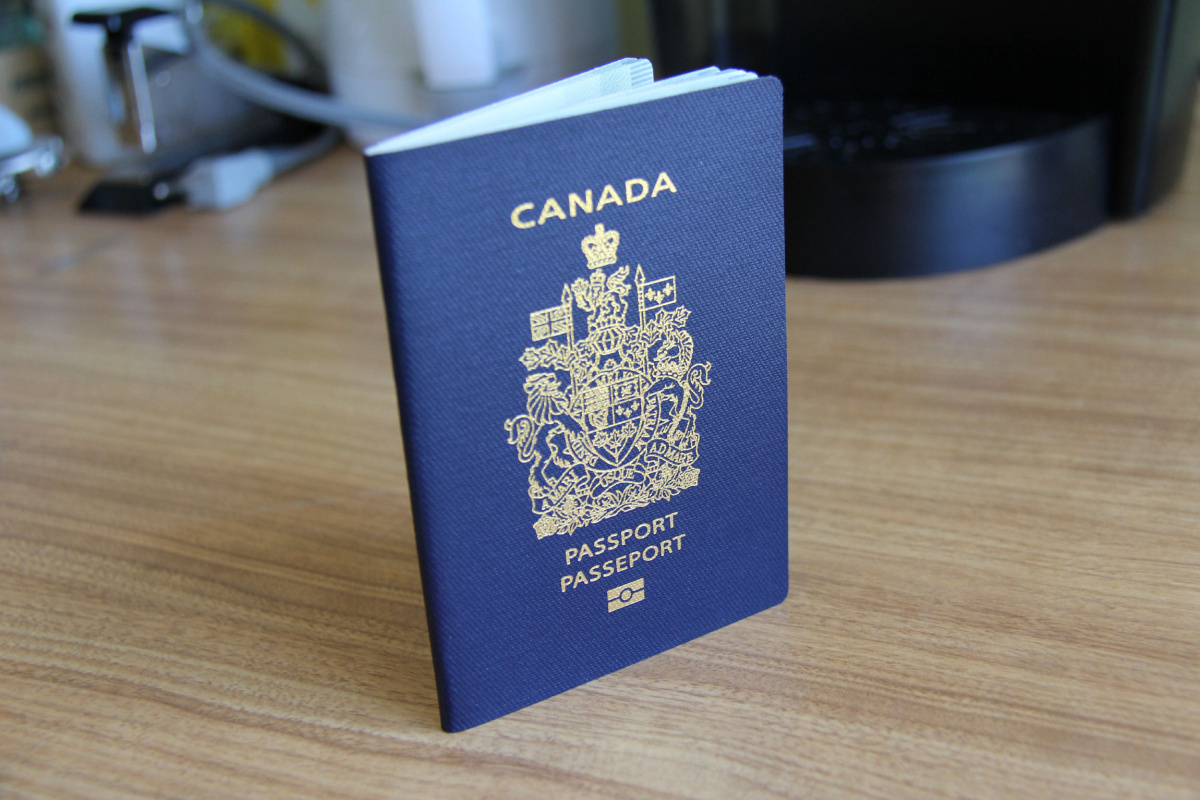
When a Vietnam trip begins taking shape, Canadian travelers often have flights, hotels, travel dates and itineraries competing for attention at the same time. The visa may look like just …
You have your Canadian passport ready, a few flight options to Vietnam open on your screen, and perhaps a rough plan involving Hanoi, Da Nang, Hoi An or Ho Chi …
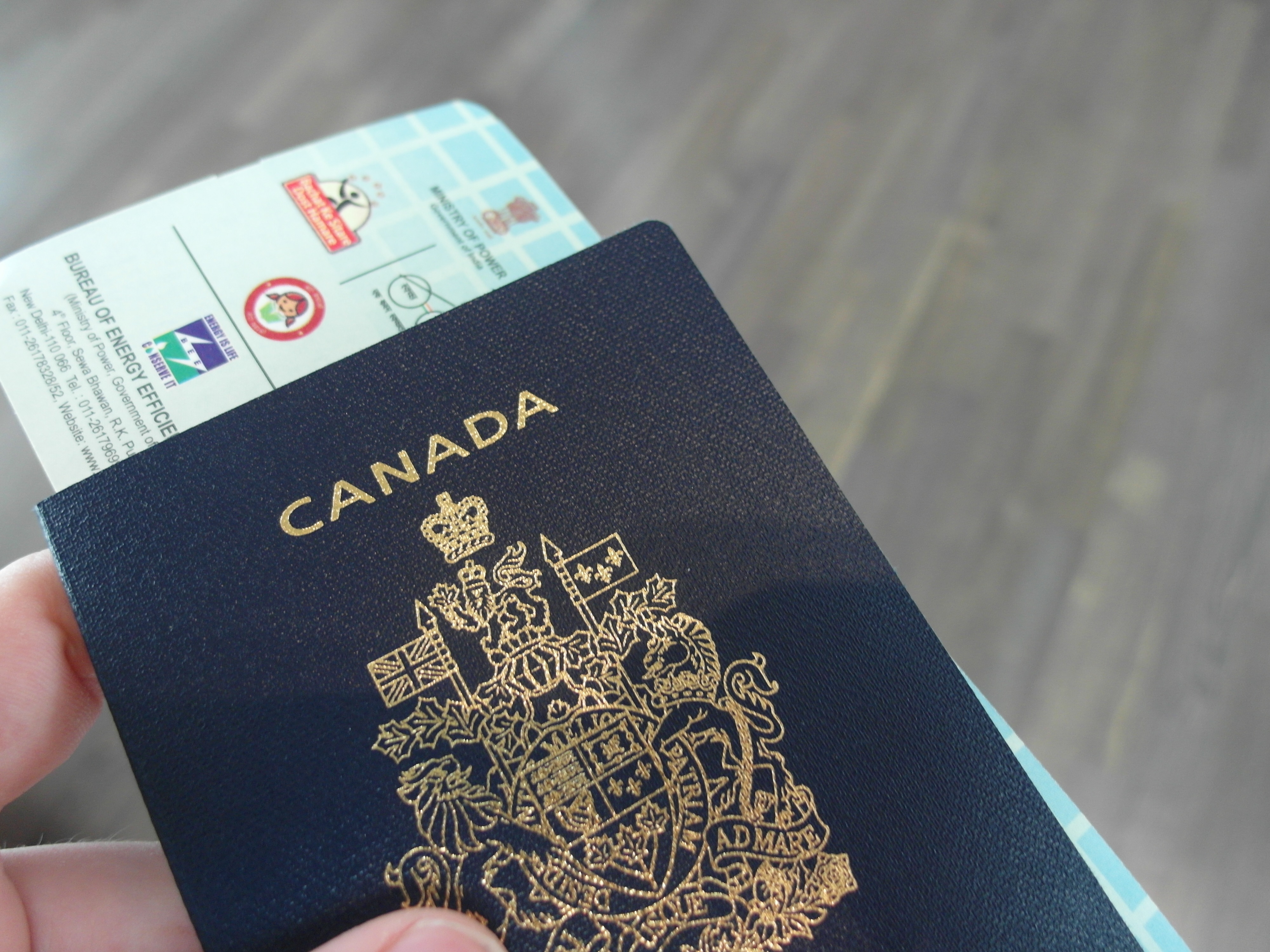
If you are planning a trip from Canada to Vietnam, arranging flights and hotels online is usually the easy part. The visa is where many travellers start wondering whether the …
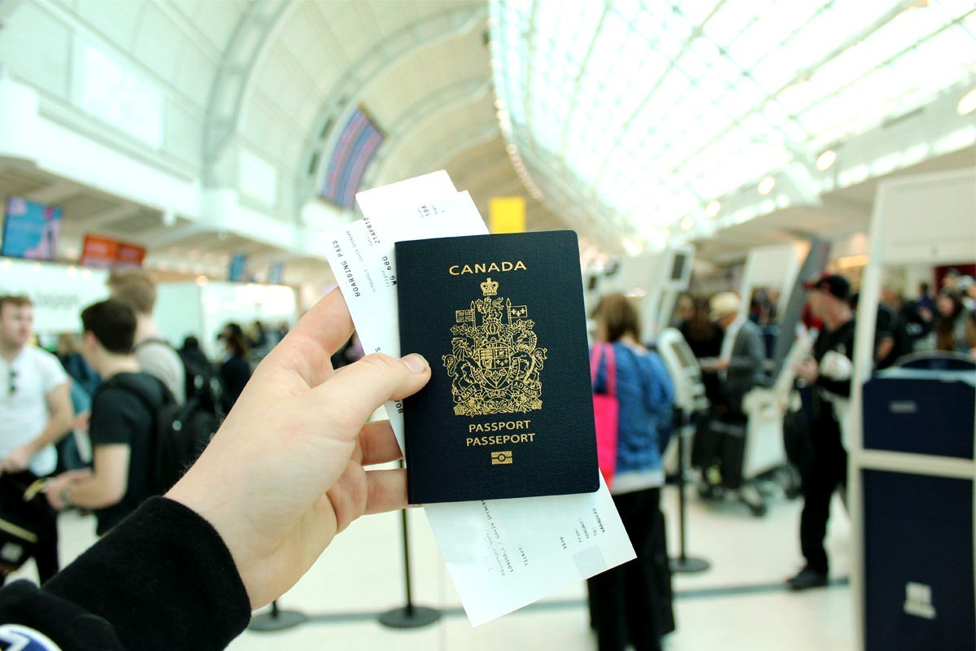
For Canadians looking for an urgent way to obtain the documents needed to travel to Vietnam, the term “pre-approved visa letter” can sound reassuringly straightforward. It may appear to be …
Your flight to Vietnam is approaching, but you still do not have a visa. Can you simply fly from Canada, arrive at an airport in Vietnam, and receive a visa …
If you are planning to spend several weeks exploring Vietnam, a short visa window can make the trip unnecessarily restrictive. A longer e-visa gives Canadian travellers more flexibility to move …
As trade and investment between Canada and Vietnam continue to grow, more Canadian entrepreneurs, business owners, consultants, and corporate professionals are travelling to Vietnam for meetings, market research, factory visits, …
When your flight to Vietnam is only a few hours away, “urgent” takes on a very different meaning. Waiting until later today may no longer be enough—you need to know …


