Your flight to Vietnam is booked, your accommodation is confirmed, and your bags may already be packed. There is just one problem: when you check your Vietnam eVisa application, it …

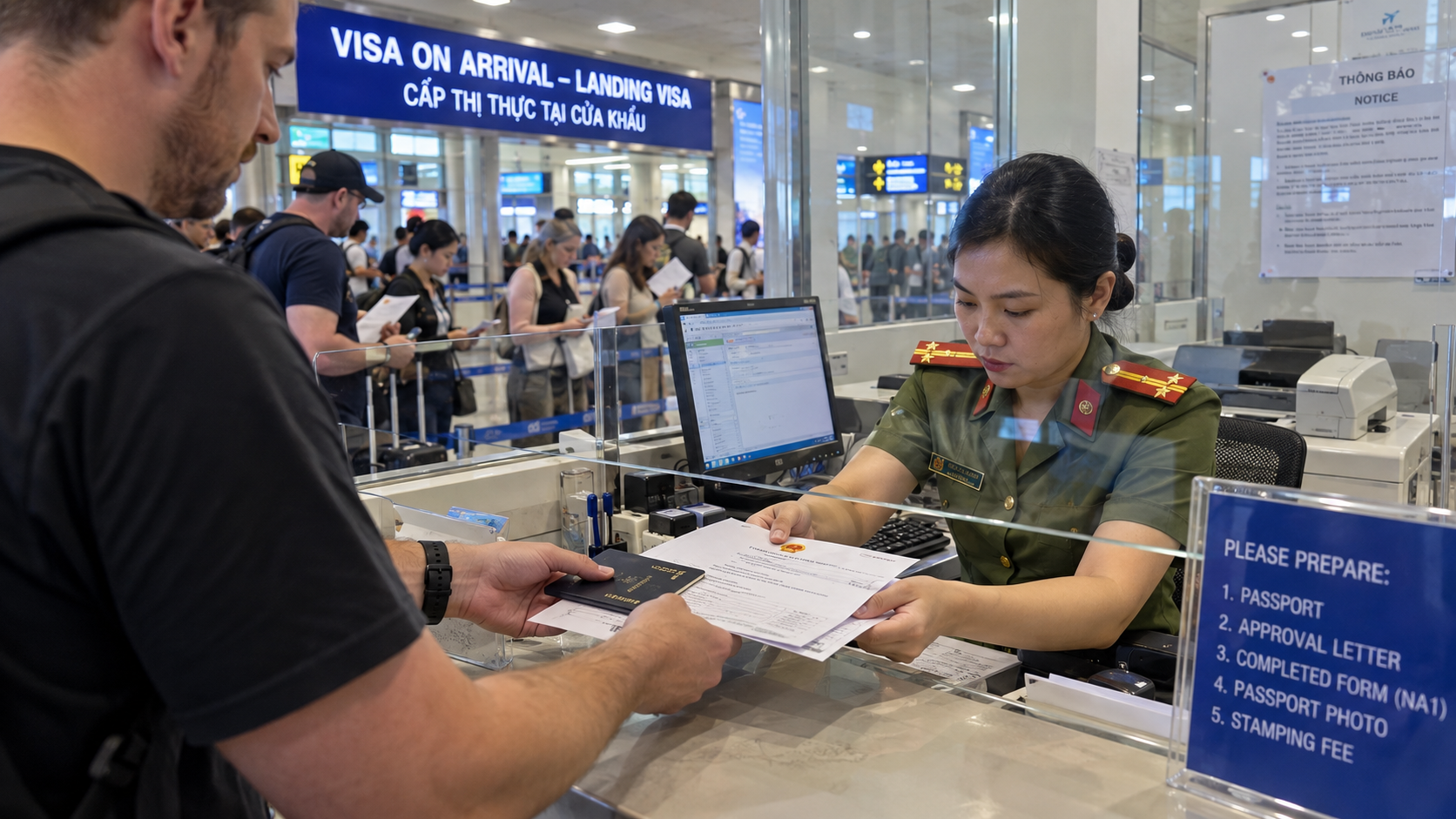
When a Vietnam eVisa remains under processing longer than expected, visa on arrival may seem like an obvious backup. However, the term can be misleading. A pending eVisa is not an issued visa, and visa on arrival should not be assumed to mean that any traveller can simply enter Vietnam and obtain a visa at the airport without prior arrangements. If your eVisa is still processing, the key is to understand when an alternative may be available, what must be arranged in advance, and how to avoid relying on a backup that may not actually work for your situation.
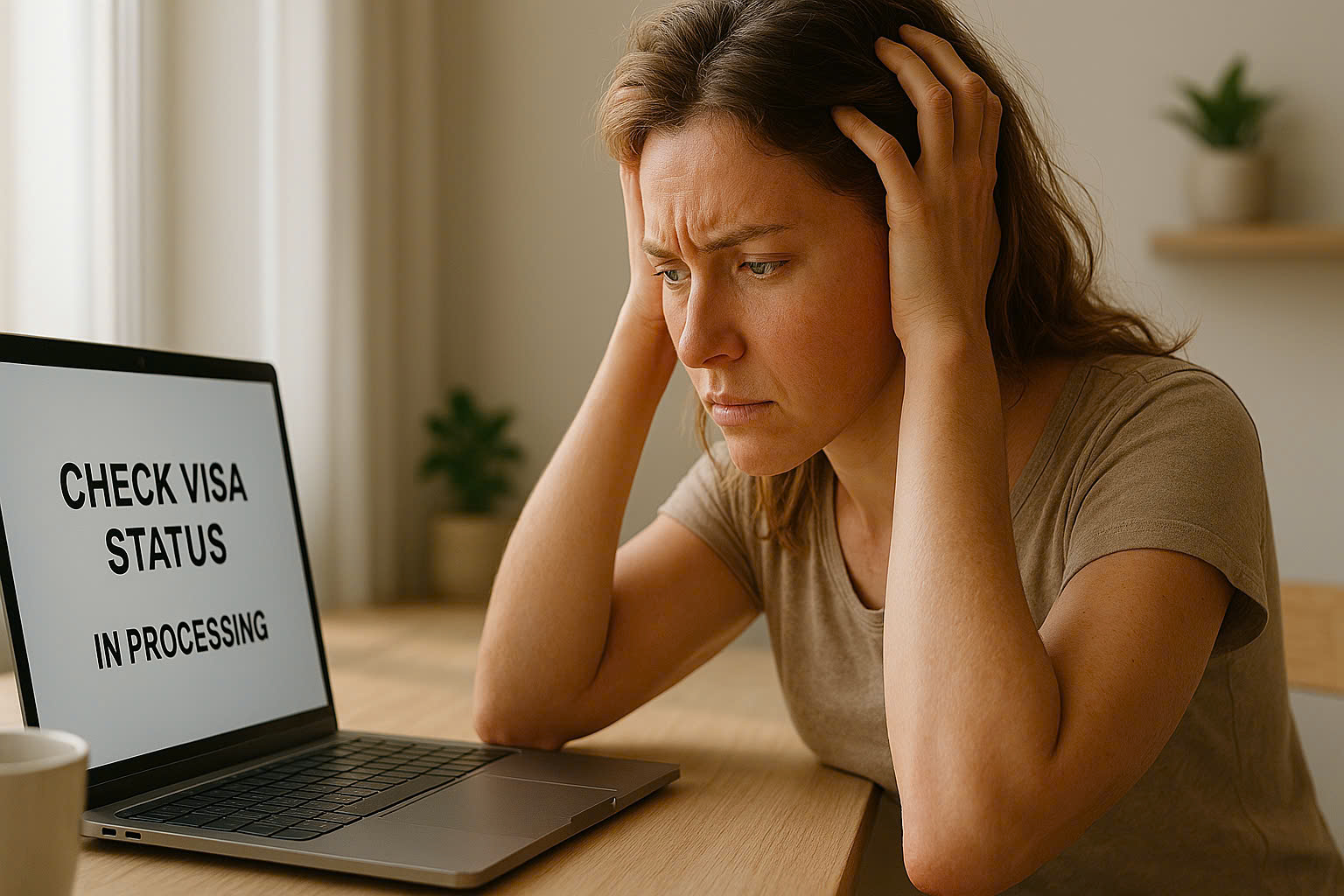
Seeing an eVisa application remain under processing does not necessarily mean something has gone wrong. The real difficulty begins when the expected travel date gets closer and the traveller still does not have an issued visa that can be used for the journey. An application that remains unresolved when departure is still well in the future creates a very different situation from one that remains unresolved shortly before an international flight.
This distinction is important because travellers often plan around an expected result rather than the document they actually possess. Once an application has been submitted, it is easy to start thinking of the visa as something that is already on its way and therefore almost guaranteed to be available before departure. Flights, hotels, transfers and tours may then be organised around that expectation. If the application continues to show as processing, however, the traveller eventually reaches a point where relying entirely on an anticipated approval becomes increasingly uncomfortable.
The most useful response is not to panic and immediately start several new applications. Instead, establish exactly where you stand. Confirm that the application was submitted successfully, check its current status through the appropriate system, review the important information that was entered and compare it with the passport that will be used for travel. At the same time, look at the actual departure deadline rather than simply thinking of the trip as being “soon”. Knowing whether you have five days, two days or only several hours remaining changes the way the situation should be assessed.
A pending application should also remain conceptually separate from an issued eVisa. Until the visa has actually been granted, travellers should avoid making decisions as though they already possess the final travel document. This does not mean every pending application will become a problem, but it does mean that a traveller whose departure is rapidly approaching needs to understand what alternatives may exist rather than relying solely on an expected outcome.
When an eVisa has not yet been issued, “visa on arrival” sounds like an ideal insurance policy. If the online application arrives in time, everything proceeds normally; if it does not, the traveller imagines using the airport visa instead. On the surface, this appears to remove the risk of waiting for the eVisa.
The problem lies in what travellers often assume the words “on arrival” mean. They may picture arriving at Tan Son Nhat International Airport in Ho Chi Minh City, Noi Bai International Airport in Hanoi or another Vietnamese international airport without an issued visa, finding a counter after landing, paying the required amount and obtaining a visa immediately. That should not be treated as a universal backup strategy.
Vietnam’s immigration framework can include procedures for visas issued at international border gates in qualifying circumstances. Those procedures, however, have their own conditions and should not be confused with an unrestricted walk-in tourist visa service. Depending on the particular procedure and traveller’s circumstances, arrangements or documentation may need to exist before arrival.
For someone whose eVisa is still processing, this distinction completely changes the meaning of a “backup visa”. A useful backup is not merely the hope that something can be arranged after the aircraft lands. It is an alternative that has been properly assessed for the traveller’s circumstances early enough to be relied upon when the journey begins. If a particular airport-related visa procedure requires arrangements before travel, discovering that requirement after arriving at the departure airport defeats the purpose of having a backup in the first place.
A traveller worried about a pending eVisa naturally focuses on Vietnamese immigration because that is where entry into the country will ultimately be decided. Yet the practical journey begins before the traveller reaches Vietnam. International airlines perform travel-document checks, and the documentation relevant to a passenger can depend on nationality, destination, route and individual circumstances.
This is why a confirmed airline ticket should never be confused with confirmed eligibility to complete the journey. Paying for a seat proves that a booking exists; it does not establish that every passport, visa or immigration requirement applicable to the passenger has been satisfied. Travellers should therefore consider both what they need for the journey itself and what they need when presenting themselves for entry into Vietnam.
This becomes particularly important when somebody intends to rely on an airport visa as a backup. If the supposed backup depends on steps that have not been completed before departure, simply knowing that a visa procedure exists somewhere at a Vietnamese airport does not solve the traveller’s immediate problem. The traveller still needs to establish whether the arrangement is actually available in the individual case and whether the necessary documentation will be in place at the correct time.
For that reason, the safest way to think about an emergency Vietnam visa option is as a pre-departure problem even when part of the relevant procedure is associated with an airport. The objective is not merely to have an idea for what you might do after landing. The objective is to know before travelling that the documentation you intend to rely on is appropriate for your circumstances.

When several days remain before departure, travellers have something extremely valuable that they may not have later: time to investigate without immediately making a rushed decision. If your eVisa remains under processing, begin by checking the existing application rather than assuming that another application or emergency arrangement is automatically necessary.
Review the application details against your passport, paying particular attention to information that can affect the accuracy of the visa process. Make sure you are checking the status using the appropriate application information and retain the relevant reference details. If anything about the submission appears inconsistent with the passport or intended journey, identify the issue early rather than waiting until the final day.
At this stage, repeatedly submitting new applications simply because the first one has not yet produced a result may not be the most useful response. Before creating another application, it is better to understand what has happened with the one already in the system and why you believe a different application is needed. Anxiety can easily lead travellers to take several actions at once, but more activity does not necessarily create more certainty.
The remaining time should also be used to understand what a genuine backup would require if the original eVisa does not become available before the flight. Researching that question several days ahead is very different from beginning the same research while travelling to the airport. Even if the original eVisa is ultimately issued in time, knowing what alternatives may or may not apply to your situation can prevent last-minute decisions based on outdated information.
Once departure moves into a short window, the traveller’s priorities begin to change. The original eVisa may still be issued, but the amount of time available to respond if it is not becomes increasingly limited. At this point, simply continuing to wait without understanding any alternative may leave the traveller with very little room to act later.
This does not mean that every traveller with an eVisa still processing 48 hours before departure should immediately purchase another service or abandon the original application. Circumstances differ, and there is no single answer that applies to every nationality, itinerary and visa case. What changes is the value of obtaining clarity. A traveller who knows the status of the existing application and has already investigated whether another legitimate route is available is in a much stronger position than someone who waits until the last few hours before asking what “visa on arrival” actually means.
This is also the stage when professional review may become more useful. The purpose should not simply be to find someone promising the fastest possible result. A meaningful review should begin with the traveller’s passport, current application situation, intended arrival date, flight schedule and other relevant details before identifying what processing option, if any, is suitable for that case.
If you are approaching departure and need assistance assessing an urgent Vietnam visa situation, available visa-support options can be reviewed at https://www.vietnamimmigration.com/apply-vietnam-visa/. A private visa service can assist with the application process and available service options, but it should not be confused with the Vietnamese authority responsible for the final visa decision. Any expedited processing time, service commitment or refund condition should therefore be checked against the provider’s current terms and eligibility requirements.

When the flight is scheduled for the following day, the situation has become genuinely time-sensitive. At this point, spending hours comparing old travel blogs and forum stories about how somebody obtained a Vietnam visa years ago is unlikely to provide the certainty you need. The most useful information is the information relating to your own application and journey.
Begin by establishing whether the eVisa application is genuinely still processing and whether all available application details are correct. Confirm the passport that will be used for the trip and review the actual flight departure and intended arrival information. If an eVisa has already been issued since the last time you checked, examine the issued document carefully rather than merely assuming that an approval notification means every detail is correct.
If the application remains unresolved, the next question is whether a legitimate alternative can realistically be arranged for your particular circumstances within the remaining time. This is where the phrase “visa on arrival as a backup” needs to be interpreted carefully. The useful question is not whether an airport in Vietnam has ever handled visas on arrival; it is whether you personally have an appropriate procedure available and can complete whatever preparation is required before relying on it for your journey.
Travellers who require professional assistance with a last-minute Vietnam visa situation can review available support at https://www.vietnamimmigration.com/apply-vietnam-visa/. In an urgent case, processing speed is naturally important, but accuracy is equally critical. A fast application containing incorrect passport information or based on a misunderstanding of the traveller’s situation may create another problem rather than solving the original one.
There is no universal point at which every traveller should stop waiting and move to another option. The answer depends on several factors, particularly how much time remains before departure, what the current application status shows, whether the information submitted is accurate and what alternative procedures are genuinely available for the traveller’s circumstances.
When the flight is still sufficiently far away, monitoring the existing application may be reasonable. As departure becomes closer, however, it becomes increasingly useful to investigate an alternative rather than assuming that the original application will necessarily be completed at the most convenient moment. Investigating a backup does not automatically mean abandoning the pending application; it means understanding what could be done if the expected result does not arrive when needed.
Travellers should also avoid treating all visa problems as though they were identical. An application that remains processing is different from an application that has received a final negative result. Likewise, a visa that has already been issued but contains information the traveller is concerned about presents a different issue again. Before paying for an urgent solution, make sure the problem being solved is actually the problem you have.
The closer the flight becomes, the more valuable a case-specific assessment can be. Instead of searching only for the fastest advertised visa, travellers should look for a solution that considers their actual passport, current application, itinerary and available time. The purpose of a backup is to reduce uncertainty, not simply to create another application whose status the traveller then has to worry about.
When travellers are under time pressure, marketing claims about speed naturally attract attention. Yet the quality of an urgent visa service should not be judged solely by the shortest processing time displayed on a page. A useful service should first help determine what the traveller is dealing with and whether the requested option is appropriate for the circumstances.
That process may involve reviewing passport information, understanding the existing eVisa situation, checking the intended arrival schedule and identifying the service route available for the case. Accurate information becomes especially important when there is little time remaining because an avoidable error can consume hours that the traveller cannot recover.
Travellers should also understand the distinction between administrative visa assistance and the authority that actually decides whether a visa is issued. A private service provider can help prepare, review or facilitate an application according to the services it offers, but the final immigration decision belongs to the competent Vietnamese authority. Keeping that distinction clear makes it easier to evaluate service promises realistically.
Before purchasing urgent assistance, review the applicable service conditions carefully, including what the quoted processing time actually refers to, which travellers are eligible, what documents are required and how any refund policy operates. A reliable backup should create greater clarity about the journey rather than asking the traveller to rely on another vague assumption.
When travellers become anxious about an approaching flight, there is a natural temptation to submit another eVisa application immediately. The logic seems reasonable: if one application is taking too long, perhaps a second application will be processed faster. The difficulty is that creating another application without first understanding the original one does not necessarily resolve the underlying uncertainty.
Before submitting anything new, check the existing status and compare the original information with the passport. If you believe there is an error, identify exactly what it is. If the application simply remains processing, distinguish that situation from one in which the application information itself appears incorrect. Those circumstances may require different decisions.
The same principle applies when considering an alternative visa route. Do not choose an option solely because it contains the words “urgent”, “emergency” or “visa on arrival”. First establish whether the option is relevant to your nationality and circumstances, what needs to happen before departure, what documents will be provided and what conditions apply.
The goal is not to accumulate as many applications as possible before the aircraft departs. The goal is to arrive at the departure stage with a clear understanding of which valid travel documentation you are relying on and why it is appropriate for the trip.
Can I get a Vietnam visa on arrival if my eVisa is still processing? A pending eVisa does not automatically give a traveller access to a visa on arrival. Vietnam has visa procedures associated with international border checkpoints in qualifying circumstances, but travellers should not interpret these as a universal facility where anyone can arrive without prior arrangements and purchase a tourist visa. If considering an alternative because an eVisa remains pending, determine what procedure is actually available for your individual case before travelling.
Can I fly to Vietnam while my eVisa application is still pending? A pending application is not the same as an issued visa. Travellers should make sure they possess the documentation required for their journey and should verify relevant requirements for their individual circumstances before departure rather than assuming that the pending application itself functions as entry permission.
My Vietnam eVisa is still processing and my flight is tomorrow. What should I do? Check the current application status, verify the information against your passport and establish exactly how much time remains before departure. If the application is still unresolved, investigate what legitimate alternatives may be available for your case. Travellers who need time-sensitive visa assistance can review available services at https://www.vietnamimmigration.com/apply-vietnam-visa/.
Should I submit another eVisa because my first application is still processing? A second application should not be treated as an automatic solution to a pending first application. Before applying again, establish the status of the original submission and determine whether there is a specific reason a new application is necessary.
Does “visa on arrival” mean I can simply get a visa after landing in Vietnam? Not as a general assumption. The term can be misleading because visa procedures at international border checkpoints may involve eligibility requirements and arrangements that exist before arrival. Travellers should not build their trip around the expectation that an ordinary tourist visa will automatically be available for purchase after landing.
What if my original eVisa is approved while I am investigating a backup option? If the eVisa is issued, review the actual document carefully against your passport and itinerary. If you have also begun arranging another visa-related service, contact the relevant provider to understand the status of that service and any applicable conditions rather than making assumptions about which process should be used.
When a Vietnam eVisa remains processing and the flight is approaching, searching for a backup is entirely understandable. The mistake is assuming that the words “visa on arrival” automatically provide that backup. An airport-related visa procedure is only useful to a traveller if it genuinely applies to the individual circumstances and any necessary arrangements can be completed in time for the journey.
The best response to a delayed eVisa is therefore to replace uncertainty with verified information. Check the existing application, make sure the passport and travel details are accurate, consider how much time genuinely remains before departure and investigate alternative options early enough to make an informed decision. If the flight is very close, professional assistance may help clarify what can realistically be done, but the purpose should always be to establish a legitimate and usable solution before the trip depends on it rather than simply hoping that the visa problem can be solved after landing.

Your flight to Vietnam is booked, your accommodation is confirmed, and your bags may already be packed. There is just one problem: when you check your Vietnam eVisa application, it …


