Planning to explore Vietnam in 2026? Whether you’re captivated by the bustling energy of Ho Chi Minh City, dreaming of a boat ride through Ha Long Bay, or craving the …

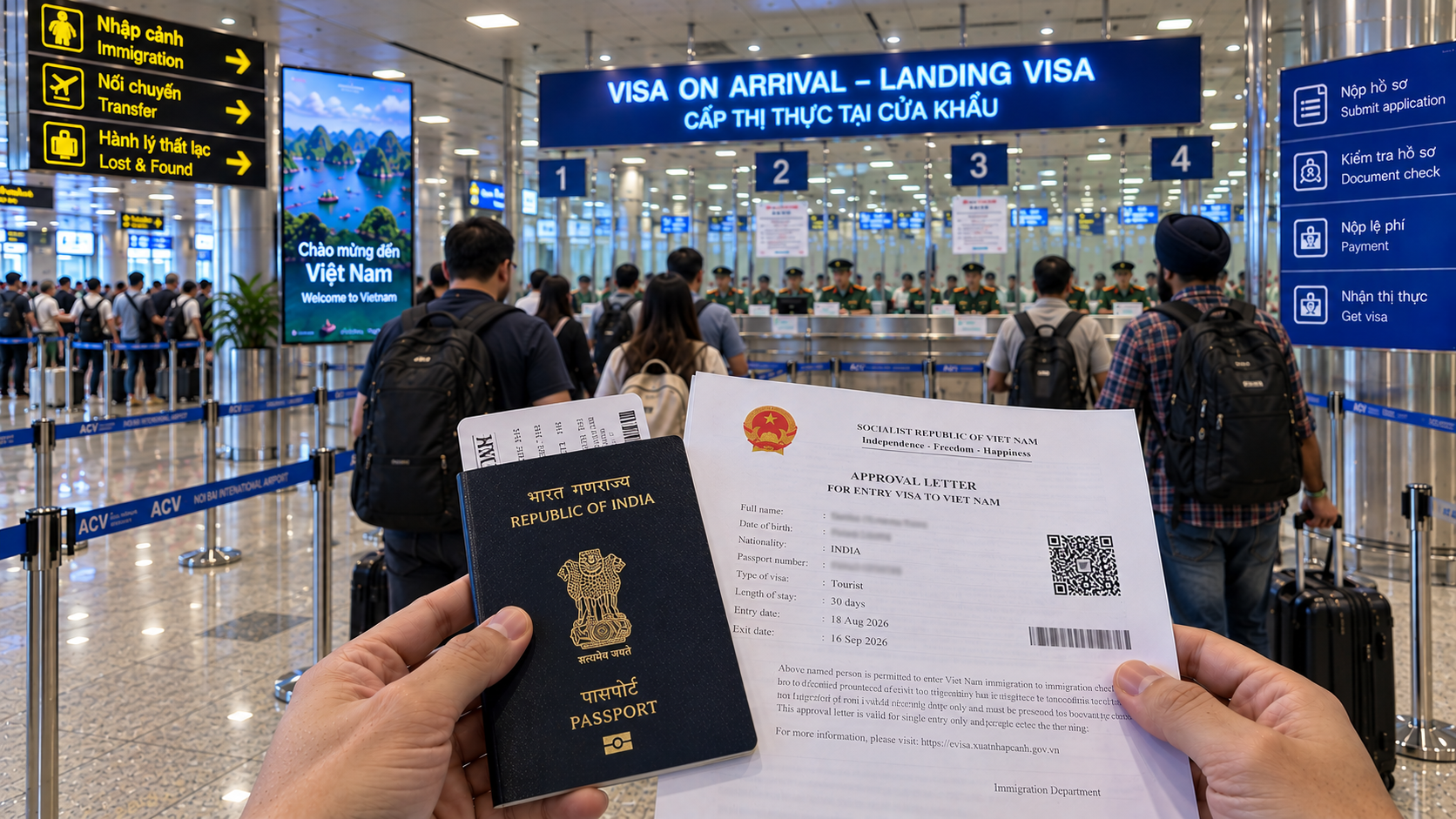
If you are travelling from India to Vietnam and have been told that you need a Vietnam immigration approval letter, it is perfectly reasonable to wonder what you are actually being asked to obtain. The word “approval” can make the document sound like a completed visa, while the term “Visa on Arrival” can create the opposite impression—that nothing needs to be arranged until you land in Vietnam. Neither interpretation gives you the full picture. For Indian travellers using an applicable approval-letter arrangement, it is more useful to think of the process as a journey with two connected stages: the relevant approval is arranged before departure from India, while the remaining visa formalities are completed after arrival at the appropriate Vietnamese airport. Understanding this distinction also helps you work out what you are paying for, which documents you still need to carry, whether an airport fee remains payable, and what to check before choosing a visa service. Before you pay for an approval letter or leave for the airport, the following seven points will give you a much clearer idea of how the process fits together.
A Vietnam immigration approval letter is an approval document used as part of an applicable visa arrangement rather than something that should automatically be regarded as the finished visa itself. You may also encounter similar expressions such as Vietnam Visa Approval Letter or pre-approved visa letter when researching the process online. Although the terminology can vary, the practical issue for an Indian traveller is understanding what the document allows you to do and which steps remain after it has been issued.
For the process covered in this guide, the journey begins with arranging the appropriate approval before leaving India. You then check the information carefully, prepare the supporting arrival documents, travel to Vietnam and complete the remaining formalities at the relevant airport. Looking at the process this way is far more useful than assuming that everything is finished simply because an approval document has arrived in your inbox.
One of the easiest mistakes to make is to interpret the word “approved” as meaning that every part of the visa procedure has already been completed. In the arrangement discussed here, the approval letter belongs to the pre-arrival stage and provides the documentation needed to continue with the applicable process. There are still arrival formalities to complete, which is why travellers should avoid treating the letter as though it replaces every other visa document or airport requirement.
The difference becomes clearer when the two stages are compared side by side:
| Vietnam Immigration Approval Letter | Completed Visa Stage |
|---|---|
| Arranged before travelling to Vietnam | Completed according to the applicable visa procedure |
| Serves as approval documentation | Represents the later or final visa stage |
| Used as part of the relevant arrival process | Allows entry according to the applicable visa conditions |
| Does not mean every airport formality is finished | Comes after the required remaining formalities are completed |
For Indian passport holders, this distinction is particularly useful when reviewing a visa service. Rather than asking only whether an approval letter will be provided, it is worth understanding what happens after the document is issued and what you are expected to do with it. A transparent explanation should make both stages clear instead of leaving you with the impression that receiving a PDF automatically completes the entire journey.

The phrase “Visa on Arrival” naturally directs attention towards the airport in Vietnam, which is why some travellers assume they can leave India first and sort out the complete visa process after landing. For the approval-letter route discussed in this article, that is not the correct way to understand the sequence. The approval stage takes place before departure, while the airport is where the remaining formalities are completed.
This matters before you even reach Vietnam because international travel involves document checks at different stages of the journey. Depending on the traveller, route and applicable requirements, an airline may check relevant travel documentation when you check in or before you board. It is therefore unwise to assume that every visa-related issue can simply be postponed until you are standing in front of an immigration counter in Vietnam.
If you are flying from Delhi, Mumbai, Bengaluru, Chennai, Hyderabad, Kolkata or another Indian city, include the required approval documentation in your pre-flight planning rather than treating it as an arrival-day task. The practical sequence is to arrange the applicable approval first, prepare the supporting paperwork, travel to Vietnam and then complete the remaining procedure after landing.
Speed is often the first thing travellers think about when arranging a visa close to departure, but an approval issued quickly is of little value if the information on it does not correspond with the passport being used for the trip. Your application details should therefore be entered carefully from the beginning, particularly your name and passport information. The intended arrival date and actual Vietnamese entry point should also be provided correctly where they form part of the application.
Indian travellers should generally have the following information available when an approval arrangement is being prepared:
| Information | What to Prepare |
|---|---|
| Passport details | Information from the passport you will actually use for the journey |
| Nationality | Indian |
| Intended arrival date | Your planned date of entry into Vietnam |
| Arrival point | The actual Vietnamese international airport where you enter |
| Entry arrangement | Information corresponding with your planned journey |
| Travel details | Flight or itinerary information where required |
Once the approval document arrives, open it and compare the relevant details directly with your passport instead of checking from memory. Look carefully at your full name, passport details, nationality and any entry information shown on the document, and compare relevant dates or airports with your current itinerary. This is particularly important if your travel arrangements have changed since the application was originally submitted.
It is worth carrying out the same check again shortly before departure. If you have renewed, replaced or otherwise changed your passport after the approval was arranged, do not automatically assume that documentation connected with the previous passport can be used without further review. Resolving a discrepancy while you are still in India is generally much easier than discovering it after your journey has already begun.
Receiving the approval letter is an important part of the process, but it should also be the point at which you organise the rest of your arrival documents. Focusing only on the approval letter can lead travellers to overlook a form, photograph or applicable fee that is required at a later stage. Preparing everything together before leaving India makes the airport procedure easier to follow after a long international journey.
For the Visa on Arrival arrangement discussed in this guide, the document pack should include:
| Document or Item | What to Prepare |
|---|---|
| Valid passport | The passport corresponding with the approval documentation |
| Vietnam approval letter | The approval arranged before departure |
| Passport photograph | 4 × 6 cm with a white background |
| NA1 form | Completed for the relevant arrival procedure |
| Stamping fee | USD25 for the single-entry arrangement discussed here |
These documents should be kept somewhere accessible during your journey, preferably together in your cabin baggage. Placing essential arrival paperwork in checked luggage can create an unnecessary problem if you need the documents before collecting your suitcase. It is also useful to have your paperwork organised in the order you are likely to need it rather than searching through unrelated travel documents after landing.
For the single-entry arrangement discussed in this article, the relevant airport stamping fee is USD25. This should be considered separately from any service or processing fee paid earlier to arrange the approval documentation, because the two charges relate to different stages of the process.
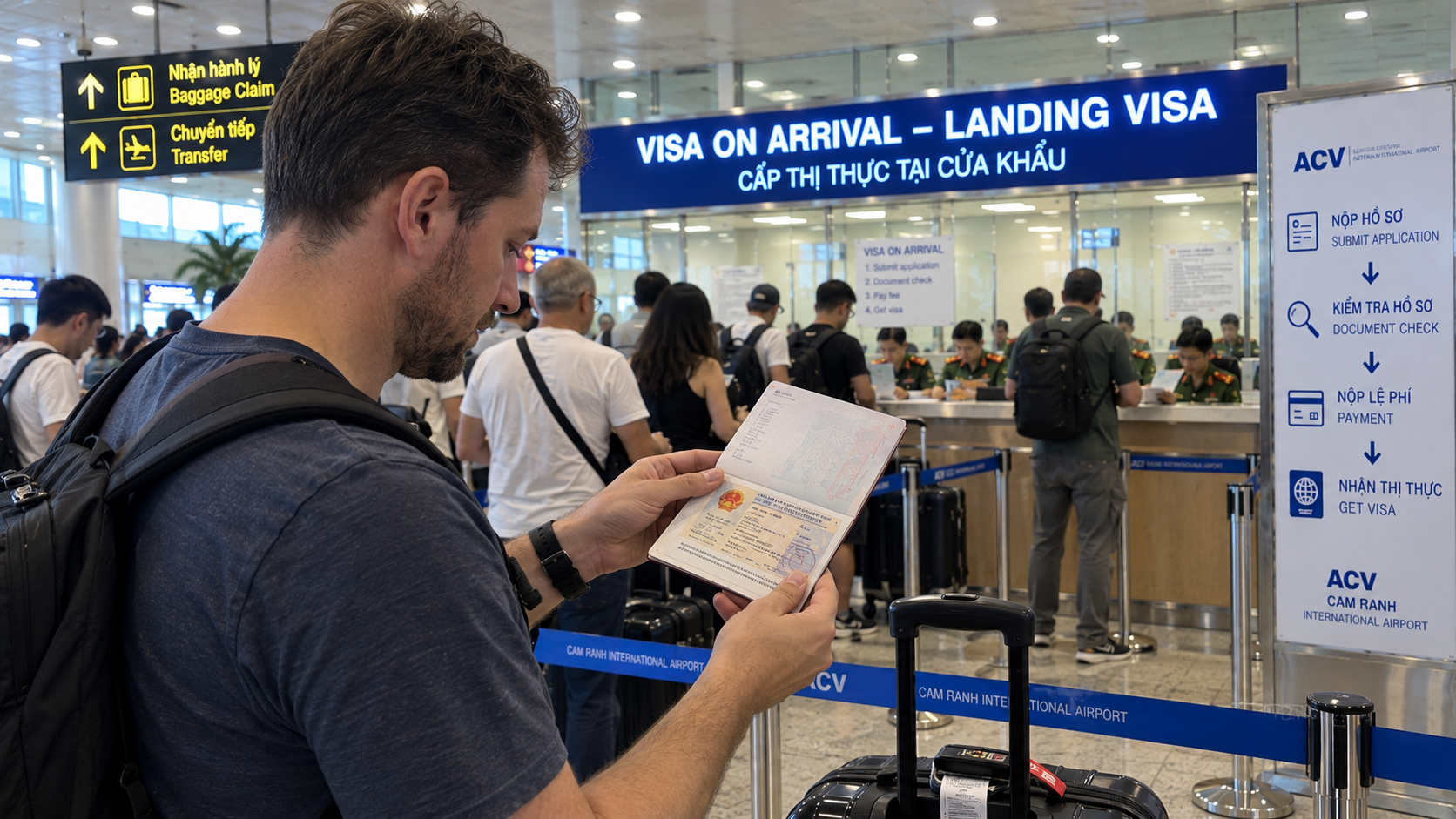
Price is often one of the first things travellers compare when looking at Vietnam visa services, but comparing headline figures without understanding what they include can be misleading. A fee paid before departure may relate to the service involved in arranging or processing the approval documentation, whereas a separate stamping fee may apply when completing the relevant procedure after arriving in Vietnam. For the single-entry arrangement discussed here, that airport stamping fee is USD25.
This distinction is important because paying for an approval service does not necessarily mean every later charge has already been covered. Before choosing a service, look at what is actually included in the quoted amount and whether any airport payment remains separate. A clear provider should make it reasonably easy for a traveller to understand which part of the process each fee relates to.
Rather than asking only, “How much does the visa cost?”, it is more useful to ask for a breakdown of the process and the charges attached to each stage. That gives you a better basis for comparing services and reduces the chance of arriving in Vietnam with a different expectation about what has already been paid.
Travellers naturally plan their holidays around destinations, so someone may say that they are going to Nha Trang, Hanoi or Ho Chi Minh City without thinking about the exact immigration entry point. For visa documentation, however, the airport where you actually enter Vietnam can be more relevant than the city where you plan to spend most of your holiday. A traveller heading to Nha Trang, for example, may complete international arrival procedures at Cam Ranh International Airport.
Common international airports associated with the process discussed in this article include:
| Destination | International Airport |
|---|---|
| Ho Chi Minh City | Tan Son Nhat International Airport |
| Hanoi | Noi Bai International Airport |
| Da Nang | Da Nang International Airport |
| Nha Trang | Cam Ranh International Airport |
| Phu Quoc | Phu Quoc International Airport |
| Da Lat | Lien Khuong International Airport |
This becomes even more important if Vietnam is only one part of a longer Southeast Asian trip. An Indian traveller might fly to Thailand first, continue through Cambodia and later enter Vietnam by land, which is very different from flying directly into a Vietnamese international airport. An airport-based approval arrangement should not automatically be assumed to work in the same way at a land border or seaport.
For that reason, check the actual route before arranging the approval documentation rather than relying only on your final destination. If your itinerary changes after the approval has been arranged, review whether the new entry point still corresponds with the process you intended to use.
When departure is approaching, it is understandable that the first question becomes whether the approval can be processed urgently. However, an accurate answer depends on more than simply saying that your flight is “soon”. The passport details, time of submission, planned arrival date, flight schedule and applicable processing procedure can all affect which options may be available.
If your flight from India is close, prepare your passport information together with your Vietnam arrival date, actual airport of entry, flight number and departure time. You should also have the relevant entry arrangement available and mention any existing Vietnam visa application if one has already been submitted. Providing this information together allows the situation to be assessed against the time genuinely remaining before departure.
This is also why travellers should be cautious about an unconditional promise that every urgent case can be completed within exactly the same period. A responsible assessment should take the individual application and itinerary into account before a processing option is presented.
Choosing a visa service becomes much easier when you stop comparing only price and speed and start asking what the service actually includes. Before making payment, make sure you understand what document will be arranged, whether it fits your planned entry route and what you will still need to do after receiving it. You should also know whether the quoted amount includes all charges or whether an airport stamping fee remains payable later.
It is equally useful to understand how your passport and application information will be checked. If an error is found, you should know how corrections are handled, and if the application cannot be processed, the relevant service terms and refund conditions should be available for you to review. Travellers with a flight approaching should also check whether support is accessible when they need clarification rather than relying entirely on an automated confirmation.
These questions may seem less exciting than a promise of very fast processing, but they provide much more useful information about the service you are considering. The aim should not simply be to purchase “an approval letter”; it should be to understand exactly what is being arranged and how that document fits into the rest of your journey.
If you are travelling from India and need assistance with an applicable Vietnam approval arrangement, our Vietnam Visa Services team can review your passport information and travel details before processing. This helps establish whether the information provided is consistent with the intended journey and can also identify obvious discrepancies before they become more difficult to deal with close to departure.
You can submit the relevant application and travel information through:
For eligible urgent cases, expedited processing of approximately 2–8 hours may be available depending on the application, submission time and applicable procedures. Rather than treating this timeframe as an automatic promise for every traveller, the available option should be assessed against the actual documents and flight schedule. Passport and application information can also be reviewed before processing so that obvious inconsistencies can be identified as early as possible.
Our team provides 24/7 assistance with questions relating to Vietnam visa applications, approval documentation and relevant entry procedures, supported by more than 15 years of experience in Vietnam visa services. Refund arrangements are handled according to the applicable service terms and published refund policy, allowing travellers to review the conditions associated with the service rather than relying on a vague assurance.

Is a Vietnam immigration approval letter the same as a completed Vietnam visa?
For the process discussed in this guide, the approval letter belongs to the pre-arrival approval stage rather than representing completion of every visa formality. Indian travellers using the applicable arrangement still need to prepare the other required documents and complete the relevant procedure after arriving in Vietnam. It is therefore more accurate to view the letter as one stage of the visa process rather than the entire process itself.
Can an Indian traveller board a flight with only the approval letter?
The approval letter should not be viewed as the only travel document required for the journey. You will still need the passport corresponding with the approval and should prepare the other documents required for the applicable visa and arrival procedure. Airline document checks can also depend on the route, traveller and applicable travel requirements, so the full documentation should be organised before departure.
Can I fly to Vietnam first and arrange the immigration approval letter after I arrive?
That is not the sequence used for the approval-letter process described in this article. The relevant approval is arranged before departure from India, while the remaining formalities are completed after arriving at the appropriate Vietnamese airport. Treating the airport as the place to begin the approval application can therefore create unnecessary problems before or during the journey.
Should Indian travellers carry a printed copy of the Vietnam approval letter?
You should have the required approval documentation readily accessible in the form needed for the applicable arrival procedure. It is sensible to organise the document together with your passport and other arrival paperwork rather than depending only on an application number stored somewhere on your phone. Keeping the necessary documents accessible also makes the process easier if you are asked to present them during the journey.
What else should I carry with the approval documentation?
For the process discussed here, prepare the passport that corresponds with the approval, a completed NA1 form, a 4 × 6 cm white-background photograph and the applicable airport stamping fee. These documents serve different purposes, so receiving the approval letter does not remove the need to prepare the rest of the arrival pack. Checking everything before leaving India is far easier than trying to organise missing paperwork after landing.
How much is the Vietnam airport stamping fee for the arrangement discussed here?
For the single-entry arrangement covered in this guide, the airport stamping fee is USD25. This fee should be distinguished from any service or processing charge paid to arrange the approval documentation before travel. Understanding that difference in advance makes it easier to know what has already been paid and what may still be payable at the airport.
Can Indian citizens request urgent Vietnam approval processing?
Eligible applications may have access to an expedited processing option, but availability and timing depend on the individual case. Factors such as the application information, submission time, flight schedule and applicable processing procedures need to be considered together. If your departure is close, providing complete passport and itinerary information from the beginning makes it easier to assess what option may realistically be available.
A Vietnam immigration approval letter becomes much easier to understand when it is viewed as one part of a larger travel process rather than as a stand-alone product. Before paying for a service, make sure you know what document is being arranged, which fees are included, what remains payable later, what supporting documents you still need and whether the process matches the way you actually intend to enter Vietnam.
Once the approval documentation is received, compare it carefully with your Indian passport, organise the remaining arrival documents and keep everything accessible throughout the journey. The most useful principle is to arrange the appropriate approval before departure, verify the details carefully, prepare the complete document pack and then complete the remaining formalities after arriving in Vietnam. Understanding both what the approval letter does and what it does not do will help you approach the process with clearer expectations.
Planning to explore Vietnam in 2026? Whether you’re captivated by the bustling energy of Ho Chi Minh City, dreaming of a boat ride through Ha Long Bay, or craving the …
Are you an Indian traveller dreaming of exploring Vietnam’s rich heritage, bustling cities, and serene coastlines in 2026? Whether you’re planning to stroll through the lantern-lit alleys of Hoi An, …
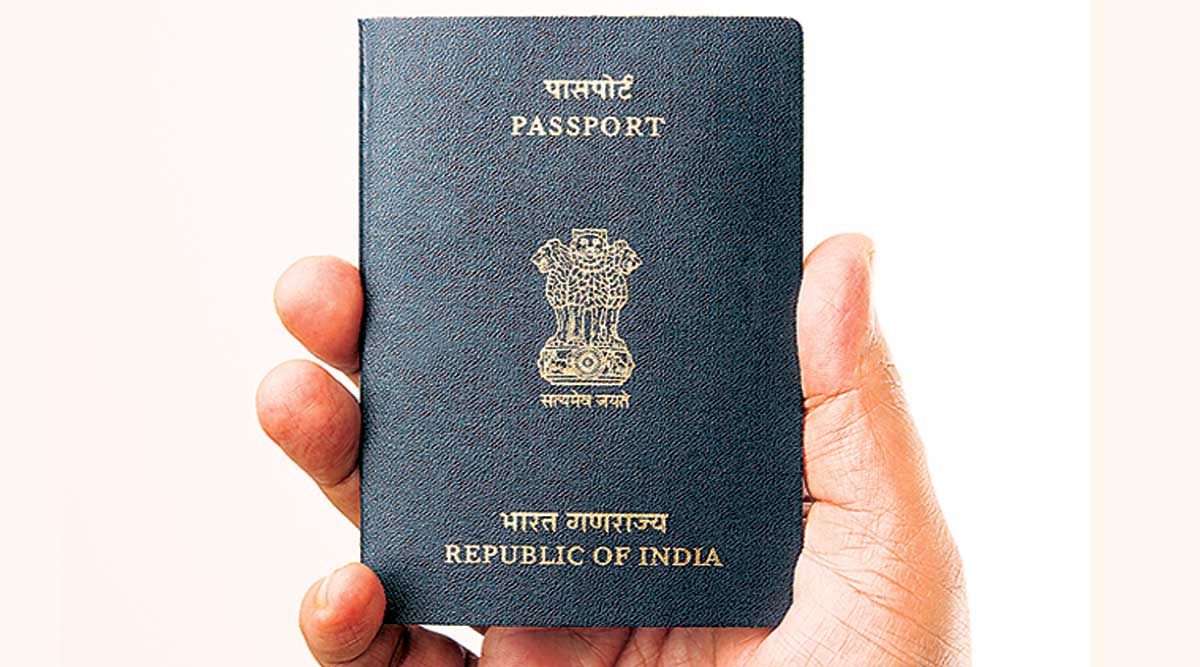
For many travellers from India, planning a journey to Vietnam is exciting—but the moment you start searching for visa information, the excitement often turns into confusion. Different websites say different …
For many travellers from India heading to Vietnam—whether for a beach holiday, a cultural getaway, business meetings, or a multi-country Southeast Asian itinerary—the visa process is often the first thing …