Planning a holiday in Vietnam from New Zealand? Before finalising your flights and accommodation, securing the correct tourist visa should be one of your first priorities. Vietnam’s electronic visa system …

Your flights to Vietnam are booked, the accommodation is sorted, and most of the trip is ready to go. Then you realise there is one problem that cannot simply be packed into your suitcase later: your Vietnam visa application was submitted much closer to departure than planned, and it is still not ready. At this point, there is little value in thinking about when you should have applied. What matters is how much genuine processing time remains, whether your current application needs any action from you, and what you can do now to avoid losing even more time before airline check-in.
There is no universal cut-off that makes a Vietnam visa application late in every situation. A better way to look at it is whether the amount of normal processing time remaining is still comfortably longer than the time you have before departure.
Travellers commonly plan around a normal processing period of approximately 3–5 working days, while some applications can take longer depending on the individual case. If you have fewer than three working days remaining before you need the visa, you should not rely on the assumption that standard processing will necessarily finish before your flight.
Whether your application is genuinely late depends on several factors:
For example, submitting an application four calendar days before flying may initially sound reasonable. However, if a weekend or public holiday sits between the application date and departure, the usable processing window can be considerably shorter.
This is why New Zealand travellers should think in terms of working time remaining, rather than simply counting dates on a calendar.
Once you realise the application was made late, the first calculation should not simply be the number of days until departure. Instead, work out how much practical processing time remains before you need to have your travel documents ready.
| Time Remaining Before Departure | How to Treat the Situation |
|---|---|
| Several complete working days | Standard processing may still fit, but monitor the application |
| Around 2–3 days | The application is becoming time-sensitive |
| Approximately 24–48 hours | Consider an urgent assessment |
| Departing tomorrow | Start planning around an emergency-level deadline |
| Departing the same day or within hours | Airline check-in becomes the key deadline |
These timeframes are useful for assessing urgency, but they are not promises of visa approval within a particular period. Every application can be different, and additional checks or corrections may affect the actual timeline.
There is another deadline that travellers sometimes overlook: airline check-in.
If your airline needs to verify your travel documentation before completing check-in, your practical visa deadline may arrive well before the aircraft actually leaves. When departure is already close, those extra hours can make a significant difference.
A common mistake with a late visa application is assuming that every day between submission and departure represents a full processing day.
Imagine submitting your application on Friday for a flight departing on Monday. There may appear to be several days between the two dates, but that does not mean you have several complete working days available.
Weekends and Vietnamese public holidays can reduce the practical processing window considerably. The time of day when the application or amendment is submitted can also matter when the remaining period is already very short.
New Zealand travellers should also account for the time difference between New Zealand and Vietnam. New Zealand is several hours ahead of Vietnam, with the exact difference varying according to daylight saving time. When you still have a week before departure, this difference may not feel particularly important. When you have only a few hours left, it can matter considerably.
For a time-sensitive case, use exact dates and times wherever possible. Saying “I submitted it last night” is much less precise than knowing exactly when the application was sent and how that corresponds with working time in Vietnam.
If you have already submitted the application and it remains pending, repeatedly refreshing the status page is not the only thing you should be doing. First make sure there is nothing associated with the current application that requires your attention.
Check the official application status using your registration information. Then check the email account connected with the application, including spam and junk folders, to make sure you have not missed an amendment or information request.
Keep the following details together:
If an amendment has been requested, read it carefully before responding. A late application already leaves little room for delays, so rushing through a correction and introducing another mistake can make the situation more difficult.
The objective is to establish whether the application is simply still being processed or whether something is waiting for you to complete.

Once fewer than three days remain before your flight, it is sensible to treat the application as time-sensitive. At this stage, the focus should shift from general expectations about processing times to the actual status of your application and the real deadline created by your flight.
Start with the application itself. Confirm its current status and check whether any action is required. Then calculate how many working hours or working days genuinely remain rather than counting calendar dates alone.
A practical sequence is:
It is also worth preparing all relevant documents before the situation becomes more urgent:
If the normal processing window no longer matches your departure schedule, you can provide the relevant information through https://www.vietnamimmigration.com/apply-vietnam-visa/ so the situation can be assessed against your actual flight deadline.
The important point is not to panic because you applied late. It is to avoid making the situation even later by allowing additional hours to disappear without taking useful action.
Having 48 hours until departure does not necessarily mean you have two full working days available for your visa. Part of those 48 hours may fall overnight, over a weekend or during a Vietnamese public holiday.
This is why exact flight information becomes increasingly important as departure approaches.
A traveller leaving Auckland tomorrow morning is dealing with a very different practical deadline from someone whose flight departs late the following evening, even if both describe their trips as being “within two days.”
At this stage, keep your passport file, application reference, current status, portrait and flight itinerary in one easily accessible place. Continue monitoring the email address linked to the application so that you can respond quickly if anything requires your attention.
When the remaining window has fallen below 48 hours, a small preventable problem can consume a significant proportion of the time you have left. Organisation becomes just as important as urgency.
If you are flying tomorrow and the visa is still pending, there may still be an update before departure. However, relying entirely on the hope that approval will appear before you leave for the airport becomes increasingly risky as the deadline gets closer.
This is the point to organise your existing application information and travel documents immediately.
Have these ready:
Do not leave this preparation until you are already at Auckland, Christchurch, Wellington or another departure airport. If assistance becomes necessary, you should be able to provide the relevant information quickly rather than searching through old emails while the check-in clock is running.
The closer your flight gets, the less useful passive waiting becomes. If the standard processing window clearly no longer fits your travel schedule, it may be appropriate to have the situation assessed for an urgent option while there is still usable time remaining.
For some eligible time-sensitive cases, urgent or emergency processing assistance may be available when departure is less than 24 hours away. However, the existence of a faster processing option should not be confused with a guarantee that every application will receive approval within 24 hours.
Actual timing may depend on factors such as:
If you already know that you are flying tomorrow, deliberately waiting until only a few hours remain generally does not improve your position. Acting earlier gives you more room to respond if an issue needs attention.
Instead of asking only, “Can it be done within 24 hours?”, ask a more useful question:
“How many usable hours are actually left before my airline needs my travel documents?”
For certain eligible and highly time-sensitive cases, emergency assistance may potentially be available within approximately 2–8 hours. This can become relevant when a New Zealand traveller has submitted late and the departure deadline is now extremely close.
However, this timeframe needs to be understood correctly.
The potential availability of 2–8 hour emergency assistance does not mean that visa approval within 2–8 hours is guaranteed.
Professional visa support can help review documentation and assist with a time-sensitive process, but the final decision on a visa application remains with the competent Vietnamese authorities.
Actual timing may still depend on the condition of the application, when assistance is requested, whether additional checks are needed, weekends, Vietnamese public holidays and other circumstances specific to the case.
If you still have several usable hours available, make use of them. An emergency situation is better addressed as soon as it becomes clear rather than intentionally allowing the remaining window to shrink further.
When an application has already been submitted late, there is very little spare time available for avoidable errors. A small mistake that might be manageable weeks before departure can become far more significant when the flight is tomorrow.
Common problems worth checking for include:
If you are asked to correct information, compare every relevant field directly against your New Zealand passport. Do not rely on memory simply because you are in a hurry.
Open the passport image before using it and make sure all important details are readable. Confirm that the portrait you provide is the intended file rather than another photograph stored nearby on your phone or computer.
A late application already gives you less room for delay. Do not lose more time to a mistake that could have been identified with a careful five-minute check.
Organisation matters much more when the departure deadline is approaching. Rather than keeping application information scattered across your phone, inbox and computer, put the essential files and details together so that they can be accessed immediately.
Keep ready:
This preparation does not change the visa decision. What it does is prevent you from wasting more of the limited time remaining if the application requires attention or you need a time-sensitive assessment.
When departure is only 24–48 hours away, saving even an hour of unnecessary searching can be useful.
When a Vietnam visa application has been left too late, the problem is no longer simply understanding how the visa process works. The immediate challenge is understanding the current application, identifying whether anything needs attention and determining what options may still fit the remaining travel window.
Depending on the individual circumstances, an experienced visa support team may assist by:
A team with more than 15 years of experience handling Vietnam visa cases may also be familiar with common issues that become particularly important when a traveller has only a short period remaining before departure.
New Zealand travellers with an approaching flight can provide the relevant details through https://www.vietnamimmigration.com/apply-vietnam-visa/ so the current situation can be assessed against the actual departure deadline.
Professional support can help organise a time-sensitive case, identify preventable problems and reduce avoidable administrative delays. However, private visa assistance does not control the final immigration decision, and visa approval ultimately remains with the competent Vietnamese authorities.

When approval arrives shortly before the flight, it can be tempting to download the document and immediately head for the airport. Before doing that, take a few minutes to compare the issued visa with the New Zealand passport you will actually use for travel.
Check:
Once everything has been confirmed, save the complete visa document somewhere that can be accessed easily during the journey. Keep a backup copy and, where appropriate, have a printed version available as well.
Make sure you travel using the same passport connected with the visa application. Receiving approval close to departure is a relief, but it is not a reason to skip the final document check.
Realising that you submitted your Vietnam visa application later than you should have can be stressful, particularly when the flight is only a few days or even a few hours away. But once the application is already in the system, repeatedly thinking about when you should have applied will not recover the lost time.
What you can control is what happens from this point onward. Check the current status, calculate actual working time rather than calendar days, monitor your email, keep the relevant documents ready and pay increasing attention to the airline check-in deadline as departure approaches.
If the normal processing window no longer fits the trip, https://www.vietnamimmigration.com/apply-vietnam-visa/ can be used to provide the details of the time-sensitive situation for assessment according to the actual flight schedule and urgent options that may be applicable.
You cannot change how late the application was submitted. You can still make better use of every hour that remains.
Planning a holiday in Vietnam from New Zealand? Before finalising your flights and accommodation, securing the correct tourist visa should be one of your first priorities. Vietnam’s electronic visa system …
Travel from New Zealand to Vietnam continues to attract holidaymakers, business visitors, families, and travellers looking to experience the country’s food, culture, and landscapes. However, an overlooked visa requirement can …
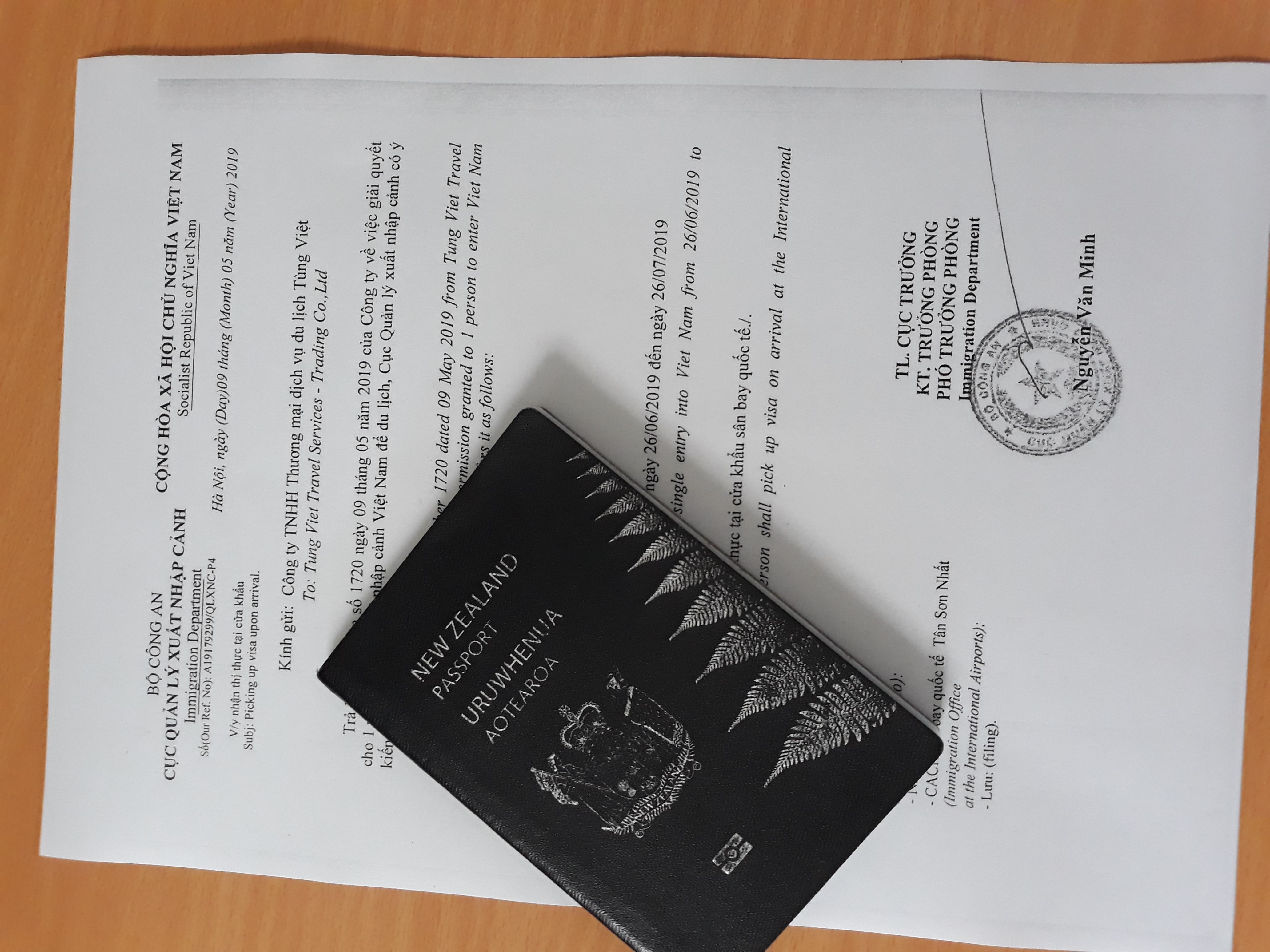
Planning an international trip is always exciting, but sometimes unexpected issues appear at the last minute. Imagine you are a traveller from New Zealand preparing to fly to Vietnam tomorrow. …
For many travellers from New Zealand, organising a trip to Vietnam is exciting—until the visa research begins. A quick search online often brings up a jumble of conflicting advice: some …