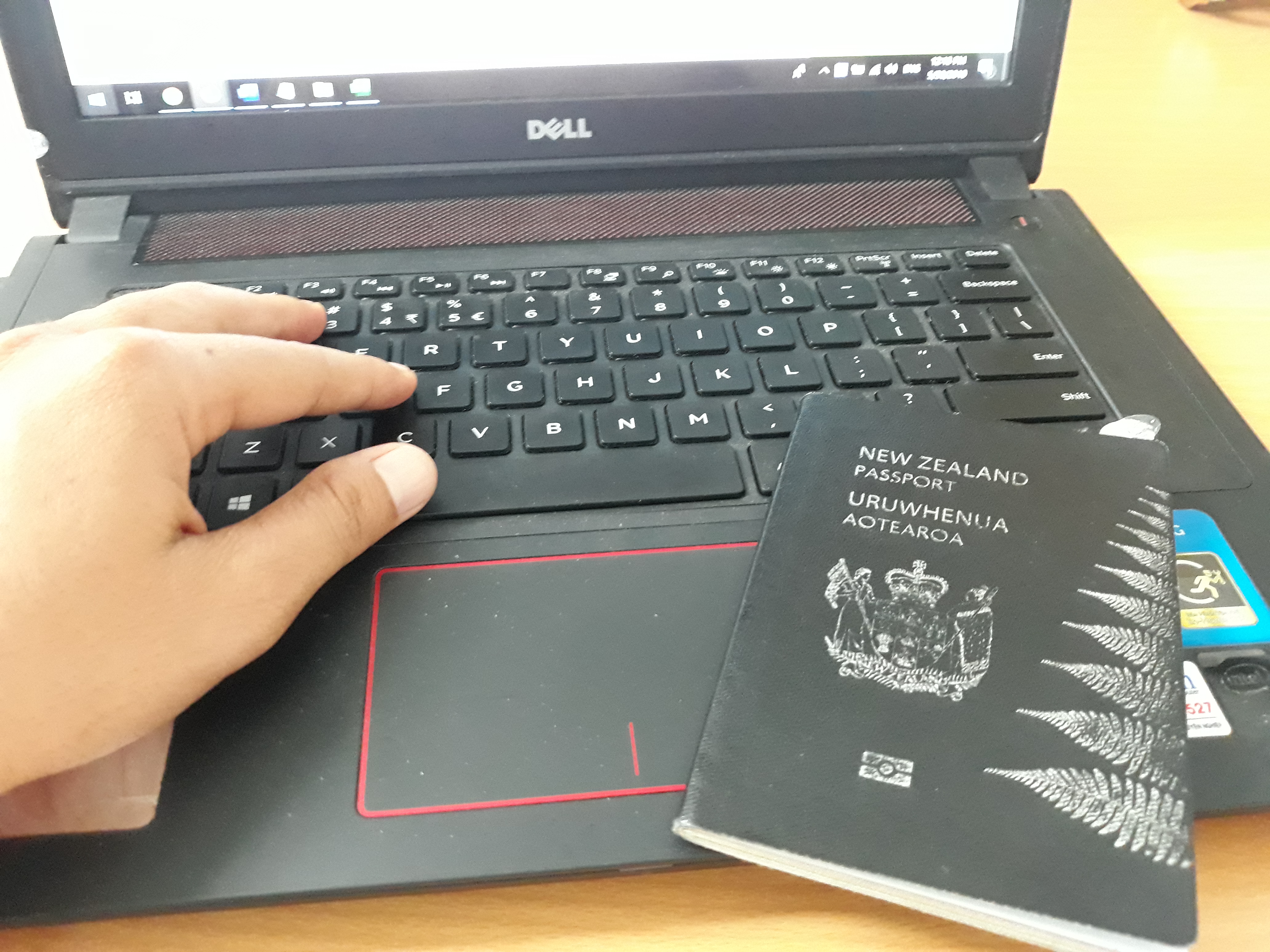
Three months in Vietnam gives you something a short holiday cannot: time. Instead of racing between Hanoi, Ha Long Bay, Hoi An and Ho Chi Minh City, you can travel more slowly, spend longer in places you enjoy and build a much more flexible itinerary. But a longer journey also makes the visa details more important. For New Zealand passport holders planning to visit Vietnam for up to three months, obtaining the visa is only part of the job. You also need to make sure the validity dates and number of permitted entries actually fit the journey you have planned. This becomes especially important if you intend to leave Vietnam for Cambodia, Thailand or another nearby country and then return. Understanding how an up-to-90-day Vietnam e-visa works before applying can help you avoid choosing the wrong entry type, entering unsuitable dates or discovering too late that the visa you requested does not match your itinerary.
New Zealand passport holders can apply for Vietnam’s e-visa system, and an e-visa may be issued with a validity period of up to 90 days, with single or multiple entry depending on the visa requested and issued.
Travellers often search online for a “3-month Vietnam visitor visa” or “3-month tourist visa”. For practical planning, however, it is better to think in terms of an e-visa valid for up to 90 days and then pay close attention to the specific dates and entry conditions shown on the visa that is actually issued.
This distinction matters because “three months” should not be interpreted as an automatic promise that every traveller receives 90 days counted from whichever date they eventually decide to enter Vietnam.
A longer Vietnam trip should therefore begin with three questions:
Once those three points are clear, choosing the appropriate visa arrangement becomes much easier.

When planning a longer stay, do not focus only on the headline “90 days”. Several pieces of information on the visa determine how it can be used.
| Visa Information | Why It Matters |
|---|---|
| Valid from | Shows the beginning of the visa validity period |
| Valid until | Shows the end of the visa validity period |
| Single entry | Generally permits one entry under that visa |
| Multiple entry | Allows multiple entries during the visa validity period, subject to the visa conditions |
The validity dates deserve particular attention. An e-visa is issued with specific dates, so you should plan around what is actually shown on the approved document.
For example, if your plans change and you enter Vietnam later than originally intended, you should not automatically assume the entire visa period shifts forward with your arrival.
Visa validity and actual arrival are not the same concept.
This is one of the most important points for New Zealanders planning a long stay because losing several days may be insignificant on a short trip but can matter considerably when you have designed an itinerary around nearly the full visa period.
In everyday conversation, travellers often use “three months” and “90 days” interchangeably. When dealing with visa dates, it is better to be more precise.
Months have different numbers of days, and the document issued to you will contain actual validity dates. Those dates are much more important than calculating the trip based on the informal phrase “three months”.
When planning your journey:
The safest reference is always the information displayed on the visa itself.
If your travel plans involve staying close to the maximum permitted period, accuracy becomes particularly important. Do not build an itinerary around an estimated departure date without checking it against the visa you receive.
For a three-month journey, the number of entries can be just as important as the length of the visa.
Consider these different itineraries.
Scenario 1: New Zealand → Vietnam → New Zealand
You arrive in Vietnam, spend your entire trip travelling within the country and then fly home. If there is no plan to leave Vietnam and re-enter during that visa period, a single-entry arrangement may fit this type of itinerary.
Scenario 2: New Zealand → Vietnam → Cambodia → Vietnam → New Zealand
Here the situation changes. You enter Vietnam, leave for Cambodia and then want to enter Vietnam again. Your visa arrangement therefore needs to accommodate that return.
Scenario 3: New Zealand → Vietnam → Thailand → Vietnam → Singapore → Vietnam → New Zealand
For an itinerary involving several departures from and returns to Vietnam, the number of permitted entries becomes a central part of visa planning.
A useful way to think about it is:
| Your Travel Plan | Entry Arrangement to Consider |
|---|---|
| Enter Vietnam once and remain until leaving for home | Single entry may be sufficient |
| Leave Vietnam and do not return | Single entry may still fit |
| Leave Vietnam and return during the same trip | Multiple entry becomes important |
| Make several regional trips and repeatedly return to Vietnam | Multiple entry is particularly relevant |
The length of the visa is only half of the decision. The permitted number of entries must also match your itinerary.

A longer-validity e-visa can be particularly useful for New Zealand travellers who want more than a short holiday in Vietnam.
It may suit travellers planning:
For example, three months gives you considerably more flexibility to explore northern Vietnam, travel gradually through the central region and continue south without turning every few days into another transfer.
However, the visa should still be used in accordance with its permitted purpose and conditions. Having a visa valid for a longer period does not automatically authorise activities outside the scope of the permission granted.
Preparing everything before starting the application reduces the chance of stopping halfway through to search for files or confirm basic travel information.
New Zealand travellers should generally have the following information and digital documents ready as applicable:
Before uploading anything, open the files and check them at full size.
Make sure the passport data page is clear and readable. Confirm that you have selected the correct portrait rather than relying on a small file thumbnail.
The longer your intended trip, the more frustrating it can be to discover that a simple application error has affected your plans. A few minutes spent checking the documents beforehand is worthwhile.
Obtaining the appropriate visa becomes much easier when you work from your itinerary backwards rather than selecting options before you know how you intend to travel.
Start with your intended itinerary rather than automatically choosing the longest period simply because it is available.
Ask yourself:
Having a clear timeframe helps reduce mistakes later.
If Vietnam is your only destination, this step is straightforward.
If you are planning a wider Southeast Asian journey, write the countries in order. For example:
New Zealand → Vietnam → Cambodia → Vietnam → New Zealand
That second entry into Vietnam changes the visa planning considerably.
Do this before choosing single or multiple entry.
If you intend to enter Vietnam once and stay until you leave for New Zealand or another country without returning, single entry may be sufficient.
If you plan to leave Vietnam and come back while the visa remains valid, multiple entry may be the more appropriate option.
Do not choose based only on price or convenience. Choose according to the actual itinerary.
Your planned entry date is an important part of a longer visa application because it helps determine the validity period you are requesting.
Check your flight itinerary rather than entering an approximate date from memory.
If your plans are not yet completely fixed, think carefully about the date range before proceeding.
Take the physical passport you intend to use for the trip and check the details directly from it.
Pay particular attention to:
Do not enter passport information from memory or copy it from an old booking without checking it against the actual document.
Your digital files should be clear, correctly selected and suitable for the application requirements.
For the passport image, make sure the relevant data is readable and the important parts of the page are visible. For the portrait, confirm that you are using the intended image and that its quality is adequate.
Small technical mistakes can create unnecessary complications.
Enter the information consistently with the passport and your actual travel plans.
This is particularly important for:
Accuracy is more useful than speed at this stage.
Before proceeding, perform one complete review from top to bottom.
Compare the application with the passport rather than simply rereading what you typed. Check the arrival date against the itinerary and ask yourself one final time whether single or multiple entry genuinely matches the full journey.
New Zealand travellers who want assistance preparing a Vietnam visa application can provide their travel details through https://www.vietnamimmigration.com/apply-vietnam-visa/ for support with the application process and document preparation.
A professional pre-check can be particularly useful for a longer itinerary where visa dates and the number of entries both need to match the travel plan.
After submission, keep the relevant registration or reference information somewhere safe and monitor the email address associated with the application.
Check spam and junk folders as well as the main inbox. If additional information or an amendment is requested, deal with it carefully rather than rushing through the response.
Do not stop at seeing that the application has been approved.
Open the actual visa and compare its details with your passport and itinerary. This final check is especially important for a three-month journey because you need to confirm not only personal information but also validity dates and the permitted number of entries.

The fact that you are requesting a longer validity period does not mean you should build your travel plans around an exact guaranteed processing date.
Processing may be affected by factors such as:
For this reason, avoid treating a general processing estimate as a promise that the visa will definitely arrive on a particular day.
This becomes even more important if you are booking flights, accommodation and regional travel around a long itinerary.
Allowing additional time gives you more room to deal with an unexpected correction or review without immediately turning the visa into a last-minute problem.
A three-month trip usually involves considerably more planning than a short weekend break. Your visa deserves the same approach.
Avoid deliberately leaving the application until immediately before departure. Even when an application appears straightforward, an unexpected amendment, document issue, weekend or holiday can reduce the available time.
When deciding when to apply, consider:
Applying with a reasonable buffer also gives you time to check the issued visa properly rather than receiving it just before leaving for the airport.
A three-month journey deserves more than a last-minute visa application.
This is one of the most important questions for travellers planning a longer stay.
You should not automatically assume that your entire visa validity period starts again from the day you physically enter Vietnam.
The visa is issued with specific validity information. You therefore need to check the dates stated on the approved document and plan your stay within those dates and the conditions of the visa.
Imagine, purely as an example, that a traveller requested a visa based on an intended arrival date but later decided to enter Vietnam significantly later. The traveller should not simply assume that the visa’s end date automatically moves forward by the same number of days.
This is why changing your flight after the visa has been issued deserves careful attention.
Plan according to the validity dates printed on the visa, not according to an assumed “90 days from whenever I arrive” calculation.
Potentially, but the answer depends heavily on the number of entries permitted by the visa.
If you hold a single-entry visa and use that entry to enter Vietnam, leaving the country is fundamentally different from travelling domestically from Hanoi to Da Nang or Ho Chi Minh City. You should not assume that the remaining validity period by itself gives you another entry.
A multiple-entry arrangement is therefore particularly relevant when your itinerary includes leaving Vietnam and returning during the visa’s validity.
| Example Itinerary | What to Think About |
|---|---|
| Vietnam only | Single entry may fit |
| Vietnam → Cambodia → New Zealand | No planned return to Vietnam |
| Vietnam → Cambodia → Vietnam | Re-entry needs to be considered |
| Vietnam → Thailand → Vietnam → Cambodia → Vietnam | Multiple returns make entry type particularly important |
Before applying, draw out the complete itinerary. It takes only a minute and can prevent a major misunderstanding later.
A three-month Southeast Asian journey rarely has to stay within one country. New Zealand travellers may naturally want to combine Vietnam with Cambodia, Thailand, Laos, Singapore or other destinations in the region.
This is exactly where travellers can focus too heavily on visa duration and overlook entry type.
Suppose your itinerary is:
Auckland → Ho Chi Minh City → Da Nang → Hanoi → Cambodia → Ho Chi Minh City → Auckland
Your return from Cambodia to Ho Chi Minh City means you intend to enter Vietnam again.
The fact that the original visa validity period has not yet ended does not, by itself, answer whether that second entry is permitted. The number of entries shown on the visa matters.
Therefore, if regional travel is part of your three-month plan, make the single-versus-multiple-entry decision before submitting the application rather than discovering its importance after leaving Vietnam.
Longer travel does not necessarily make the application more complicated, but it does make some planning errors more consequential.
Common issues worth checking carefully include:
One of the simplest ways to reduce mistakes is to perform two separate reviews.
First, compare all personal details with the passport.
Second, compare all travel-related details with the itinerary.
These are different checks, and both matter.
For a straightforward trip, many travellers primarily need to understand the requirements and prepare their information carefully. For a more complicated three-month itinerary, professional support can also help reduce uncertainty around dates, documents and entry arrangements.
Depending on the case, assistance may include:
A team with more than 15 years of experience handling Vietnam visa matters can also help identify practical issues that travellers may overlook when planning a longer itinerary.
If you would prefer assistance preparing the application, you can provide the relevant passport and travel information through https://www.vietnamimmigration.com/apply-vietnam-visa/ for support based on your planned Vietnam journey.
Professional assistance can help simplify document preparation and reduce avoidable application errors. The final decision on any visa application, however, remains with the competent Vietnamese authorities, so approval should not be treated as something a private service can unconditionally guarantee.
Once the visa has been approved, take a few minutes to perform one final check before travelling from New Zealand.
Compare the visa directly with your passport and itinerary, paying attention to:
Pay particular attention to the final two planning issues discussed throughout this guide: dates and entries.
If you intended to travel around Southeast Asia and return to Vietnam, confirm that the issued visa matches that plan. If you intend to remain in Vietnam for most of the validity period, confirm the end date before finalising the later stages of your itinerary.
Save the complete visa somewhere easily accessible during the journey, keep a backup copy and prepare a printed copy where appropriate.
Obtaining a Vietnam visitor visa for up to three months is not simply about selecting the longest available period and moving on to the next item on your travel checklist. For New Zealand travellers, the better approach is to build the visa around the journey you actually intend to take.
Start with your arrival and departure plans, decide whether you will leave Vietnam and return, choose the appropriate entry arrangement, prepare your passport and digital files carefully, and then check every important detail before submission. Once the visa is issued, verify the validity dates and permitted entries rather than assuming that “90 days” tells you everything you need to know.
If you would like assistance preparing your application and checking the travel details before proceeding, https://www.vietnamimmigration.com/apply-vietnam-visa/ can be used to provide the relevant information for visa support.
For a three-month Vietnam trip, the goal is not simply to obtain a visa marked for a long period. The goal is to have a visa whose validity dates and entry conditions actually match the journey you have spent months planning.