For many Americans planning a last-minute trip to Vietnam—whether for vacation, business, or a personal commitment—nothing is more stressful than seeing your e-visa application sitting in “Pending” status while your …

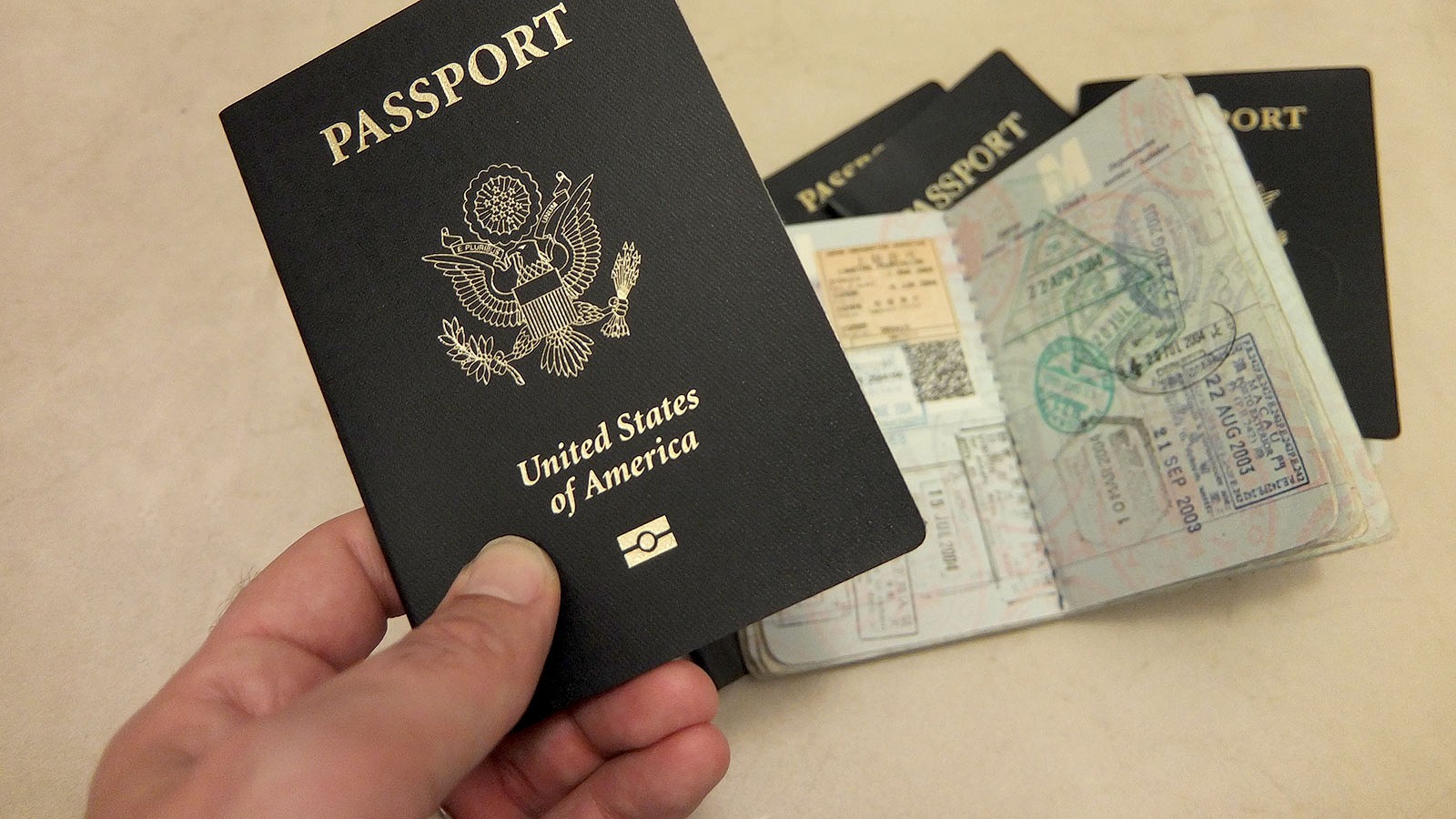
Your departure date is closing in. Your flights are confirmed, your hotels are booked, and your Vietnam itinerary is ready—but your e-Visa application still shows no final result. Each time you check the portal, the status remains under review. Your inbox is empty, and the thought of arriving at the airport without an approved visa is becoming more stressful by the hour.
For U.S. travelers, this situation raises several urgent questions. Will the airline let you board with proof that an application has been submitted? Should you keep waiting, or is it time to arrange another visa? Can an American passport holder switch to Visa on Arrival while the original e-Visa remains pending? Most importantly, how can you protect your trip without creating a second problem through duplicate or conflicting applications?
*A pending application is not the same as permission to enter Vietnam. U.S. citizens generally need a visa before traveling to Vietnam, apart from a limited Phu Quoc-only exception, and travelers should not expect an airline to treat an application receipt or processing screen as a valid entry document. Vietnam’s official e-Visa system issues results electronically, but approval is not guaranteed merely because an application and payment have been completed. *
Visa on Arrival is also widely misunderstood. American travelers should not assume they can fly to Vietnam without prior authorization and arrange everything after landing. Any alternative airport-based process must be organized in advance and must satisfy the applicable requirements before departure. This guide explains what Americans should do when a Vietnam e-Visa is still pending, whether another visa route may be considered, and how to reduce the risk of being denied boarding or forced to change an expensive trip.
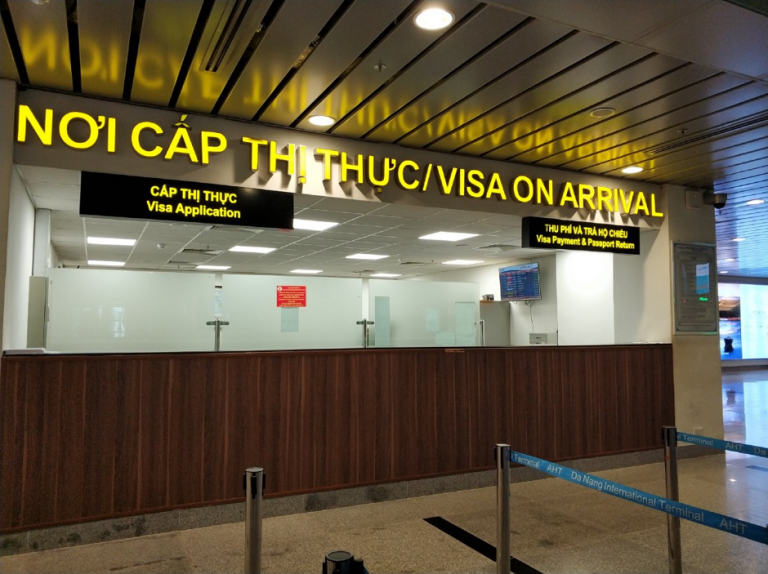
Potentially, but only when an appropriate alternative arrangement is available and the traveler has obtained all required authorization before leaving the United States. An American traveler should never assume that “Visa on Arrival” means showing up at a Vietnamese airport without a visa or pre-approved document.
Vietnam’s airport visa process is not the same as the walk-up arrival permits offered by some destinations. Where an airport-based option applies, the necessary approval generally needs to be arranged before the passenger boards the flight. Without documentation that the airline recognizes as sufficient for travel, the passenger may be refused at check-in.
The safest answer is therefore not a simple yes or no. A U.S. passport holder whose e-Visa is still pending may be able to explore another visa route, but eligibility depends on the purpose of travel, departure timeline, proposed port of entry, available immigration procedures, and the traveler’s individual circumstances.
Americans should also understand that a pending e-Visa has no usable entry value by itself. The U.S. Department of State advises that a visa is required before travel to Vietnam for ordinary visits, except for qualifying stays limited to Phu Quoc. The official Vietnamese portal likewise describes the process as submitting an application, paying the fee, and then receiving the result online—not receiving an automatic right to travel immediately after submission.
For that reason, travelers approaching their departure date should verify whether a legitimate alternative can be completed in time instead of relying on the hope that the pending application will suddenly be approved.
A delayed e-Visa does not automatically mean that the application has been rejected. Processing can take longer when application volume rises, especially around holidays, peak travel periods, or other times when immigration authorities receive unusually large numbers of submissions.
The official Vietnam e-Visa instructions currently state that processing may take up to five working days after complete documents are received. “Working days” are important: weekends, public holidays, incomplete documents, or requests for further review can make the real waiting period longer than a traveler expects.
Application quality is another major factor. A passport-page image that is blurry, cropped, poorly lit, or difficult to read may require extra checking. The same applies to an unsuitable portrait, incomplete address information, an incorrect entry checkpoint, or travel dates that do not align with the intended itinerary.
Small data-entry mistakes can also create significant delays. American applicants should make sure that their full name, date of birth, nationality, passport number, passport expiration date, and other identifying information match the passport exactly. A missing letter, transposed number, or incorrect date may not look serious on the application screen, but it can affect processing or make an issued visa unusable.
Payment problems can cause confusion as well. Completing a payment step does not mean that the application has already been approved. Travelers should confirm that the application was properly recorded and continue checking the official status page rather than relying only on a payment receipt.
If the status has not changed, check the email address used in the application, including spam and junk folders. Then review the submitted information and compare the remaining processing time with the flight schedule. The closer the departure becomes, the less practical it is to wait without evaluating a backup plan.
Start by checking the application through the correct portal using the exact details associated with the submission. Travelers occasionally enter the wrong reference code, email address, or date of birth when checking the result and mistakenly conclude that the application has disappeared or stopped moving.
Next, review every important field from the original application. Pay particular attention to the passport number, full legal name, nationality, birth date, passport validity, expected arrival date, and selected entry checkpoint. If the information is accurate, note how many Vietnamese working days have passed since complete submission.
Do not treat the payment confirmation, application code, or “processing” status as a travel document. These records only show that an application exists. They do not prove that Vietnam has granted entry permission, and they should not be expected to satisfy an airline’s document check.
The next step depends on the departure date. An American traveler with several weeks remaining may have time to continue monitoring the official process. Someone flying within a few days should consider obtaining a professional assessment of the existing application and any urgent options that may be legally available.
Travelers should avoid panic-filing multiple applications with different dates, ports, or personal details. Duplicate submissions do not necessarily accelerate a decision. In some cases, they may create confusion because the traveler now has several records containing inconsistent information.
A better approach is to establish exactly what is wrong—or whether anything is wrong at all—before submitting another request. That allows the traveler to choose a backup route based on facts rather than anxiety.
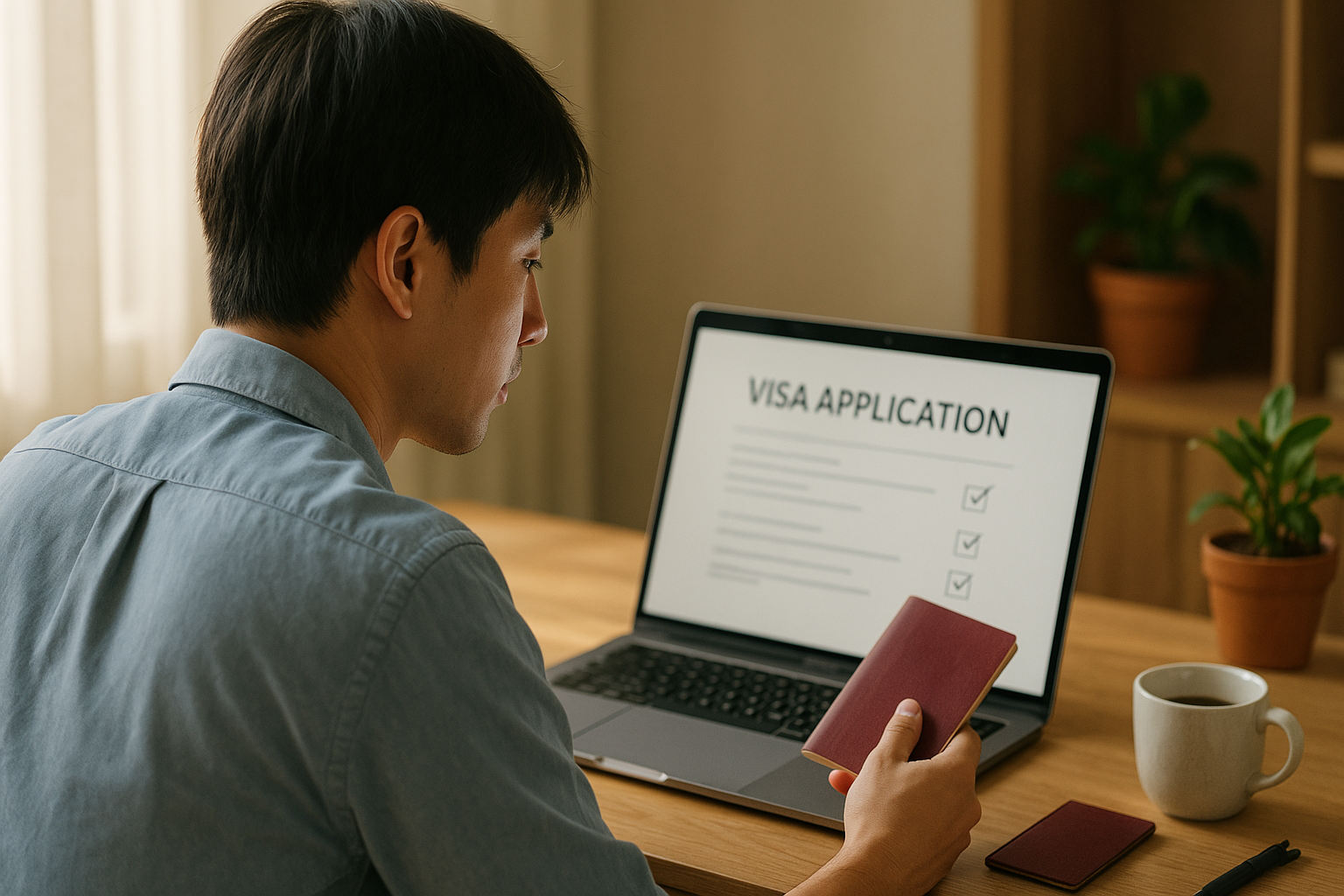
Americans may investigate another Vietnam visa solution while an e-Visa remains pending, but they should not assume that submitting a second application is automatically permitted, helpful, or faster.
Before starting another process, confirm whether the proposed option is genuinely available for the traveler’s nationality, purpose of entry, arrival airport, and departure schedule. It is also essential to understand what documents must be issued before check-in and what steps, if any, would remain after landing.
All information across the applications must match the passport. The traveler’s name, passport number, nationality, date of birth, intended arrival date, and reason for travel should be consistent. Conflicting data may complicate document checks or trigger additional questions.
The traveler should also know which visa or approval will actually be used for entry. If an e-Visa and another document are issued at different times, compare their validity dates, permitted number of entries, approved entry checkpoints, and other conditions. Carrying two documents does not mean they can be used interchangeably.
Americans should be especially careful with websites that describe Visa on Arrival as a guaranteed walk-up service. Vietnam’s official e-Visa platform is operated by the Ministry of Public Security, and the U.S. Embassy advises travelers to verify Vietnamese visa requirements before departure. Any third-party service should be understood as an intermediary, not the government authority making the final immigration decision.
When time is limited, a professional review may help determine whether the existing e-Visa should simply be monitored, whether an error needs to be addressed, or whether another pre-arranged option may be appropriate.
When the flight is only a few days away, the order of action matters. First, confirm the status of the existing application. Second, check for requests, corrections, or notifications. Third, verify the passport information and identify how many working days remain before departure.
After those checks, assess whether the existing application still has a realistic chance of being completed before the airline’s document deadline. Remember that receiving a result shortly before departure may still leave little time to inspect the visa for errors, print it, or resolve a mismatch.
For eligible urgent cases, an experienced visa support provider may be able to review the traveler’s documents, identify preventable mistakes, and advise whether an accelerated solution is currently available for the itinerary.
American travelers who need case-specific assistance can submit their information through Vietnam Visa Services:
The value of professional support is not limited to speed. A careful pre-submission review may catch problems involving the passport scan, portrait, travel dates, name order, selected checkpoint, or passport validity before those issues lead to another delay.
A service with extensive Vietnam visa experience can also help travelers understand what documents they need before leaving the United States, what they may need to present at check-in, and whether their proposed entry airport is compatible with the selected visa arrangement.
Round-the-clock assistance can be particularly useful when a traveler is dealing with U.S.–Vietnam time differences or a flight departing outside normal business hours. However, applicants should read all service terms carefully, including processing commitments, refund conditions, exclusions, and the distinction between assistance from a private company and final approval by Vietnamese authorities.
No responsible provider can override immigration law or guarantee how a government agency will decide every application. Travelers should be cautious of unconditional promises and should make sure that any claimed guarantee is clearly defined in writing.

The first major mistake is applying too close to departure. Travelers sometimes plan around the shortest advertised processing period without allowing for weekends, holidays, incomplete documents, or technical problems. The official instructions refer to working days, so a five-day processing window may cover a much longer span on the calendar.
Another mistake is believing that “pending” means “almost approved.” A status page does not tell the traveler whether the file will be approved next, selected for additional review, or returned for correction. Until the actual e-Visa has been issued, the traveler should not assume the case is complete.
Submitting multiple applications without first identifying the problem is also risky. One application may list Hanoi as the entry checkpoint, another may list Ho Chi Minh City, and a third may contain a different arrival date. Those inconsistencies can create unnecessary uncertainty.
American travelers should also avoid entering shortened names or familiar names that do not match the passport. The visa should reflect the legal identity shown in the machine-readable travel document, not the name the traveler normally uses socially.
Choosing the wrong entry checkpoint is another preventable issue. An approved e-Visa must be compatible with the traveler’s actual entry plan. Before submitting, verify the airport, land border, or seaport through which entry will occur.
Booking an entirely nonrefundable trip before receiving the visa can magnify the financial impact of a delay. Where possible, choose flexible flights, hotels, and tours until entry authorization has been confirmed.
Finally, do not stop checking once the visa arrives. Review the full name, passport number, nationality, date of birth, validity period, number of entries, and approved checkpoint immediately. An approved visa containing incorrect information may still cause problems at the airline counter or immigration inspection.
An alternative pre-arranged visa solution may be possible in certain cases, but Americans should not travel expecting to obtain a visa at the airport without prior authorization. Availability must be confirmed for the traveler’s specific circumstances before departure.
Vietnam’s official e-Visa instructions state that processing may take up to five working days after complete documents are received. Actual calendar time can be longer when weekends, holidays, incomplete information, or additional review are involved.
A pending application is not an approved visa. Americans should expect to need valid entry authorization before traveling, and an airline may deny boarding when the required documents have not been issued.
They may be able to explore another process, but filing a duplicate application without checking the original record may create conflicting information. The traveler should confirm eligibility and obtain case-specific guidance first.
They should immediately check the application status, review their email, verify all passport details, and determine whether an urgent lawful alternative is available. They should not rely on an application receipt as permission to board.
Urgent assistance may be available for eligible cases, depending on the departure date, nationality, purpose of travel, supporting documents, and current immigration procedures. Availability should be verified rather than assumed.
U.S. citizens generally need a visa before traveling to Vietnam, subject to a limited Phu Quoc exception. An airline may refuse boarding if the traveler cannot show acceptable entry documentation.
An airport-based process may exist in limited, pre-arranged circumstances, but it should not be understood as a visa that any American can request after arriving without advance approval.
The best option depends on how soon the flight departs, whether the existing application is accurate, the traveler’s purpose of entry, and which procedures are currently available. A document review should come before a new application.
Not automatically. Restarting may waste time or produce a second conflicting file. The better decision depends on whether the first application contains an error, how long it has been processing, and how soon the traveler is scheduled to leave.
A delayed e-Visa can be frustrating, but the worst response is to assume that approval will arrive at the last moment. A pending status does not provide entry authorization and should not be treated as enough to board a Vietnam-bound flight.
Check the existing application carefully, calculate the remaining time in working days, and address any problem as soon as it becomes apparent. If the departure is close, obtain a professional assessment before filing additional applications or changing the itinerary.
U.S. travelers who need help reviewing their documents or evaluating urgent Vietnam visa options can submit a request here:
Applying early, entering passport information exactly as printed, selecting the correct checkpoint, and responding quickly to delays are the most effective ways to protect a trip from the United States to Vietnam.
For many Americans planning a last-minute trip to Vietnam—whether for vacation, business, or a personal commitment—nothing is more stressful than seeing your e-visa application sitting in “Pending” status while your …