
Many travelers only realize how confusing “First name” and “Last name” can be when they’re already staring at the Vietnam E-visa application form—minutes away from clicking Submit. The problem isn’t that the form is complicated. The problem is that the words feel familiar, but their meaning in visa systems is not the same as everyday conversation. Across different countries, cultures, and passports, names can be ordered differently, split into multiple parts, or written in ways that don’t neatly fit “first” and “last.” Vietnam’s E-visa system, like most immigration systems, does not interpret your culture or guess what you meant. It matches data. If your E-visa name does not match your passport precisely, you risk delays, rejection, or problems at the airport. This article gives an official-style explanation of the international terms—Given name, Surname, Family name, First name, Last name—and shows how the Vietnam E-visa system typically understands them, so you can enter your name correctly and travel with confidence.
In everyday life, “first name” often means “the name people call you,” and “last name” means “your family name.” But visa forms and immigration databases use these labels in a more technical, standardized way. Understanding that difference is the first step to filling the Vietnam E-visa correctly.
First name (in visa forms) usually corresponds to your given name(s)—the personal names assigned to you, which may include one or more words. In many passports, this is labeled as Given name or Given names. Importantly, it can include your middle name (or multiple given names), because many countries treat “middle names” as part of the given-name block.
Last name (in visa forms) typically corresponds to your surname or family name. In passports, this is commonly labeled as Surname, Family name, or sometimes Last name depending on the country.
So when you see “First name” and “Last name” on an E-visa form, do not interpret it as “the name you prefer” and “the name at the end.” Instead, interpret it as:
That sounds simple, but confusion happens because different cultures arrange names differently on paper, and because some passports include multi-part surnames or multiple given names.
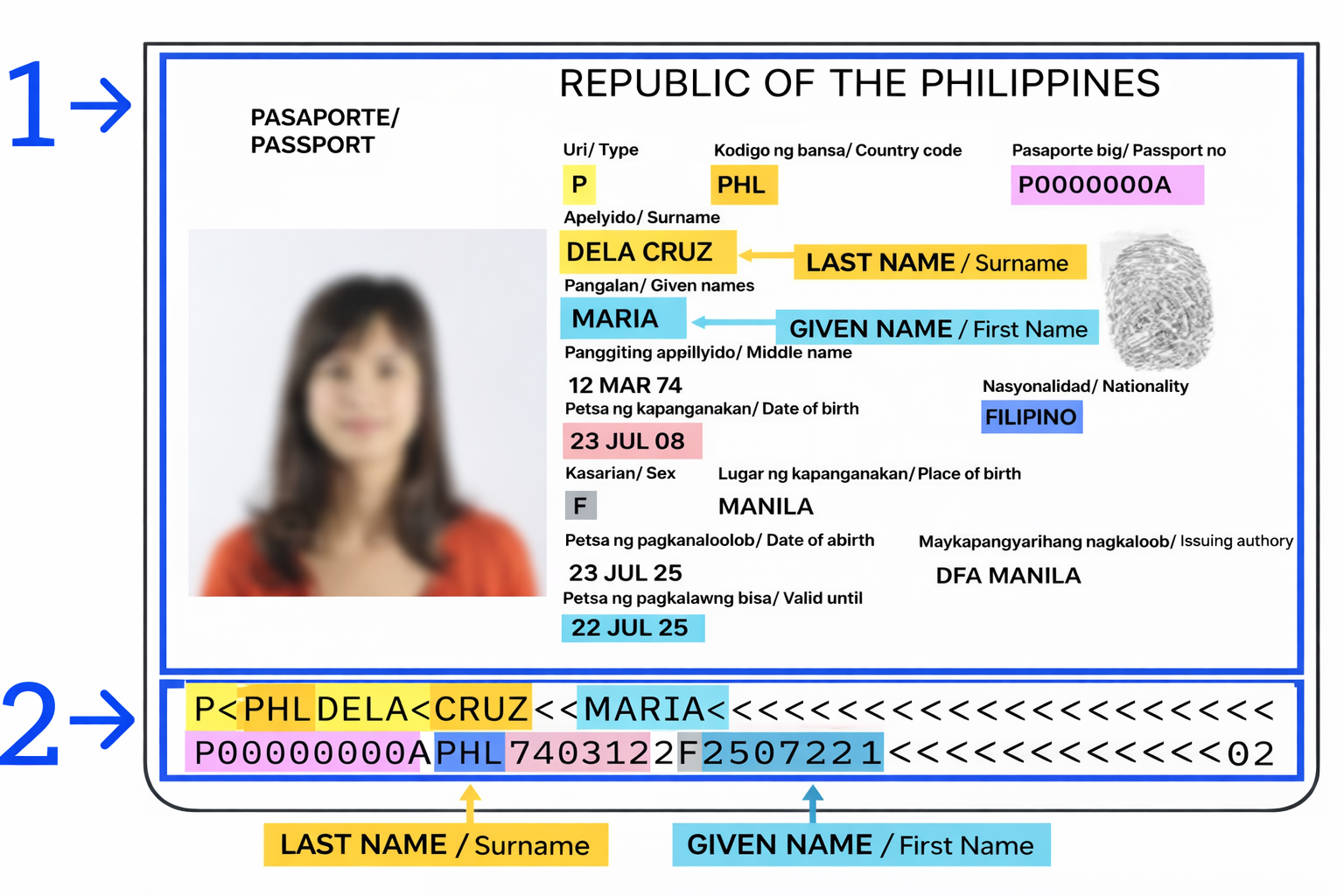
These terms overlap, but each has a specific role in international travel documents. Visa forms often use “First name” and “Last name,” while passports often use “Given name(s)” and “Surname.” Knowing how these map to each other prevents costly mistakes.
Given name / Given names
Surname / Family name
Family name is essentially synonymous with surname in most administrative contexts. When a passport uses “Family name,” treat it as the same field as “Surname.”
The key concept is this: visa forms are not trying to understand your culture—they are trying to match your passport fields. If your passport says “Surname” and “Given name,” those are the most authoritative labels you should follow when entering your information into a visa system.
Vietnam’s E-visa system is designed to process applications efficiently and consistently. It relies heavily on the information you submit and how well it matches your passport identity page. This is why name-field interpretation matters so much.
In practice, the Vietnam E-visa application typically expects you to enter:
The system generally does not “fix” mistakes for you. If you place your surname into the first-name field, or if you omit part of your given name, you may end up with a visa that does not match your passport. Even if your application gets approved, mismatches can create problems with airlines or immigration checks because your visa and passport must correspond.
A useful mindset is this: the Vietnam E-visa form is a structured database entry. It is not a conversation. It is not a cultural name parser. It is an identity record. Your job is to replicate passport data accurately within the required fields.
Long names are one of the most common reasons people second-guess the form. Travelers see the “First name” field and assume they should enter only one word. That assumption is risky.
If your passport shows multiple given names, you should generally include all of them in the First name field, in the same order, without abbreviations. If your surname is composed of two words, you should generally include both words in the Last name field, exactly as shown.
Here are the rules that reduce nearly all confusion:
If you’re unsure how your passport separates surname and given names, look at the labels on the passport identity page. Many passports explicitly label Surname and Given name(s). Those labels should guide your entries more than cultural habit.
Vietnam’s E-visa form uses English labels, but travelers come from naming systems that don’t always align with a simple “first/last” split. Below is how to approach common regional naming patterns—always with the same principle: follow the passport labels and replicate what is printed.
Indian passports may present names in ways that vary by region and family tradition. Some travelers have multiple given names, some have initials, and some have surnames that are not used daily.
How to handle it for Vietnam E-visa:
Practical example:
The common mistake is entering only “RAHUL” as first name and dropping “KUMAR.” If “KUMAR” appears as part of your given names in the passport, include it.
Middle Eastern names can include multiple components (personal name, father’s name, grandfather’s name, family name). Different countries print these differently on passports. The crucial point is: do not try to “understand” the genealogy inside the form. The visa system only needs a correct match to the passport’s fields.
How to handle it:
If your passport lists a long given-name sequence, it belongs together in the First name field—unless the passport label indicates otherwise.
Spanish naming often uses two surnames (paternal and maternal). Many Spanish and Latin American passports treat these together as the surname/family name, which can be the main source of confusion.
How to handle it:
Example:
The common mistake is using only “GARCIA” as last name. If the passport presents the surname as “LOPEZ GARCIA,” the visa should reflect that.
Vietnamese names often place the family name first in everyday writing (e.g., “NGUYEN Thi Minh Anh”). But in passports, the fields are typically labeled and structured to align with international travel standards. So even if you know Vietnamese names culturally, you should still follow the passport’s labels.
How to handle it:
Example structure:
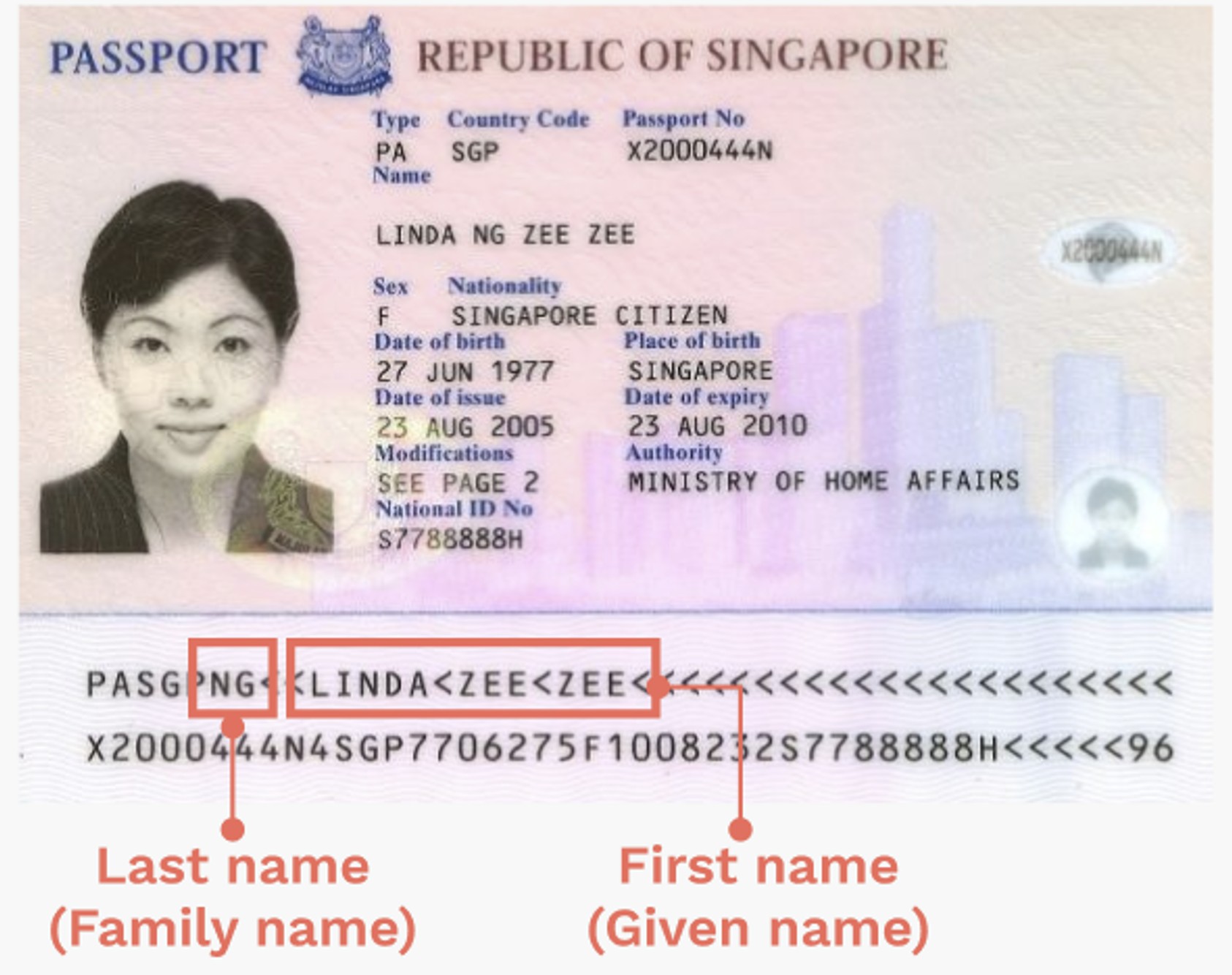
This is the most “official” point to internalize: visa forms are legal-administrative records built for identity matching. They are designed for databases, scanning, and consistency—not cultural nuance.
If you fill out a visa form based on how people address you, or based on your local naming tradition, you can accidentally create a mismatch with your passport. And in border control, mismatch equals risk.
The safest, most professional approach is always:
This mindset alone prevents the majority of E-visa name errors.
Even careful travelers can hesitate when:
If you’re not completely certain, it can be smarter to get your application reviewed before submission. A professional check costs far less than a missed flight or a last-minute reapplication.
This is where VietnamImmigration.com can help. If you use their Vietnam visa service, your details are reviewed against your passport to reduce the risk of common errors—especially name order, spacing, and multi-part names. For travelers on a tight schedule, the service can also support faster processing (including urgent options), and provide guidance if your case is unusual. For many applicants, the biggest benefit is peace of mind: knowing that what you submit matches what the immigration system expects.

1) Is “First name” always just one word?
No. On Vietnam E-visa forms, “First name” usually corresponds to your given name(s), which can be one word or multiple words. If your passport’s given name line includes more than one word, the safest approach is to enter all of them in the First name field.
2) Can I remove my middle name to make it shorter?
It’s not recommended if the middle name appears on your passport identity page as part of your given names. Removing it can create a mismatch between visa and passport, which can lead to delays or travel issues.
3) What if my passport shows my full name in one line?
Look for labels like Surname and Given name(s). If your passport labels are clear, follow them. If labels aren’t obvious, focus on how the passport identifies the family name versus given names and keep the visa consistent with that structure.
4) Does Vietnam E-visa rearrange names automatically?
Generally, no. The system typically processes what you enter. That’s why entering the correct name components in the correct fields is essential.
5) What happens if my visa name order is different from my passport?
You risk problems at multiple stages: application approval, airline check-in/boarding, and entry at immigration. In many cases, the safest fix is to submit a corrected application rather than travel with a mismatch.
Most name-order problems don’t happen because travelers are careless—they happen because international terms are misunderstood. Once you correctly understand how “First name,” “Last name,” “Given name(s),” and “Surname” map to passport data, the Vietnam E-visa form becomes much easier to complete.
Follow your passport labels, copy your name accurately, and don’t rely on cultural habit. If your name is complex and you’re unsure, a professional review can prevent costly mistakes and help your Vietnam trip start smoothly.