Flight tomorrow, visa still not ready? You’re not the only one. Every week, countless Canadian travellers face the same stressful moment — realizing, sometimes the night before their flight, that …

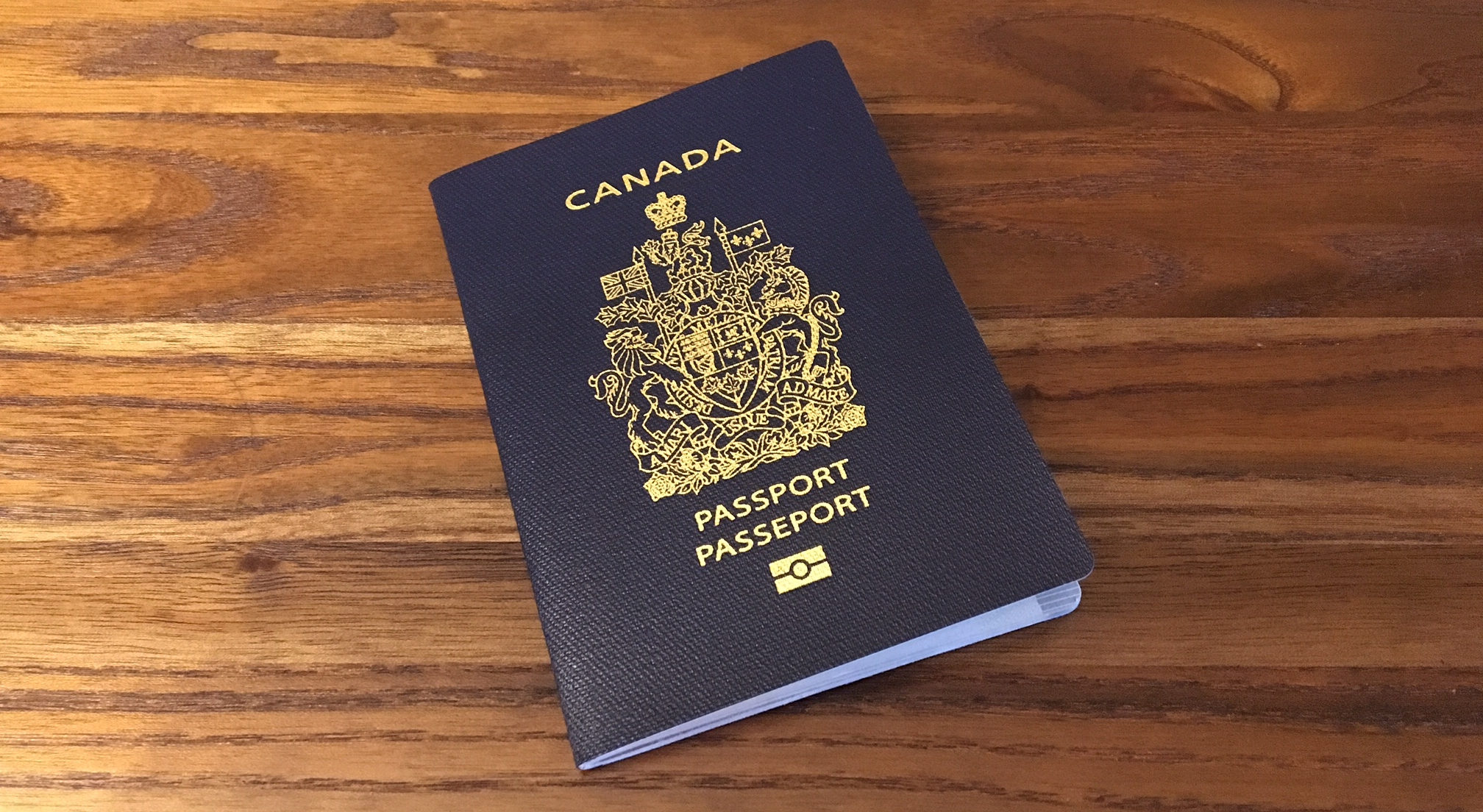
For many Canadians planning a trip to Vietnam, the visa process can feel a bit more complicated than expected. The rules differ depending on the type of visit, and regulations have shifted over the years, leaving plenty of outdated or misleading information online. It’s not uncommon for Canadian travellers to assume they can simply arrive in Vietnam and sort out the visa later, only to learn at the airline counter that they need official approval before being allowed to board. Others discover—sometimes too late—that Vietnam requires a specific document known as a visa pre-approval letter before a visa on arrival can be issued. This guide was written to help Canadian visitors understand the current requirements clearly and accurately. It outlines the purpose of the pre-approval letter, who qualifies for one, what documents you’ll need, and how the application process works, all based on Vietnam’s official immigration standards. With the right preparation, travelling from Canada to Vietnam becomes much smoother and far less stressful.
Vietnam does not offer visa-free entry to Canadian passport holders, which means Canadians must organise entry documents before travelling. For those planning to obtain a visa on arrival at a Vietnamese airport, the pre-approval letter is an essential prerequisite. Without this letter, airlines are instructed not to board passengers, as Vietnam requires prior clearance before issuing an arrival visa. This is a common point of confusion for Canadians who expect the visa on arrival to work the same way as it does in other countries.
Many Canadian travellers assume that a “true” visa on arrival exists in Vietnam. In reality, Vietnam’s system is a two-step process: travellers must first be screened by the immigration authority through the pre-approval mechanism, and only afterwards can they receive their visa at the airport. The pre-approval letter shows that your information has already been reviewed and accepted by immigration officers, allowing airport authorities to issue your entry visa without further complications.
Understanding this requirement is crucial because having the letter avoids last-minute stress at check-in or unexpected denial at the border. Airlines in Canada and abroad follow Vietnam’s entry rules strictly and routinely request the letter before allowing passengers to board. With the document properly prepared, Canadian travellers can arrive in Vietnam confident that the entry process will run smoothly.
The Vietnam visa pre-approval letter is an official immigration document authorised by the Vietnam Immigration Department. It’s not a general travel confirmation or a convenience form—rather, it is a government-approved document verifying that the traveller has been cleared to obtain a visa upon arrival. The letter is issued only by the immigration authority through legally recognised agents and follows a formal review of the traveller’s details.
The approval letter is used as a pre-screening tool to ensure that visitors meet Vietnam’s entry requirements before boarding a flight. It signals that your identity, passport details and travel intentions have been examined and accepted for visa issuance. When Canadians present the letter at the airport in Vietnam, immigration officers are able to process the visa efficiently because the preliminary review has already been completed.
From a regulatory standpoint, the pre-approval letter is part of Vietnam’s structured immigration framework. It allows the government to maintain controlled entry while offering a user-friendly option for international travellers. For Canadians, it functions as a legal green light confirming your eligibility to receive your visa at a Vietnamese airport. Without it, the visa-on-arrival system simply cannot be used.

Canadian citizens are eligible to apply for the pre-approval letter online, making the process straightforward. The first requirement is that your passport must remain valid for at least six months beyond your planned arrival date. Travellers whose passports are damaged or close to expiry may experience delays or rejection, as Vietnamese immigration follows strict documentation standards.
Another aspect considered during the review process is previous compliance with Vietnam’s immigration laws. Canadians who have never overstayed a visa or violated regulations will generally pass this stage with ease. The system is designed to process high volumes of applicants, and most Canadians find it easy to meet the basic criteria.
The documentation needed is minimal. Typically, you only need to provide a clear digital copy of your passport information page and basic trip details such as your intended entry point and the date you plan to arrive. While a confirmed return ticket isn’t necessary, providing accurate travel information helps prevent errors that could delay approval. The streamlined nature of the requirements makes the process manageable even for first-time travellers to Vietnam.
Step 1: Prepare your information
You’ll need a high-quality scan of your passport’s photo page, along with your planned arrival date and the airport where you intend to land. These details form the basis of your application, and accuracy is important.
Step 2: Submit your online application via VietnamImmigration.com
This platform enables travellers to enter their information directly into a format that matches the Vietnam Immigration Department’s official requirements. You’ll be asked to confirm your personal details, travel itinerary and visa type before submitting the request.
Step 3: Wait for immigration processing
Once your application has been submitted, immigration officers review your documents to ensure compliance with their entry rules. If everything checks out, they authorise the issuance of your approval letter. Processing times vary depending on the service selected and the workload at the time of application.
Step 4: Receive and print your approval letter
The approved letter will be emailed to you. You must print a physical copy—a black-and-white print is perfectly acceptable—and keep it with your travel documents. Airlines require this letter before check-in, and immigration officers in Vietnam will request it upon arrival.

For most Canadian applicants, standard processing takes three to five business days. This timeframe allows immigration officers to review your documents, verify your identity and confirm your eligibility for visa issuance.
If you’re travelling soon, urgent processing is available. Under urgent service, approval may be completed within two to eight hours, depending on when the request is submitted and current workload levels. Although urgent processing involves additional fees, it can be extremely helpful for travellers dealing with sudden changes or tight schedules.
Urgent service is especially recommended for Canadians who:
• have flights departing within the next few days
• recently made changes to their travel itinerary
• must provide proof of visa eligibility to their airline
• previously encountered errors or delays in their application
Choosing the appropriate processing time can help ensure a smooth departure and avoid unexpected disruptions to your travel plans.
Once you arrive in Vietnam with your approval letter, you’ll follow the visa-on-arrival procedure. This system is designed to handle travellers who have already been cleared by immigration authorities, making the process relatively efficient.
Required documents:
• Printed copy of your pre-approval letter
• Completed entry/exit form
• Two passport-size photos (4 x 6 cm)
• Original Canadian passport
• Cash for the visa stamping fee (CAD, USD or VND accepted, with USD preferred)
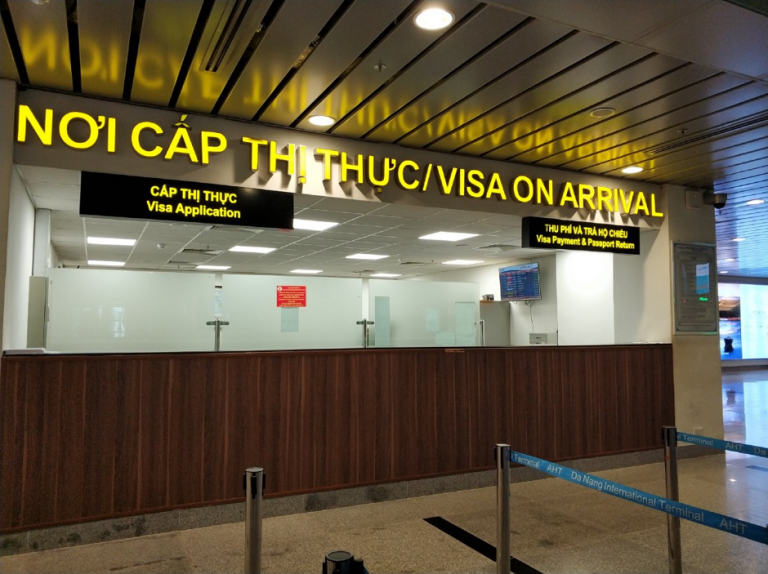
After landing, head directly to the Visa on Arrival counter, located before immigration checkpoints. Present your documents, pay the stamping fee and wait for officers to issue your visa. Processing times generally range from 15 to 30 minutes, depending on the number of arrivals.
As payment must be made in cash, having USD on hand helps speed up the process. Once the visa is stamped into your passport, you can proceed through immigration and continue your journey into Vietnam.
How long can Canadians stay in Vietnam with a visa issued through a pre-approval letter?
Tourist visas usually permit stays of 15 to 30 days. Business, work and other specialised visas may offer validity ranging from three months up to two years, depending on supporting documents.
Can Canadians extend their Vietnam visa after arriving?
Tourist visas generally cannot be extended within Vietnam. Business-related and long-term visas, however, may be extended by applying through the Vietnam Immigration Department.
Do Canadians need a return ticket to apply for the approval letter?
A return ticket is not required when applying for the approval letter. However, travellers must provide their intended arrival date, departure date and selected entry point. Some airlines may ask for onward travel information at check-in.
How far in advance should Canadians apply for a pre-approval letter?
Travellers may apply well ahead of time, even months in advance. If your trip dates are not yet finalised, it is best to wait until plans are confirmed. For safety, Canadians are encouraged to apply at least ten days before departure.
Does the approval letter itself count as a visa for Canadian citizens?
No. The approval letter is not the visa. It authorises travellers to receive the visa upon arrival at the airport. The visa only becomes valid once it has been stamped into your passport.
Flight tomorrow, visa still not ready? You’re not the only one. Every week, countless Canadian travellers face the same stressful moment — realizing, sometimes the night before their flight, that …
Dreaming of cruising through Ha Long Bay or exploring the lantern-lit streets of Hoi An? If you’re a Canadian traveler planning a trip to Vietnam, getting the right visa should …
Vietnam is no longer Southeast Asia’s best-kept secret—it’s a destination on every Canadian traveller’s radar. From the floating markets of the Mekong Delta to the lantern-lit charm of Hoi An, …
No time to read lengthy guides? Here are the 5 fastest and most effective ways for Canadian travelers to get a Vietnam visa — some in just a few working …
Every day, we receive messages like this from Canadian travelers:“My flight is in 48 hours. Can I still get a visa to Vietnam?”The answer is a confident YES — and …