Australian citizens planning a Vietnam travel visa may find the process stressful at the time constraints are tight. All Australian citizens require a visa to enter Vietnam. Standard processing takes …

Last updated: 16 October 2026 | Reading time: 10 minutes
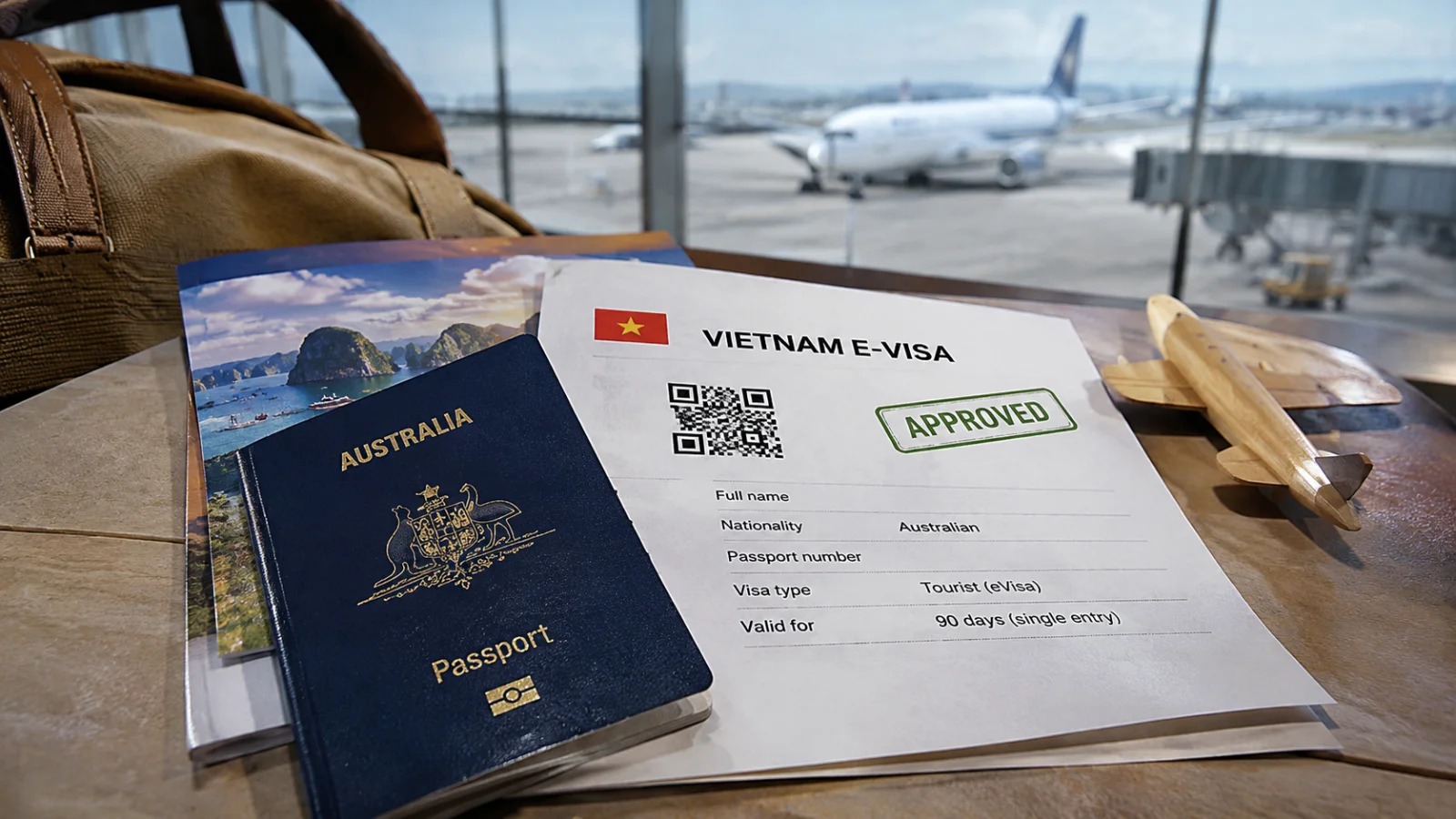
Do Australians need a visa for Vietnam? Yes. There’s no general visa exemption for Australian passport holders, so you need a visa before you clear immigration. The simplest route is the official eVisa: US$25 (about A$36) for a single entry or US$50 (about A$72) for multiple entries, valid for up to 90 days and usually issued in 3 to 5 working days.
Here’s the short version of getting a Vietnam visa for Australian passport holders, whether you’re flying out of Sydney, Melbourne, Brisbane or Perth: it’s a short online form, and it works for holidays and short business trips alike. You don’t need to visit an embassy or find a Vietnamese sponsor. Where people usually trip up isn’t the price. It’s the small stuff, like a typo in the passport number, the wrong entry airport, or leaving it until the last week.
Quick facts for Australians (October 2026)
| Item | Details |
| Visa required? | Yes, except direct Phu Quoc stays of up to 30 days |
| Best option for most travellers | Official eVisa at evisa.gov.vn |
| Maximum stay | Up to 90 days (single or multiple entry) |
| Government fee | US$25 (about A$36) single / US$50 (about A$72) multiple, non-refundable |
| Processing time | 3 working days officially; usually 3 to 5 working days in practice |
| Passport validity | At least 6 months from your arrival date |
| Embassy visit needed for eVisa? | No |
A$ amounts are approximate, based on about 1 USD = 1.44 AUD in mid-October 2026. Your card issuer may add an international transaction fee.
Need a hand with the application?
We’re a private visa service based in Vietnam, and we’ve been helping international travellers for more than 15 years. We arrange tourist, business and transit visas through the two main routes, eVisa and visa on arrival. If you’d like help, this is what we do:
Start your Vietnam visa application →
We’re a private company, not a government website, so a service fee applies on top of the official government fee.
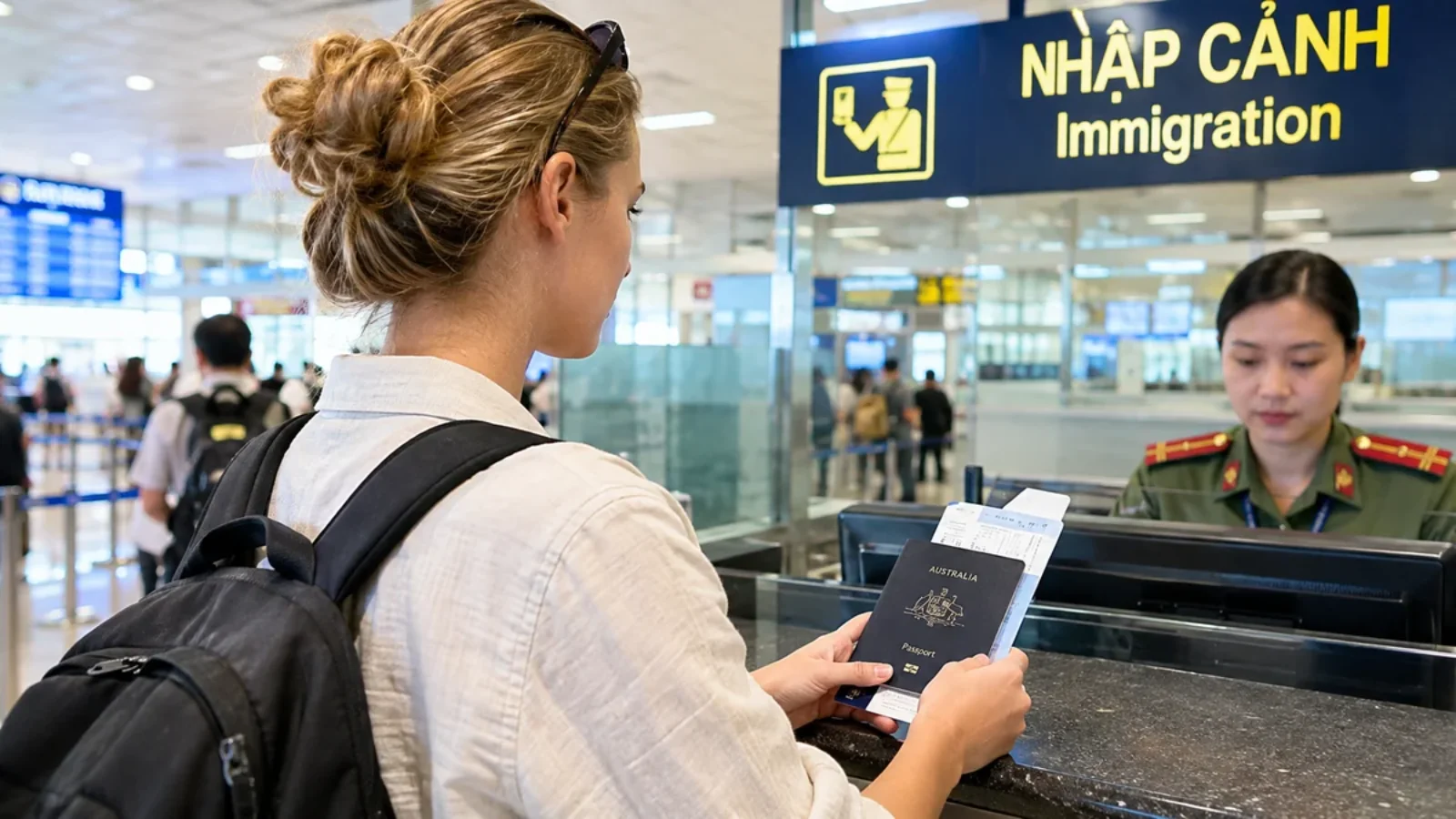
Australian passport holders don’t get general visa-free entry to Vietnam. That goes for tourists, business travellers and anyone who clears immigration during a stopover. The one notable exception is Phu Quoc: you can stay up to 30 days without a visa if you fly directly into and out of the island, without passing through any other Vietnamese city. If your plans include the mainland, you’ll need a visa.
Here’s the checklist we run through with every Australian traveller. Not sure whether you can use an eVisa? Check your Vietnam visa eligibility.
| Requirement | What you need | Notes |
| Visa | eVisa, visa on arrival (approval letter) or embassy visa | No general visa-free entry (Phu Quoc is the exception) |
| Passport | Valid Australian passport with at least 6 months of validity and blank pages | Name and number must match your application exactly |
| Entry and exit points | The ports you selected when applying | An eVisa only works at the ports named on it |
| Accommodation | Address for your first night in Vietnam | Needed for the eVisa form and may be checked at immigration |
| Onward or return travel | Flight or other ticket out of Vietnam | Airlines and officers may ask to see it |
| Printed visa | A printed eVisa or approval letter | Keep a digital backup on your phone |
One heads-up: entry formalities do change. Since April 2026, travellers arriving at Tan Son Nhat airport in Ho Chi Minh City (Saigon) need to fill in a free digital arrival card. It doesn’t replace the visa, but it’s worth checking the Australian Government’s Smartraveller page for Vietnam and the official eVisa portal a few days before you fly.
A word of warning about look-alike websites. The only official eVisa site is evisa.gov.vn. Plenty of private sites show up when you search ‘Vietnam visa’, and they add their own service fee on top of the government price. They’re legal, but you’ll pay less by applying directly. If you’re not sure whether a site or the visa on arrival system can be trusted, read is the Vietnam visa on arrival a scam?
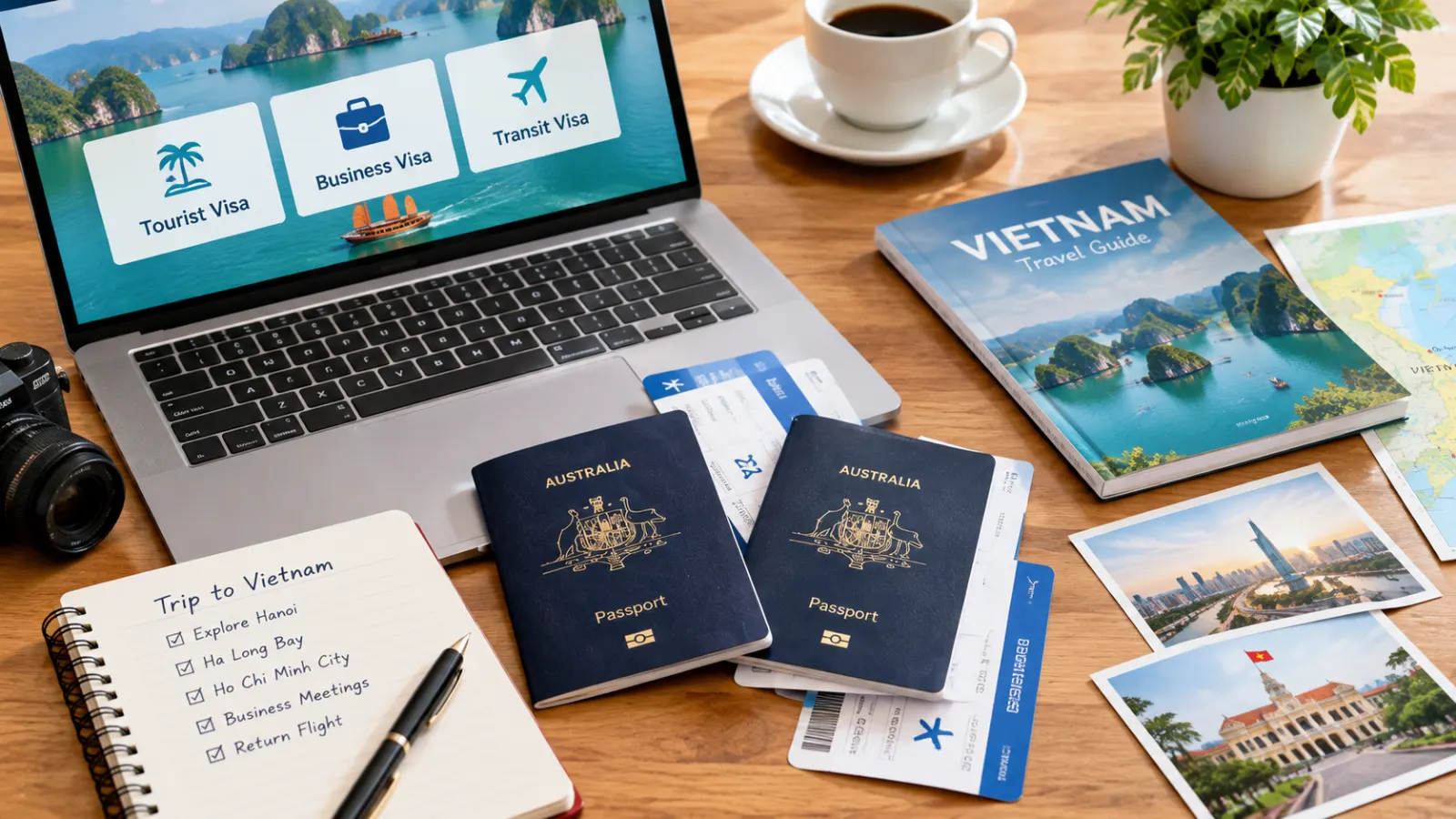
Which visa you need depends on why you’re going. These are the four situations we hear about most from Australian travellers.
| Visa type | Best for | How to get it | Sponsor in Vietnam? | Stay |
| Travel (tourist) eVisa | Holidays, family visits, sightseeing | Official eVisa portal | No | Up to 90 days |
| Business eVisa | Short-term meetings, conferences, market research, negotiations | Official eVisa portal, business purpose selected | No | Up to 90 days |
| DN1 / DN2 business visa | Longer projects, working with a Vietnamese company, preparing a work permit | Embassy or consulate, with a sponsor’s documents | Yes | About 1 to 12 months, depending on the sponsor’s documents |
| Transit (stopover) | Passing through Vietnam | No visa if you stay airside under 24 hours; otherwise an eVisa | No | Depends on the stopover |
For a holiday, a family visit or sightseeing, you want a Vietnam travel visa, and these days that almost always means an eVisa.
It’s valid for up to 90 days, with single or multiple entries, and costs US$25 (about A$36) or US$50 (about A$72).
If you’re only entering Vietnam once, single entry is plenty. Planning a side trip to Cambodia, Laos or Thailand and coming back? Choose multiple entry so you don’t end up paying twice.
Business travellers often assume a Vietnam business visa needs a Vietnamese sponsor. For short trips, it doesn’t. You can apply for the standard eVisa and choose business as the purpose of entry, and the form doesn’t ask for an invitation letter or a company in Vietnam.
The business eVisa fits activities such as:
Longer or more formal business activity is a different story. The DN1 / DN2 visa still needs a Vietnamese company or organisation to sponsor you, and it’s arranged through an embassy, a consulate or the sponsor itself.
| Business eVisa | DN1 / DN2 business visa | |
| Sponsor or invitation letter | Not required | Required |
| Where to apply | Official eVisa portal | Embassy, consulate or through the sponsor |
| Fee | US$25 (single) / US$50 (multiple) | Varies by office and sponsor |
| Maximum stay | Up to 90 days | Longer, depending on the visa issued |
| Best for | Short, independent business trips | Long-term projects, work permits, formal contracts |
If you’ll be working for a Vietnamese employer, staying beyond 90 days or applying for a work permit, check your visa category with the embassy or your sponsor before you book anything. And a note for frequent business travellers: an APEC Business Travel Card doesn’t replace a Vietnam visa, so you’ll still need one.
From our visa desk: a three-day conference. An Australian company got in touch because the DN visa process at the Sydney consulate looked too complicated and slow. After a few questions, we found the trip was a three-day conference with partner meetings in Ho Chi Minh City, which is exactly what the business eVisa is for. We handled it as an eVisa business application, and the visa arrived after 3 working days, without a pile of paperwork on their side.
Here’s the simple rule for stopovers: stay airside and you don’t need a visa. A Vietnam transit visa only becomes relevant when your stopover turns into an entry, which means you clear Vietnamese immigration.
| Your stopover situation | Visa needed? |
| International to international flight, stay in the transit area, under 24 hours, bags checked through | No |
| Leave the airport to see the city or stay at a hotel outside the transit zone | Yes |
| Collect your bags and re-check them (for example, separate tickets) | Yes |
| Connect to a domestic flight in Vietnam | Yes |
| Stopover longer than 24 hours | Yes |
In practice, most Australians who need to leave the airport during a stopover just get a single-entry eVisa. It’s quick and cheap. Pick the airport where you’ll actually clear immigration as your entry point, and check your airline’s rules too, because airlines can refuse boarding if your paperwork doesn’t match your itinerary.
From our visa desk: two airlines, one tight connection. A traveller asked which entry port to choose on the eVisa form. Their plan was Sydney to Ho Chi Minh City on Vietjet, a two-hour connection, then a separate Vietnam Airlines domestic flight to Da Nang. With two different airlines, they had to clear immigration in Ho Chi Minh City first and then move to the domestic terminal, so Ho Chi Minh City was their entry port. We also warned them that two hours was too tight: Tan Son Nhat is busy, and immigration can take close to an hour. They applied for the visa through us and added our fast track service.
You have three routes to a Vietnam visa for Australian passport holders. Here’s how they compare. If you’d like the full walkthrough, we’ve also written a guide on how to get a Vietnam visa from Australia.
| eVisa | Visa on arrival | Embassy or consulate | |
| Where you apply | Online, official portal | Online through a licensed agency, then at the airport | In person or by post |
| Cost | US$25 (about A$36) / US$50 (about A$72) | Agency service fee plus US$25 / US$50 cash stamping fee | Set by the embassy (contact them) |
| Typical processing | 3 working days officially; usually 3 to 5 working days | Approval letter in 3 to 5 working days (urgent: 4 hours to 2 working days) | About 5 to 7 working days |
| Where it works | Designated airports, land and sea border gates | International airports only | Air, land and sea |
| Best for | Most travellers, tourism and short business trips | Air travellers who prefer a visa stamp | Longer or special visa categories, such as DN business visas |
Vietnam visa fees at a glance (USD and approximate AUD)
| Fee | USD | Approx. AUD |
| eVisa, single entry (government fee) | US$25 | about A$36 |
| eVisa, multiple entry (government fee) | US$50 | about A$72 |
| Visa on arrival stamping fee, single entry (cash at the airport) | US$25 | about A$36 |
| Visa on arrival stamping fee, multiple entry (cash at the airport) | US$50 | about A$72 |
| Visa on arrival approval letter | Agency service fee, varies | Varies |
| Embassy or consulate visa | Set by the office | Contact the office |
A$ figures use about 1 USD = 1.44 AUD (mid-October 2026) and are approximate. For current prices and service options, see Vietnam visa fees.
We recommend the eVisa to almost every Australian traveller, for one simple reason: it skips the awkward steps. There’s no approval letter, no cash to carry and no counter to queue at after a long flight. You apply, pay once and print the PDF.
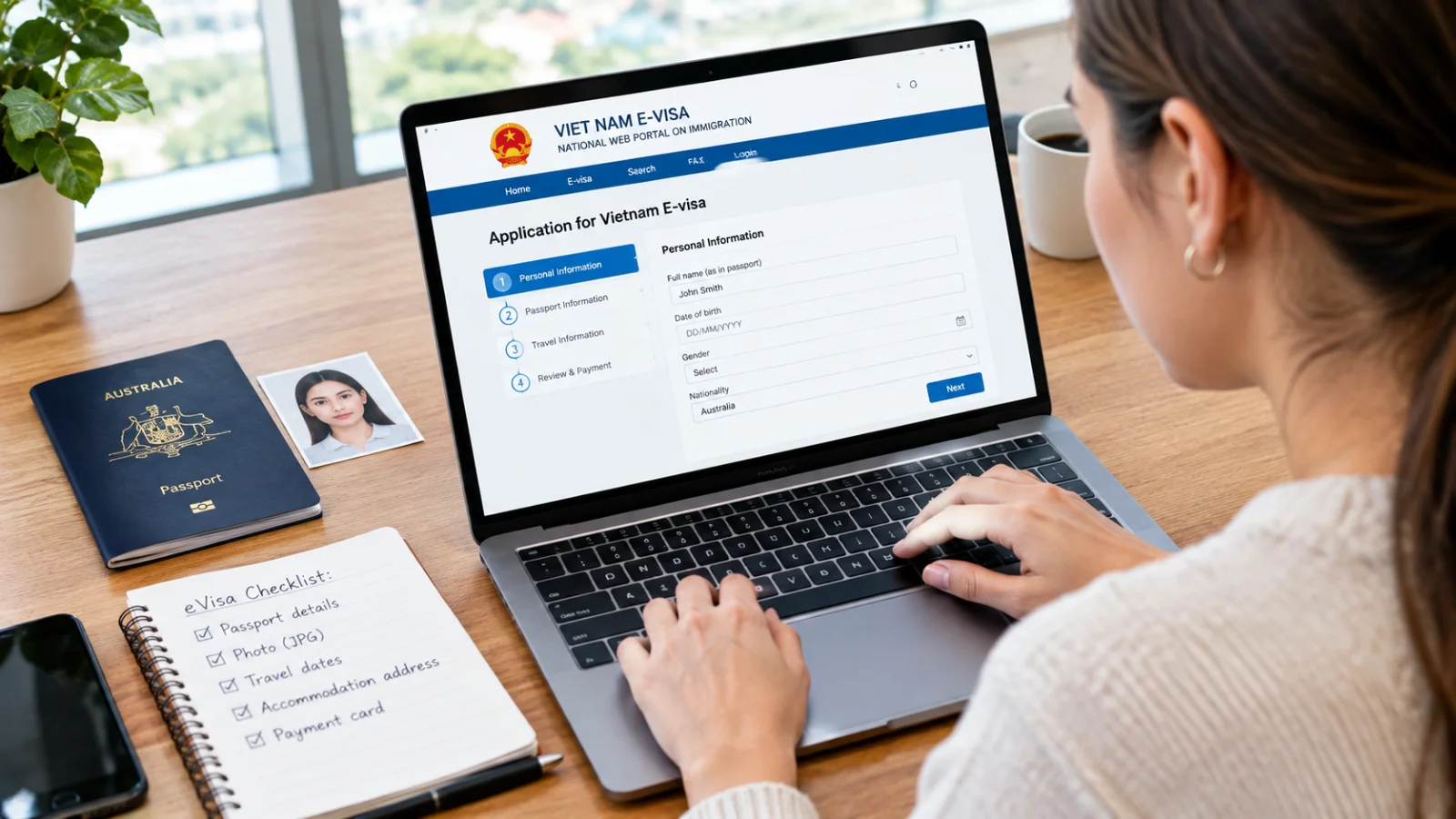
It’s also the cheapest route: US$25 (about A$36) for a single entry or US$50 (about A$72) for multiple entries, valid for up to 90 days, with no embassy visit and nothing to pay at the airport. Choose tourism or business as your purpose, and expect 3 working days officially and 3 to 5 in practice.
Two things to keep in mind. The fee is non-refundable even if your application is refused, and every detail has to match your passport exactly. Print the approved eVisa and keep it with your passport for check-in and immigration. Not sure you qualify? Check your eVisa eligibility first.
The Vietnam visa on arrival (VOA) has a slightly misleading name, and it only works if you fly in. You still need an approval letter before you board, and you still queue at a counter when you land. We usually suggest it only when someone specifically wants the stamp in their passport, or when the eVisa doesn’t fit their plans. Here’s how it works:
Points to watch:
What it costs a family of four
Say a family of four wants single-entry visas. With the eVisa, they pay the government fee and nothing else. With visa on arrival, they pay the same amount as a cash stamping fee at the airport, plus an agency fee of about US$45 per person for the approval letter. The difference is bigger than most people expect.
| eVisa (official portal) | Visa on arrival | |
| Government or stamping fee, 4 people | US$100 (about A$144) | US$100 (about A$144), paid in cash at the airport |
| Agency service fee, about US$45 per person | None | US$180 (about A$259) |
| Total | US$100 (about A$144) | US$280 (about A$403) |
Agency fees vary by provider, and A$ figures are approximate.
Before you plan a trip to Canberra, ask yourself whether you need to go at all. The Embassy of Vietnam in Canberra, Australia doesn’t handle eVisas, so if that’s your route you can skip the drive. For a sticker visa or a DN business visa, book an appointment first. There are also consulates general in Sydney and Perth.
One more thing: double-check the address. According to the embassy’s own website, it moved to 47 Culgoa Circuit, O’Malley, on 24 February 2026, and plenty of websites still show the old one at 6 Timbarra Crescent. We also keep a page on the Vietnam embassy in Australia.
| Embassy of Vietnam, Canberra | Consulate General of Vietnam, Sydney | Consulate General of Vietnam, Perth | |
| Address | 47 Culgoa Circuit, O’Malley, ACT 2606 | Suite 205, Level 2, Edgecliff Centre, 203-233 New South Head Road, Edgecliff, NSW 2027 | Level 8, 16 St Georges Terrace, Perth, WA 6000 |
| Postal address | PO Box 98, Mawson, ACT 2607 | PO Box 732, Edgecliff, NSW 2027 | PO Box 3122, East Perth, WA 6892 |
| Phone | (02) 6169 4916 | (02) 9326 1129 / (02) 9326 1202 | (08) 9221 1158 (the DFAT directory also lists (08) 9350 5367) |
| vembassy@iinet.net.au | vnconsul@iinet.net.au | vnconsulate.perth@gmail.com | |
| Website | vietnamembassy.org.au | vietnamconsulate.org.au | DFAT directory listing |
| Hours and notes | Appointment required; relocated on 24 February 2026 | Monday to Friday, 9:00 am to 12:30 pm and 1:00 pm to 4:00 pm (DFAT directory); confirm before visiting | Monday to Friday, 9:00 am to 12:30 pm and 1:30 pm to 5:00 pm (DFAT directory); confirm before visiting |
Before you go:
Get these together before you open the application form. Blurry scans and missing details are what slow most people down.
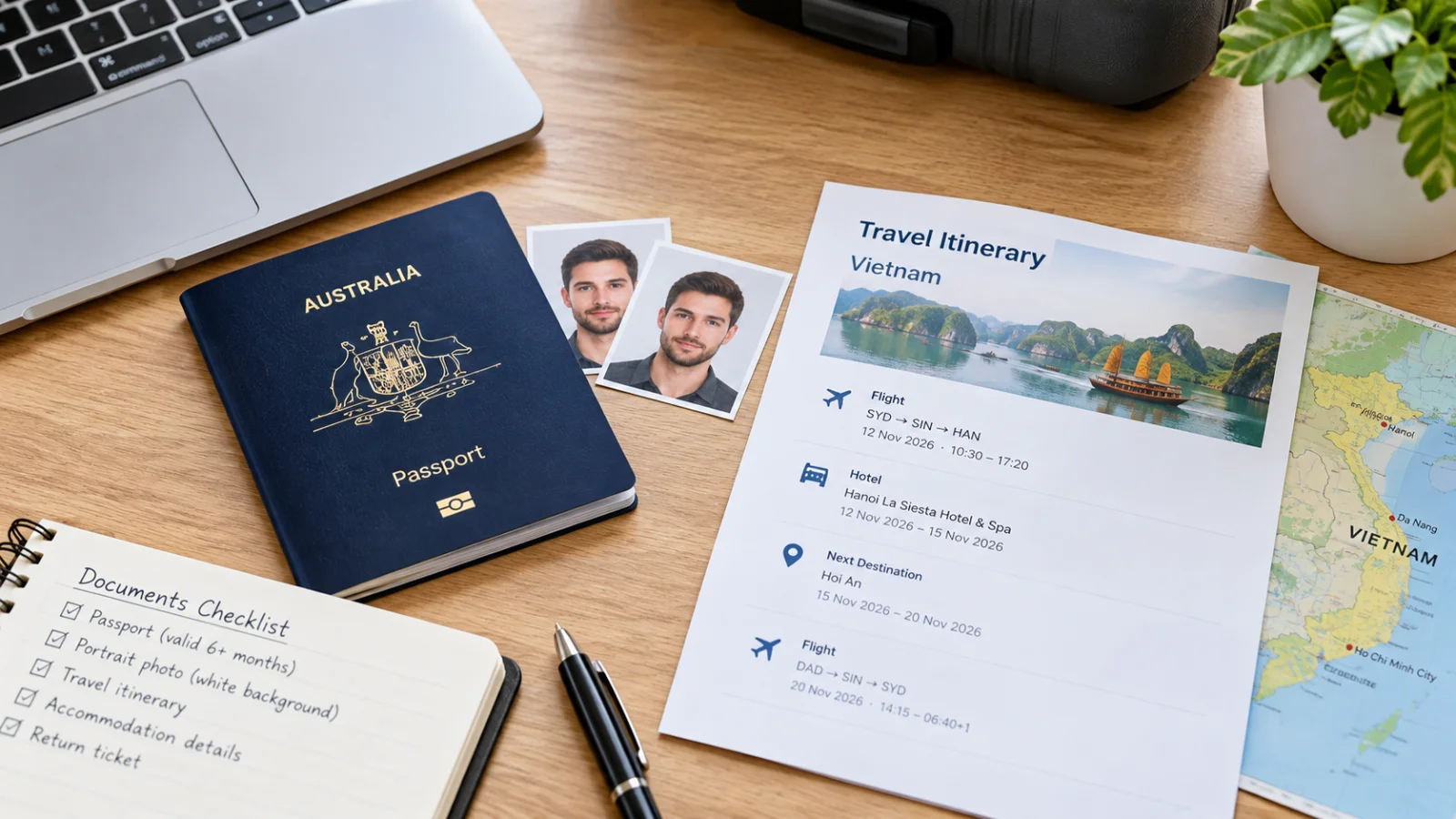
| Document or item | eVisa | Visa on arrival | Embassy visa |
| Valid Australian passport (6+ months) | Yes | Yes | Yes (original) |
| Passport data page scan | Yes | Provided to the agency | No |
| Recent portrait photo (plain background) | Yes, digital file | Yes: digital file for the agency, plus two 4 x 6 cm prints for the airport | Yes, printed |
| Trip details (dates, entry and exit ports, first-night address) | Yes | Yes | Usually |
| Online payment card | Yes | Yes, for the agency fee | No |
| Printed approval letter | No | Yes | No |
| Completed application form and visa fee | Online form; US$25 (about A$36) single or US$50 (about A$72) multiple, paid online | Form NA1 filled in at the airport; stamping fee of US$25 (about A$36) single entry or US$50 (about A$72) multiple entry, paid in cash | Yes, form and fee set by the office |
| Sponsor or invitation letter | No (including business eVisa) | No for tourism | Yes for a DN business visa |
| Prepaid return envelope (if posting) | No | No | If applying by mail |
Requirements differ between offices, so confirm the current list with the embassy, the consulate or your visa service before submitting.
Here’s how the Vietnam visa application works on the official eVisa portal, step by step.
Prefer a visual walkthrough? Follow our step-by-step guide to getting a Vietnam visa, or check your eligibility before you start.
The most common problems are the boring ones: a name that doesn’t quite match the passport, an entry airport that doesn’t match your plans, or a scan that’s too blurry to read. All three are easy to avoid if you read the form one more time before paying. Here’s what to watch for:
| Mistake | What can happen | How to avoid it |
| Typo in name, date of birth or passport number | Refusal, or denied boarding or entry | Copy details directly from the passport data page |
| Entry port does not match your real arrival point | Problems at immigration | Select the airport or border gate you will actually use |
| Applying too late | Travelling before approval arrives | Apply at least 2 to 3 weeks before departure |
| Blurry or cropped scan or photo | Delays or rejection | Use a clear colour scan with all four corners visible |
| Choosing the wrong purpose | Questions at the border | Select tourism or business to match your trip |
If you spot an error after approval, contact the immigration authority or the portal’s support channel straight away. In many cases you’ll have to submit a new application.
From our visa desk: the name that looked fine on screen. An Australian traveller of Norwegian descent applied on the government portal himself. His name includes a special character outside the basic English alphabet, and the portal approved the eVisa automatically, but with the wrong details. Approval on screen doesn’t mean the information is right. He had to apply again, because the name on the visa must match the ICAO line (the machine-readable zone) at the bottom of the passport photo page before he could fly to Vietnam.
The portal says 3 working days. In real life, plan on 3 to 5, and don’t be surprised if a messy application or a busy period stretches it to 7 to 10. Working days also exclude weekends and Vietnamese public holidays, which is where a lot of people get caught out.
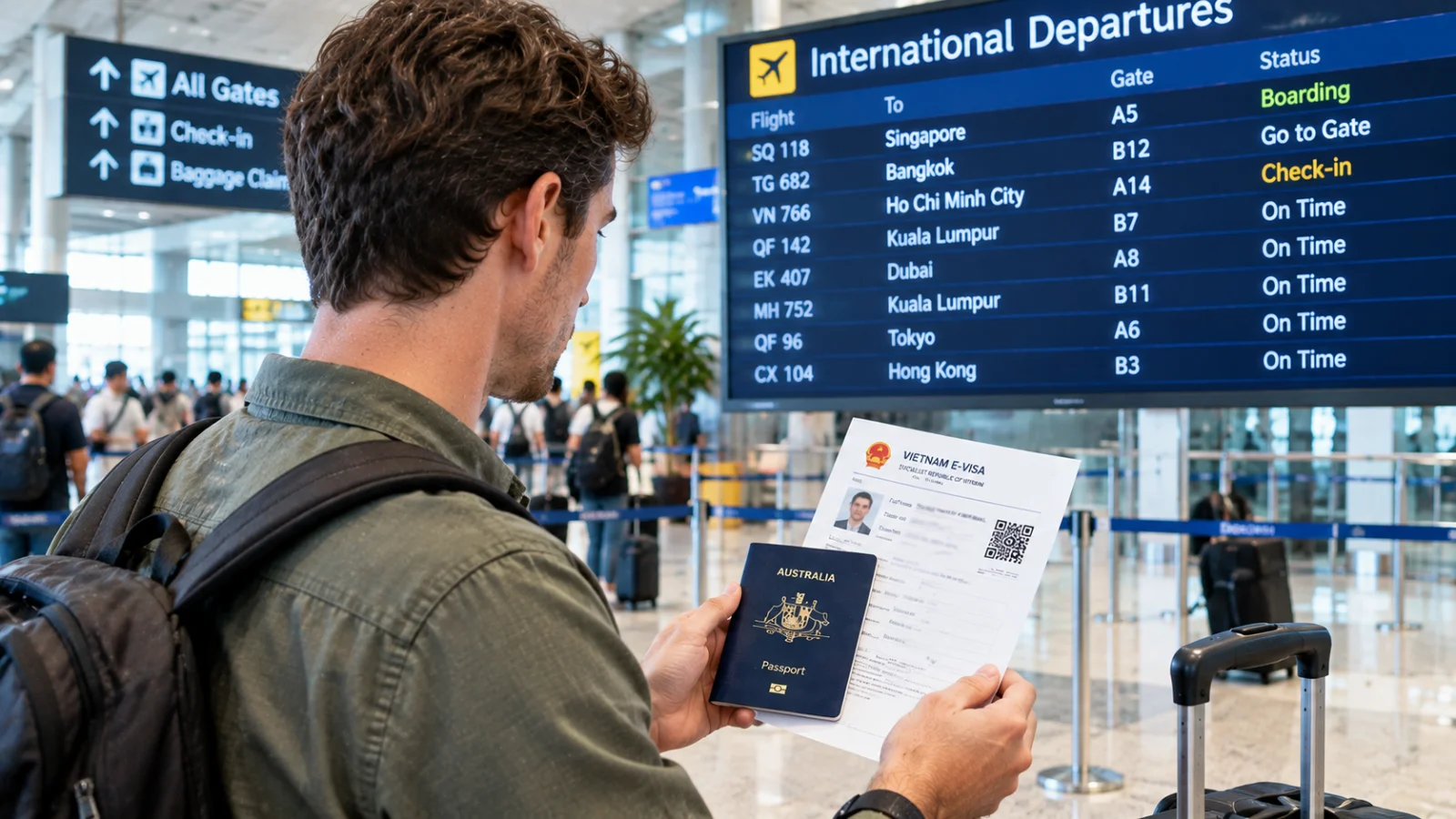
| Method | Official or advertised time | Realistic time | Notes |
| eVisa (government portal) | 3 working days | 3 to 5 working days for most applications; 7 to 10 working days if the file has errors or is incomplete, or when the portal is busy | Working days only: weekends and public holidays do not count |
| Visa on arrival approval letter | Varies by agency | 3 to 5 working days; urgent services take from 4 hours to 2 working days | Urgent service costs extra; the visa stamp is issued at the airport |
| Embassy or consulate visa | Varies by office | About 5 to 7 working days | Add postage time if applying by mail |
| eVisa with urgent service | Varies by provider | 4 hours to 2 working days | Offered by private visa services for an additional fee |
Planning tips
What we see in our own application records
Numbers only tell part of the story, so here’s a real example.
From our visa desk: ‘Is 3 working days enough?’ A family from Sydney got in touch on a Wednesday. They were flying on Saturday and had read on the government site that the eVisa takes 3 working days, so they asked whether they should just apply there. We walked them through the maths: working days don’t include weekends, so an application submitted on Wednesday would realistically come back on Monday afternoon at the earliest. They chose our urgent service, paid the urgent fee, had their visas the next day, and flew to Vietnam on Saturday without a hitch.
Flying out soon? Our urgent service can have your visa ready in 4 hours to 2 working days, and we check your documents first. You can also add an airport fast track service for a quicker arrival.
Get your urgent Vietnam visa →
Mostly, yes. There’s no general visa-free entry for Australian passport holders, so you’ll need an eVisa, a visa on arrival approval letter or an embassy visa before you clear immigration. The main exception is Phu Quoc (see below). Most people go with the eVisa. Check your eligibility before you apply.
Plan on US$25 (about A$36) for a single-entry eVisa or US$50 (about A$72) for multiple entries, and it’s non-refundable. Your card issuer may add an international transaction fee. Visa on arrival costs more because an agency fee comes on top of the same stamping fee, which you pay in cash at the airport. The A$ figures are approximate, and our Vietnam visa fees page has the current service prices.
Officially 3 working days. In practice it’s usually 3 to 5, and it can stretch to 7 to 10 if there are errors in the file or the portal is busy. A visa on arrival approval letter usually takes 3 to 5 working days, and urgent services run from 4 hours to 2 working days.
You can, as long as you’re flying in. First you get an approval letter from a licensed agency. Then, at the airport, you fill in Form NA1 and pay the stamping fee in cash (US$25 for single entry, US$50 for multiple entry). It doesn’t work at land or sea borders. If you’re wondering whether the system can be trusted, read whether the visa on arrival is legitimate.
For short trips, yes. Choose business as the purpose on the eVisa form for meetings, conferences and market research, and you won’t need a Vietnamese sponsor. Longer or more formal work with a Vietnamese company needs a DN1 or DN2 visa with a sponsor.
Only if you leave the transit area. Stay airside for under 24 hours with your bags checked through and you’re fine. You need a visa if you leave the airport, collect and re-check bags, connect to a domestic flight or stay longer than 24 hours. Most travellers just get a single-entry eVisa.
Yes, for up to 30 days, as long as you fly directly into Phu Quoc and fly directly out again, without transiting through any other Vietnamese city. If you want to visit the mainland as well, you’ll need a visa. Check the current conditions with the embassy before you book.
Yes. If your child has their own passport, they need their own visa and a separate application, so budget US$25 (about A$36) per child for a single entry. Enter each child’s name and passport details exactly as they appear in their passport.
Sometimes. The Vietnam Immigration Department handles extensions, and a lot of travellers go through an authorised agent in Vietnam. What’s allowed depends on your visa type, so start well before it expires, because overstaying can mean fines. Confirm the latest rules with the official authorities.
Use the official government portal, evisa.gov.vn. Private visa services are legal and can review your documents or speed things up, but they charge a service fee on top of the government fee. The embassy in Canberra does not process eVisa applications, see our page on the Vietnam embassy in Australia.
For most Australians, the Vietnam visa for Australian question has a simple answer: apply for the official eVisa at evisa.gov.vn. It costs US$25 (about A$36) for a single entry, lasts up to 90 days and covers both holidays and short business trips. If you only remember three things, make them these: use the official portal unless you have a reason not to, apply early, and make every detail match your passport. A mistake costs far less to fix before you pay than at the airport.
Whichever route you pick, check that your passport has at least six months left and print your approval before you leave home. Rules and fees do change, so it’s worth a quick look at the official sources below just before you fly.
Safe travels and enjoy Vietnam!
Want a second pair of eyes on your application? Send us your travel dates and we’ll suggest the right option, check your documents and help with the form. You’re covered by a 100% refund if you’re not happy with our service.
We’re a private service provider, not a government website. Service fees apply on top of the official government fee.
About this guide: Written and reviewed by the visa team at Vietnamimmigration.com, a professional visa service provider in Vietnam with more than 15 years of experience helping international travellers. Last reviewed on 16 October 2026. Visa rules and fees can change, so confirm them on the official sources below before you apply.
Official sources: Vietnam eVisa portal | Smartraveller: Vietnam | Embassy of Vietnam in Canberra | Consulate General of Vietnam in Sydney | Consulate General of Vietnam in Perth (DFAT directory)
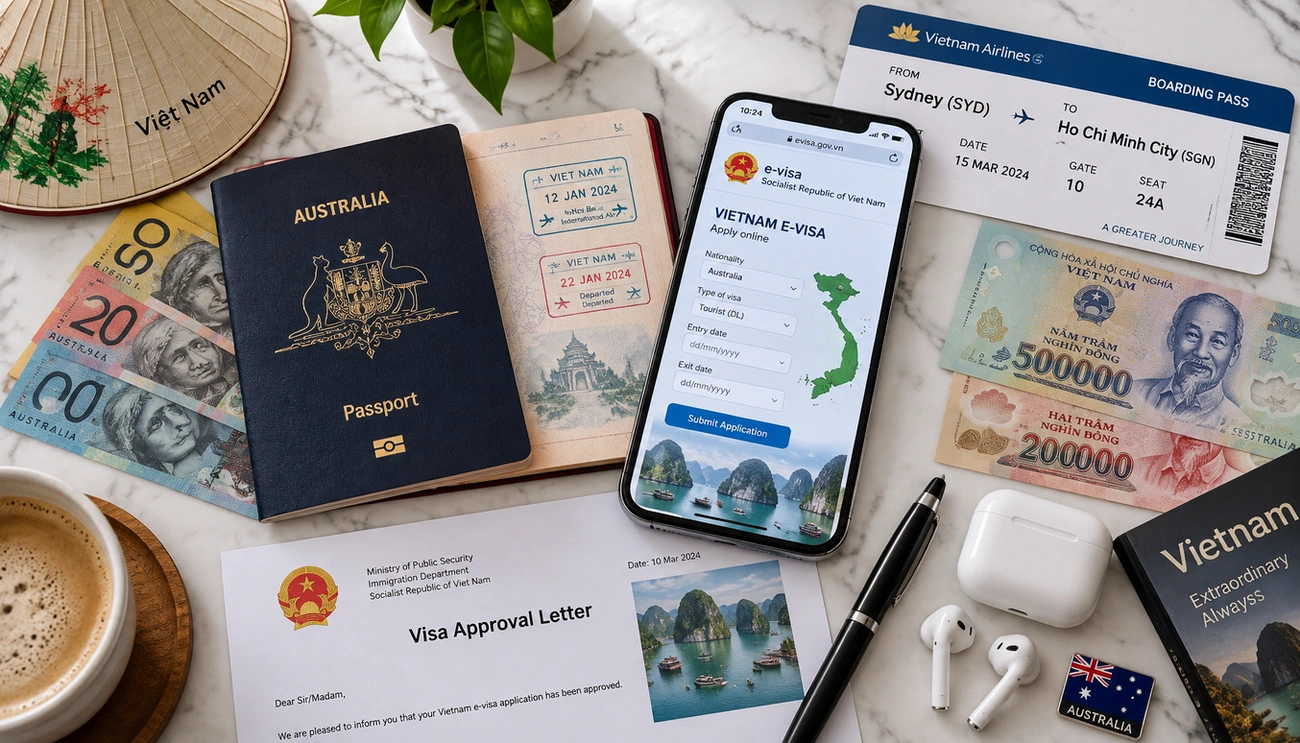
Australian citizens planning a Vietnam travel visa may find the process stressful at the time constraints are tight. All Australian citizens require a visa to enter Vietnam. Standard processing takes …
Getting a Vietnam visa without embassy for Australians is simpler than you might think. Australian citizens require a valid visa to enter Vietnam, but here’s the good news: you don’t …
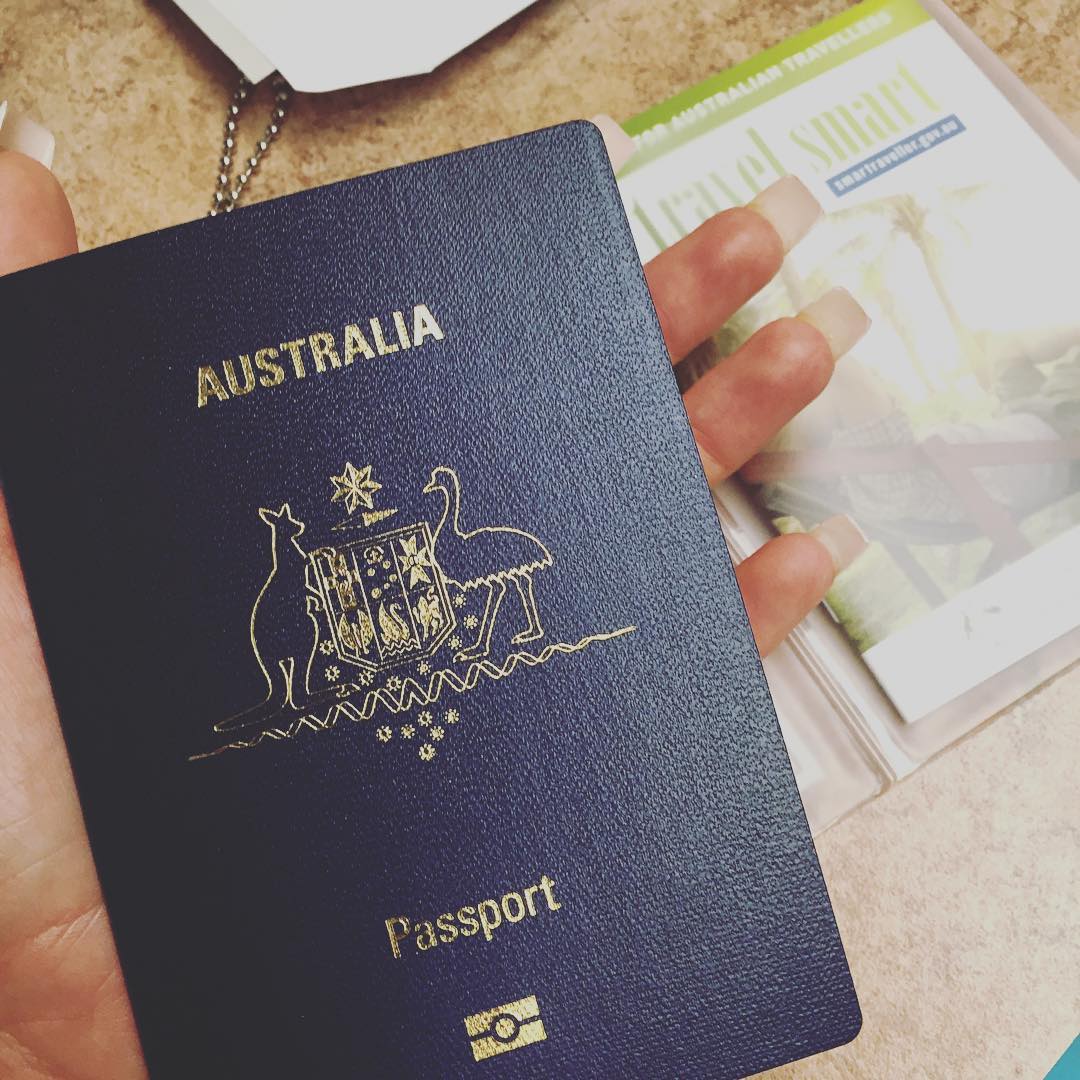
Traveling to Vietnam can be an exciting adventure, but sometimes unexpected circumstances arise that require urgent visa processing. For Australians, understanding the ins and outs of obtaining a Vietnam emergency …
Planning a trip to Vietnam? Your Vietnam paperless visa for Australians is now easier to get. About 83% of the 548,471 Australian visitors in 2025 applied online for e-visas. You need …
For Australians planning a trip to Vietnam, processing a visa through the internet is a convenient way to arrange the required travel document before departure. The procedure is relatively simple, …
For Australian travellers, applying for a Vietnam visa online can make the process much more convenient because the application can be started from home without building your travel preparations around …
You have heard that Vietnam now offers a digital visa that can be requested online, but you are not sure whether it applies to Australian passport holders or exactly how …
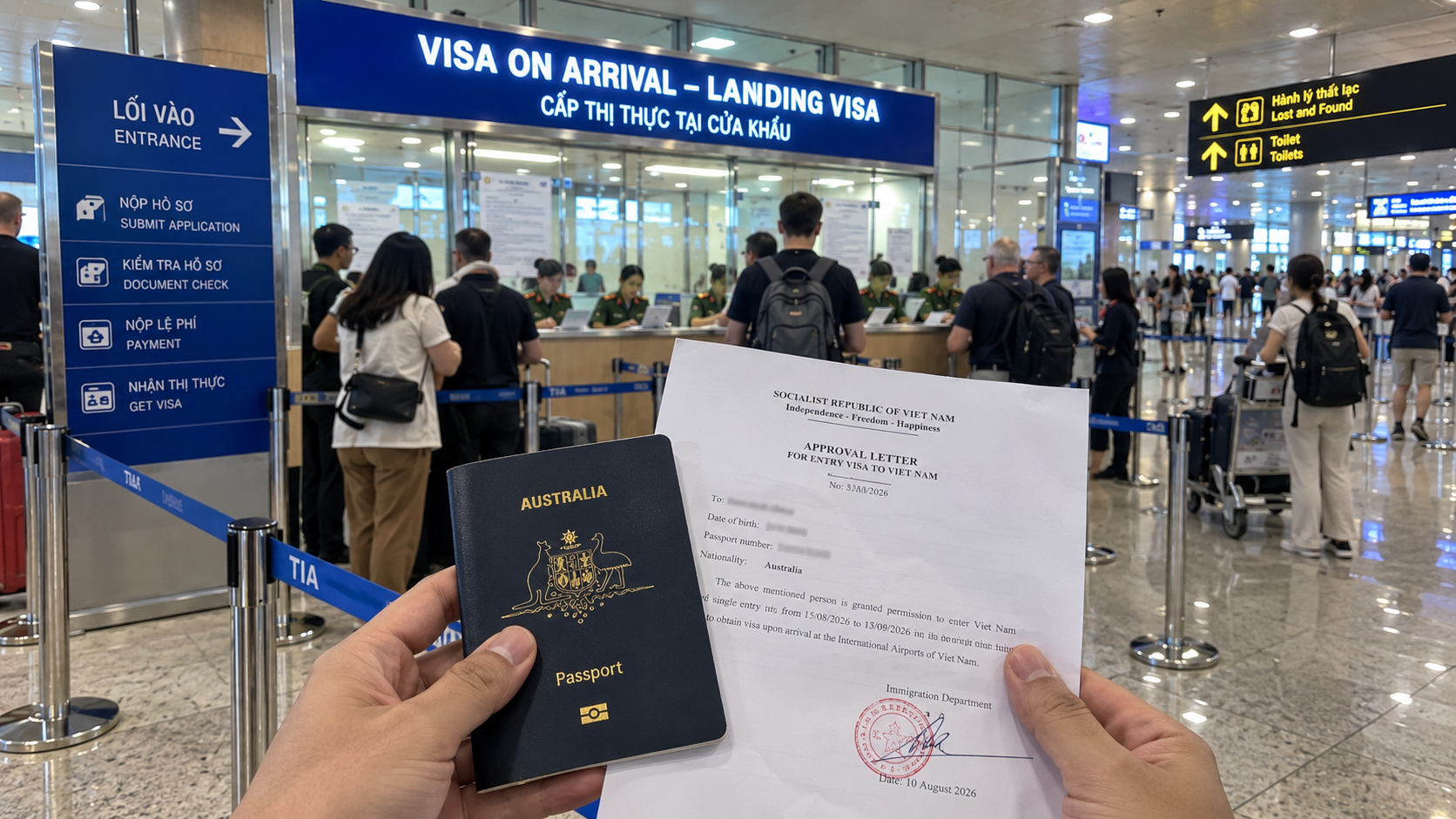
If you are travelling from Australia to Vietnam and have been told that you need a “pre-approved visa letter,” the terminology can be confusing at first. Is the letter already …
You may have seen the term “Vietnam Visa on Arrival” and assumed it means you can board a flight from Australia without a visa, land in Vietnam, walk up to …


