Getting ready for a holiday in Vietnam should feel exciting—not overwhelming. Yet for many Canadians, the visa application becomes a source of stress when departure is approaching. Vietnam’s electronic visa …

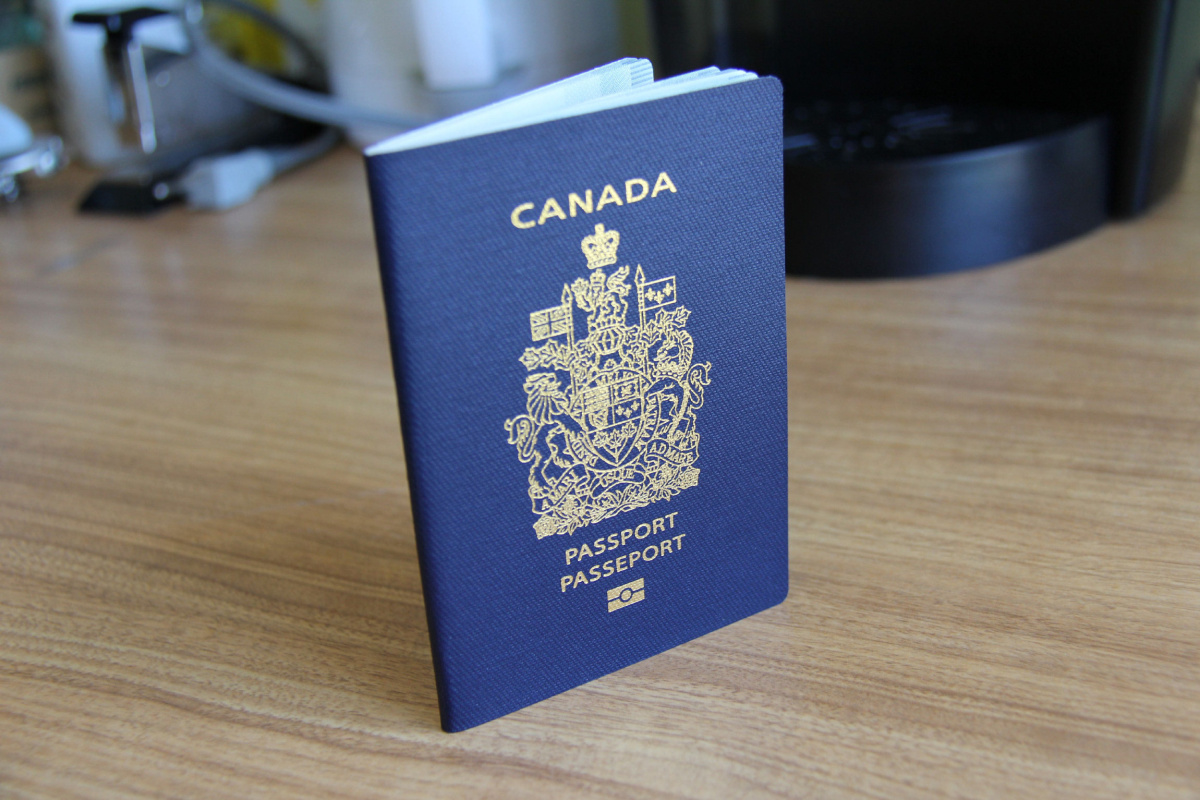
If you are planning to spend several weeks exploring Vietnam, a short visa window can make the trip unnecessarily restrictive. A longer e-visa gives Canadian travellers more flexibility to move through the country at a comfortable pace, spend additional time in different regions, or combine Vietnam with other destinations in Southeast Asia. Vietnam’s current electronic visa framework allows an e-visa to be valid for up to 90 days and to be issued for either single or multiple entry. However, the phrase “90-day visa” can be misleading if it is interpreted as automatically giving every traveller 90 fresh days from the moment they arrive. The actual validity dates printed on the issued visa are what ultimately determine when it can be used.
Before completing the application, it is therefore worth planning the visa around the trip rather than simply choosing the longest option available. A Canadian traveller spending six weeks entirely within Vietnam may need a different entry arrangement from someone who plans to visit Vietnam, leave for Cambodia or Thailand, and then return. The dates requested, number of entries and intended route all need to work together. Once those decisions are clear, the application itself becomes much easier to complete accurately and the issued visa is more likely to match the journey you actually intend to make.
Canadian passport holders can use Vietnam’s electronic visa system, and the current e-visa framework allows a validity period of up to 90 days, with either single-entry or multiple-entry options. Vietnam’s Immigration Department states that foreigners outside Vietnam who meet the applicable conditions can apply personally through the electronic system, and Canada is included in the official e-visa country framework.
This means a Canadian traveller planning an extended holiday does not necessarily need to limit the trip to a short stay. The important detail, however, is the phrase “up to 90 days.” It describes the maximum permitted validity under the current e-visa system rather than promising that every application will automatically be issued for exactly 90 days.
| Visa Feature | What Canadian Travellers Should Know |
|---|---|
| Maximum validity | Up to 90 days |
| Application method | Online electronic visa system |
| Entry options | Single entry or multiple entry |
| Official single-entry fee | USD 25 |
| Official multiple-entry fee | USD 50 |
| Published processing period | 3 working days |
The official application instructions currently list a fee of USD 25 for a single-entry e-visa and USD 50 for a multiple-entry e-visa, with applications described as being processed in 3 working days.
These are the government e-visa fees. If you choose to use a private visa-support service for document checking, application assistance or another form of support, any separate service charge should be distinguished from the official government fee.

The most important point to understand is that a visa valid for up to 90 days does not necessarily mean you arrive in Vietnam and then start a completely new 90-day countdown.
Vietnam’s e-visa application itself asks applicants to specify a requested “valid from” date and “to” date. The Immigration Department also describes an e-visa as having a maximum validity of 90 days.
For example, imagine that the issued visa shows:
Valid from: October 1
Valid until: December 29
If you actually arrive in Vietnam on October 18, you should not simply assume that your permitted visa period now extends another 90 days beyond October 18. The important dates remain those stated on the issued visa.
This distinction matters because travellers sometimes build their itinerary around the expression “90-day visa” without checking the actual validity period. If you enter later than originally planned, the end date does not automatically need to move forward simply because your arrival changed.
For travel planning, the safest habit is therefore to stop thinking of the visa only as “90 days” and instead look at it as a defined period with a start date and an end date.
The dates shown on the final issued document are more important than the label used to describe the visa.
The length of the visa and the number of times you can enter Vietnam are two different things.
Vietnam’s current e-visa system supports both single-entry and multiple-entry visas within the maximum 90-day validity framework.
A longer validity period does not automatically make a visa multiple entry. Before applying, look at your full itinerary and count how many separate times you expect to enter Vietnam.
| Planned Itinerary | Entry Type to Consider |
|---|---|
| Canada → Vietnam → Canada | Single entry may be sufficient |
| Canada → Vietnam → Thailand → Canada | Single entry may still be sufficient |
| Canada → Vietnam → Cambodia → Vietnam → Canada | Multiple entry is more appropriate |
| Canada → Vietnam → Singapore → Vietnam → onward travel | Multiple entry should be considered |
Suppose you plan to spend three weeks in Vietnam, travel to Cambodia for ten days and then return to Ho Chi Minh City before flying home. Your trip may still fit comfortably inside a 90-day validity period, but the itinerary involves two separate entries into Vietnam. That makes the entry type just as important as the validity length.
By contrast, if you enter Vietnam once, spend seven weeks travelling within the country and then fly directly back to Canada, a single-entry visa may be sufficient for that route.
A useful principle is to choose the entry type from the number of times you expect to cross into Vietnam, not from the total length of the holiday.
Not every Canadian traveller needs to request the longest validity available.
A visa with a longer validity period can be useful for travellers planning a slow journey through Vietnam, visiting several regions over an extended period, spending more time with friends or relatives, or combining Vietnam with neighbouring countries before returning.
It may also be useful when the itinerary has some flexibility and you want the requested visa period to cover several weeks of travel without placing the final departure too close to the visa’s end date.
However, if your holiday lasts only 10 or 14 days, there is no inherent advantage in treating 90 days as the default simply because the maximum is available.
The visa should make sense for the journey you actually intend to take.
A good application therefore begins with your itinerary rather than with the question, “What is the longest visa I can request?” Work out how long you genuinely need, whether there are any side trips outside Vietnam, and whether you intend to return after leaving.
That information will tell you much more about the appropriate validity and entry type than the maximum duration alone.
Choosing the requested validity period is one of the most important parts of planning a longer Vietnam trip.
The current e-visa application asks applicants to enter a requested validity start date and end date, along with the intended length of stay and entry information.
Before filling in those fields, map out at least four points in your itinerary: your expected first arrival in Vietnam, your planned final departure, any side trips outside Vietnam, and your latest planned return to Vietnam if you need multiple entry.
For example, imagine this itinerary:
Arrival in Hanoi: November 10
Travel to Cambodia: December 2
Return to Vietnam: December 8
Final departure from Ho Chi Minh City: January 4
In this situation, the traveller needs more than simply a visa that covers the first arrival. The requested validity must remain appropriate through the final departure, and the entry type needs to accommodate the return to Vietnam after Cambodia.
This is why it is usually better to think about the itinerary first and complete the online application second.
The day on which you happen to fill in the form should not automatically determine the visa’s requested start date. Instead, the dates should reflect the travel plan you expect to use.

The Immigration Department’s official instructions require applicants to provide the requested information and upload a passport data-page image and a portrait photograph. After the application is created, the applicant receives a registration code used later to check the result.
For a Canadian traveller preparing a longer tourist visa application, it is helpful to have the following information ready before beginning:
| What to Prepare | What to Check |
|---|---|
| Canadian passport | Details must match the application |
| Passport data-page image | Clear, complete and readable |
| Portrait photograph | Suitable for the application requirements |
| Personal information | Entered accurately |
| Requested validity dates | Appropriate for the actual itinerary |
| Entry option | Single or multiple based on the route |
| Planned entry point | Matches the intended journey |
| Email/contact information | Accessible during processing |
The official instructions also warn that missing, incorrect or unidentified information can prevent the application from being accepted.
For a 90-day itinerary, accuracy becomes particularly important because the application contains more than just passport details. The dates and entry arrangement need to fit a longer travel plan as well.
A few extra minutes checking the form before payment can be much easier than discovering later that the visa does not match the trip you planned.
The official e-visa process is completed electronically. Vietnam’s Immigration Department describes a straightforward sequence: provide the required information and images, pay the e-visa fee, then use the registration information to check the result.
Before beginning the form, however, Canadian travellers should already know what validity period and entry type they want to request.
Step 1: Decide the validity period and entry type. Review your expected arrival, departure and any side trips. Decide whether you require a single entry or need the ability to leave Vietnam and return within the same visa period.
Step 2: Complete the online application. Enter the required personal, passport and travel information carefully. The application should reflect the passport you intend to use for travel and the itinerary you are actually planning.
Step 3: Upload the required images. The official instructions require a passport data-page image and a portrait photograph. Make sure the files are clear and comply with the system requirements before proceeding.
Step 4: Review the application before payment. Check the spelling of your name, passport number, requested validity dates, entry type and relevant travel information. This review is especially important when you are planning a longer stay or multiple entries.
Step 5: Pay the applicable e-visa fee. The current official fee is USD 25 for single entry or USD 50 for multiple entry.
Step 6: Keep the registration information. After creating the application, retain the registration code and the details needed to retrieve the case later. The Immigration Department uses these details for online status checking.
Step 7: Check the result and obtain the e-visa. The official search function allows applicants to check the status and, when approved, download the e-visa.
This process is relatively simple, but the quality of the application depends heavily on the decisions made before the form is submitted. Choosing the correct dates and entry type is just as important as completing the technical steps correctly.
The Vietnam Immigration Department’s current instructions state that an e-visa application is processed in 3 working days.
The phrase “working days” matters. It should not simply be interpreted as three calendar dates or exactly 72 hours from the moment you submit the application.
For example, an application submitted shortly before a weekend should not be planned as though Saturday and Sunday automatically function as two ordinary processing days.
Public holidays can also affect how much calendar time passes while a traveller is waiting.
Although the official published period is 3 working days, it is still sensible to avoid leaving a long-trip visa application until immediately before departure. A longer journey usually involves more travel planning, and having the visa resolved ahead of time gives you a chance to check the issued validity and entry type before flights and side trips become difficult to change.
The Immigration Department currently lists the official electronic visa fees as follows:
| Entry Type | Official E-Visa Fee |
|---|---|
| Single entry | USD 25 |
| Multiple entry | USD 50 |
The government portal also states that the e-visa fee is paid electronically and is not refunded if the application is refused.
These amounts should be distinguished from any separate fee charged by a private visa-support provider. A third-party service may charge for assistance such as application review, document checking or time-sensitive support, while the government e-visa fee remains a separate component.
Making that distinction clear is useful when comparing the cost of applying independently with the cost of requesting professional assistance.
If you prefer assistance with the application, particularly when choosing a validity period or deciding between single and multiple entry, you can submit your travel information through our Vietnam visa support service:
Rather than simply selecting “90 days” without considering the itinerary, the application can be reviewed against the journey you are planning. This is particularly useful if your trip includes several countries, a return to Vietnam, or dates that need to fit within a longer travel schedule.
Depending on your situation, our support may include reviewing passport and application details, checking the requested validity period, assessing whether single or multiple entry better matches the itinerary, reviewing submitted documents, assisting with processing questions and answering Vietnam visa or entry-related concerns.
Our Vietnam visa support service has more than 15 years of experience assisting travellers with Vietnam visa matters and provides 24/7 support for both ordinary and time-sensitive cases. Application information and supporting documents can be checked before further processing to help identify avoidable errors. Any private service fee and applicable refund terms are separate from the official government e-visa fee and depend on the selected service.
If the trip has been arranged at short notice, an urgent-processing assessment may also be available for eligible cases depending on the application status, submission time and available processing arrangements. This should be assessed individually rather than treated as a guarantee of a fixed processing time.

Approval is an important milestone, but it should not be the final step in your preparation.
The official e-visa search system shows information including the visa number and the period during which the traveller is allowed to enter Vietnam, and it provides the option to download the visa once available.
As soon as the e-visa is issued, compare it carefully with your Canadian passport and itinerary.
Check your full name and passport number first. Then review the valid-from date, valid-until date and number of entries. Make sure these details support the trip you intend to make rather than simply assuming that approval means the application was issued exactly as you imagined.
This is especially important for travellers planning side trips.
For example, if you intend to return to Vietnam on December 20 after visiting another country, but the issued validity ends on December 18, the document clearly does not cover the journey as planned. Likewise, if you planned to leave Vietnam and re-enter but the issued document does not match that entry requirement, the itinerary needs to be reassessed before travel.
A useful rule is simple: do not rely on the visa until you have checked the document itself.
Longer trips are more likely to change.
You may decide to arrive several days later, extend one part of the journey, add a visit to Cambodia, return to Vietnam after a side trip, change the planned entry point or travel with a different passport because the original one was replaced.
When the itinerary changes, compare the new plan with the e-visa that was actually issued.
Ask whether the new arrival still falls within the validity period, whether the final departure remains covered, whether the number of entries matches the revised route and whether the passport information is still the same.
Do not simply assume that a visa described as “90 days” will absorb every itinerary change.
The correct question is whether the issued visa still matches the journey you are now planning.
If the revised itinerary no longer fits the validity or entry conditions on the visa, the appropriate visa action should be assessed before departure rather than discovering the mismatch during travel.
A 90-day e-visa is relatively straightforward when the itinerary has been planned carefully, but several misunderstandings can create avoidable complications. Most come from focusing on the phrase “90 days” while overlooking the actual dates and entry conditions.
Common mistakes include:
Most of these problems can be reduced by spending a little more time planning before submission. The visa application should be treated as part of the itinerary itself rather than as a separate administrative task that can be completed without looking at the route.
Can Canadian passport holders get a Vietnam tourist visa valid for up to 90 days?
Yes. Vietnam’s current electronic visa framework permits an e-visa to be valid for a maximum of 90 days and to be issued for single or multiple entry.
Does the 90-day period automatically start when I arrive in Vietnam?
Do not assume that a new 90-day period begins automatically on arrival. The e-visa application uses defined requested validity dates, and travellers should rely on the actual valid-from and valid-until dates shown on the visa that is ultimately issued.
Can I leave Vietnam and return on the same visa?
That depends on the entry type. Vietnam’s e-visa system allows both single-entry and multiple-entry visas, so travellers planning to leave Vietnam and subsequently return should consider whether multiple entry is required for the itinerary.
How much does the official Vietnam e-visa cost?
The Immigration Department currently lists USD 25 for a single-entry e-visa and USD 50 for a multiple-entry e-visa.
How long does normal e-visa processing take?
The current official instructions state that applications are processed in 3 working days.
Do I need a full 90-day validity period for a two-week holiday?
Not necessarily. The current framework allows validity of up to 90 days, but the requested period should make sense for the actual itinerary rather than automatically using the maximum available duration.
Can I apply for the e-visa online from Canada?
The Immigration Department provides an online application system for eligible foreigners who are outside Vietnam, allowing the application and payment process to be completed electronically.
A Vietnam e-visa with validity of up to 90 days can give Canadian travellers substantial flexibility for a longer trip, but the maximum duration is only one part of the decision. Vietnam’s current framework allows both single and multiple entry, and the final issued visa has defined validity dates that should be checked carefully before travel.
The most practical approach is to map the itinerary first, decide how many times you expect to enter Vietnam, choose validity dates that appropriately cover the trip, prepare accurate passport and application information, submit the e-visa and then verify the issued document before relying on it. When those steps are handled carefully, the visa becomes part of a well-planned journey rather than something that has to be corrected after the rest of the trip has already been booked.
Getting ready for a holiday in Vietnam should feel exciting—not overwhelming. Yet for many Canadians, the visa application becomes a source of stress when departure is approaching. Vietnam’s electronic visa …
Imagine wandering through Hanoi’s lively streets, watching the sunrise over Ha Long Bay, or sipping a fresh coconut along the rivers of the Mekong Delta. For many Canadians, Vietnam has …
Planning a trip to Vietnam from Canada but not sure how to get your visa sorted? You’re in the right place. Many Canadians find the visa process confusing, with conflicting …
You might assume that a tourist visa will be enough for a short business trip to Vietnam—just a few meetings, maybe a quick factory tour. But entering the country on …
Planning a trip from Canada to Vietnam in ? You’re definitely not the only one — Vietnam’s beautiful coastlines, lush mountains, and vibrant street food culture have become a top …
Imagine this: You’re a Canadian professional who just got an invitation to fly to Vietnam next week for a crucial business opportunity. The deal is big, and time is short. …