Your flight from New Zealand is approaching, but your Vietnam e-visa application is still showing no final result. The airfare has been paid, accommodation is confirmed, and your itinerary is …

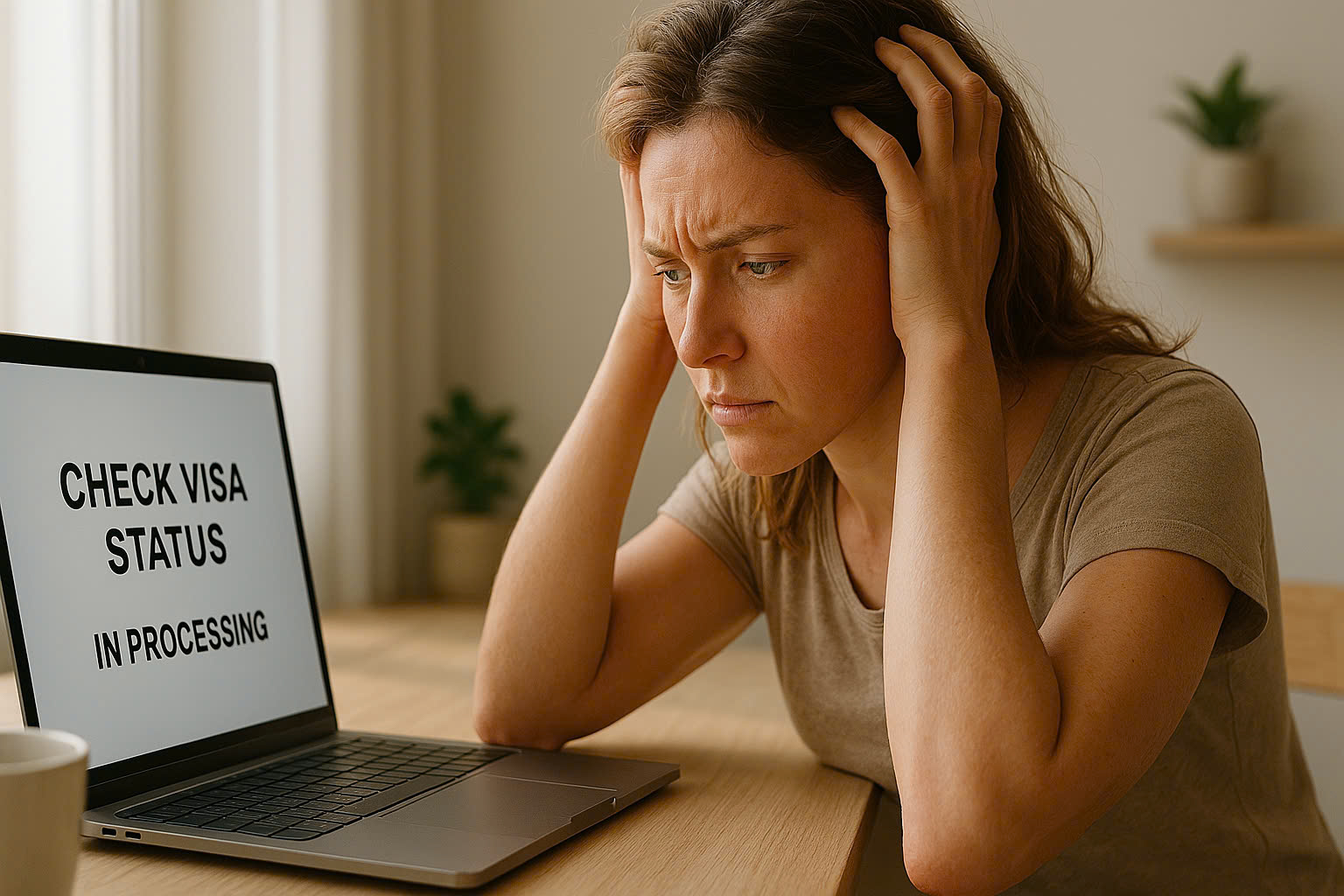
Your departure date is getting closer, yet your Vietnam e-visa application still hasn’t been approved. Your flights from Toronto, Vancouver, Calgary, or Montreal are booked, your accommodation is confirmed, and your travel itinerary is ready. But without a valid visa, every other reservation suddenly feels uncertain. Many Canadian travellers find themselves in exactly this situation—refreshing the application status over and over, hoping for an approval before it’s time to head to the airport. The uncertainty can be especially stressful when your trip includes non-refundable flights, business meetings, family visits, or a long-awaited holiday that has taken months to plan.
If your Vietnam e-visa is still pending, you may be wondering whether there’s another way to travel without cancelling or postponing your trip. Can Canadian citizens apply for a Vietnam Visa on Arrival while waiting for an e-visa decision? The answer isn’t as straightforward as many travel forums suggest. In this guide, we’ll explain why e-visa applications can sometimes take longer than expected, whether a Visa on Arrival may be available in certain situations, and what practical steps Canadian travellers should take to avoid last-minute travel disruptions and enter Vietnam with confidence.
Applying for a Vietnam e-visa may look straightforward: complete an online form, upload the required images, pay the application fee, and monitor the system for a result. However, the apparent simplicity of the application process can lead travellers to underestimate how easily a small issue can slow down the review.
One common reason is inaccurate or inconsistent information. The details entered in the application should correspond precisely with the passport that will be used for travel. A missing middle name, an incorrect passport digit, a reversed date, a spelling discrepancy, or the wrong nationality selection may require additional review. Even when the error seems minor, immigration records are document-sensitive. The applicant may know that two slightly different versions of a name refer to the same person, but an automated or administrative review cannot safely make that assumption.
Image quality can also create problems. A passport scan that is blurry, cropped, shadowed, reflective, or partially covered may prevent important details from being verified. The same applies to a portrait photograph that fails to meet the application requirements. Travellers frequently upload a casual phone picture, a photograph with an unsuitable background, an image containing glasses or shadows, or a file that has been compressed until facial details are unclear. An application may be submitted successfully from the traveller’s perspective while still requiring correction during review.
Another potential cause is an unsuitable travel date or entry point. A Vietnamese e-visa is connected to the information approved in the application, including its validity period and permitted port of entry. The Government of Canada advises travellers to use the entry point indicated in their visa authorization. Therefore, choosing the wrong airport, land crossing, or seaport can become more than a simple typing mistake; it may affect whether the document is appropriate for the planned journey.
Processing expectations can also be distorted by weekends and public holidays. Canadian applicants may count every calendar day after submission, while the relevant processing schedule may operate according to working days in Vietnam. The time difference between Canada and Vietnam can add further confusion. An application submitted late on a Friday evening in Vancouver, for example, may reach the system after business hours in Vietnam. If a Vietnamese holiday or weekend follows, the traveller’s perceived waiting period may become much longer than the number of active processing days.
High application volume can produce additional delays. During major travel seasons, international holidays, festivals, school breaks, and periods of increased tourism, more applications may enter the system at the same time. A file that would move quickly during a quieter period may require longer when processing teams are handling a larger queue. This does not necessarily mean that the application has been refused or forgotten; it may simply not have reached a final decision yet.
Some applicants unintentionally create further confusion by submitting another e-visa application before understanding what is happening with the first one. Multiple applications with overlapping dates or slightly different details may not automatically accelerate the process. Instead, the traveller may end up monitoring several application codes, paying additional fees, and becoming uncertain about which document should ultimately be used.
The most important lesson is not to build an international trip around the fastest possible processing scenario. A published or commonly advertised timeframe should be treated as an estimate rather than a personal guarantee. Flight prices, annual leave, prepaid accommodation, cruise departures, wedding dates, business meetings, and family events do not influence how quickly an individual immigration application must be decided.
Canadian travellers should therefore apply early enough to allow time for correction. After submitting the form, keep the application code and payment details in a secure place, check the status through the appropriate portal, and examine any request for amendment carefully. Once the visa is issued, compare every important field with the passport rather than assuming that approval means all details are automatically correct.
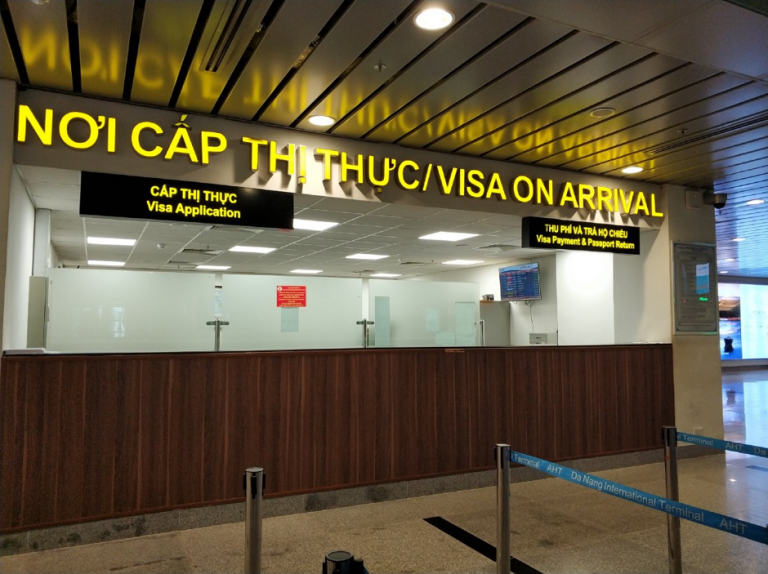
In certain eligible and properly authorized circumstances, a Canadian traveller may be able to explore an airport visa arrangement even though an earlier e-visa application has not yet received a final decision. However, this should not be understood as permission to travel without documentation.
The phrase “Visa on Arrival” can be misleading because it focuses attention on the final step at the airport rather than the authorization that must usually come first. Travellers sometimes imagine a counter where any international passenger can land, complete a form, pay a fee, and receive a tourist visa without prior arrangements. That is not a safe assumption for Vietnam.
Where an airport-based visa solution is available, the essential document is generally arranged before the passenger boards the flight. Depending on the traveller’s case and the rules in effect, this may involve an immigration approval document or another form of pre-authorized support. The passenger then presents the required materials after arriving at an eligible Vietnamese international airport and completes the remaining formalities there.
Without the necessary advance documentation, the journey may end at the Canadian departure airport or at a transit hub. Airlines are responsible for checking whether passengers appear to meet the entry requirements of their destination. If a traveller cannot present a valid e-visa, an appropriate visa, or another accepted authorization, the airline may refuse boarding. Explaining that an online application is “almost approved” or showing a payment receipt is unlikely to replace an actual travel document.
A pending e-visa and a separate airport visa arrangement are not the same application. Preparing an alternative does not automatically cancel, approve, or accelerate the original e-visa. The two processes may remain independent, and the traveller must understand which document will be used for the trip. If the e-visa is later approved, its dates, entry conditions, passport information, and intended use should still be reviewed carefully.
Timing is particularly important. A traveller who discovers the problem a week before departure generally has more options than someone who begins searching a few hours before check-in closes. Even an urgent service requires complete and accurate information. Passport details must be verified, travel dates confirmed, and eligibility assessed. Submitting rushed or contradictory information can consume the very time the traveller is trying to save.
The planned arrival location matters as well. An airport-based arrangement should not be assumed to apply to every land border, seaport, domestic terminal, or international airport. A Canadian traveller arriving by air may face different requirements from someone entering Vietnam overland from Cambodia, Laos, or China. Similarly, passengers joining a cruise should not assume that a document prepared for airport arrival will be suitable for a seaport entry.
The purpose of travel may also influence the appropriate route. A holiday, urgent family visit, business appointment, employment-related trip, study program, or long-term stay may involve different requirements. Travellers should avoid selecting a visa solution simply because its name sounds convenient. The correct document must match the actual journey and the traveller’s circumstances.
Before paying for any urgent arrangement, Canadians should ask several practical questions. Is advance approval required? Which airport can be used? What documents will be issued before departure? What must be presented after landing? Are there separate fees at the airport? Does the arrangement match the passport and intended travel dates? What happens if the case is not eligible?
Clear answers are more valuable than vague promises. A legitimate process should result in documents and instructions that can be reviewed before travel. The traveller should know what to print, where to go after landing, and what conditions apply. No responsible provider should encourage a passenger to board a flight based only on verbal reassurance.
Canadian citizens seeking help with a delayed application can review available Vietnam visa support options at:
The purpose of using professional assistance is not to bypass immigration rules. It is to have the traveller’s information examined, identify a potentially suitable application route, reduce preventable errors, and receive guidance about the documents needed for the journey. Approval remains subject to the relevant Vietnamese authorities and the traveller’s eligibility.
The main attraction of a properly arranged airport visa solution is flexibility when time is running out. A pending e-visa can leave a traveller in an uncomfortable position: the original application may still be approved, but there may no longer be enough time to rely on that possibility alone. A backup creates another potential route instead of leaving the entire trip dependent on an unresolved status page.
This is especially important when the cost of disruption is high. A missed flight from Canada to Southeast Asia can be expensive to replace. The traveller may also lose hotel deposits, domestic connections, tour reservations, cruise departures, event tickets, or prepaid transportation. Someone travelling for a wedding, family reunion, conference, factory visit, or important meeting may face consequences that cannot be solved simply by moving the trip to a later date.
A backup option can also reduce the uncertainty created by long-distance travel. Many Canadian itineraries involve one or more connections before reaching Vietnam. A passenger might travel from Calgary to Vancouver, continue to Seoul, and then fly to Hanoi. Another may leave Montreal, connect through Paris, and arrive in Ho Chi Minh City. Immigration documents may be checked at several stages, and a problem discovered halfway through the journey can be far more stressful than one resolved before leaving Canada.
Professional document review is another reason travellers seek assistance. When someone is under pressure, small errors become more likely. An incorrect passport number, an inconsistent name, an unsuitable scan, or a misunderstanding about the arrival airport can delay an urgent request. Having another person examine the information before submission may help identify issues that the applicant has overlooked.
Communication support can be valuable too. A traveller trying to resolve a visa issue from Canada may be dealing with a major time-zone difference, unfamiliar terminology, and a departure deadline. Access to guidance can make it easier to understand which documents are needed and what steps remain. However, travellers should distinguish practical support from impossible guarantees. Immigration decisions belong to the competent authorities, not to a travel website or private agent.
A Visa on Arrival arrangement may be particularly relevant when the original e-visa has not been issued close to departure, but it is not automatically the best answer for every person. If there is still sufficient time, correcting or continuing to monitor the e-visa application may be appropriate. In other cases, an embassy-issued visa or another authorized route may be more suitable. The right solution depends on the passport, travel purpose, available time, arrival method, and current rules.
Canadian travellers should also consider the possibility that the e-visa may be approved after a backup arrangement has already begun. This is not necessarily a problem, but it requires careful document management. Do not mix information from different applications, present contradictory paperwork, or assume that every document can be used interchangeably. Before departure, decide which authorization matches the final itinerary and verify that its details are correct.
Ultimately, the value of a backup is not that it allows travellers to ignore the original problem. Its value lies in giving them a structured alternative before the deadline becomes unmanageable. The earlier the situation is assessed, the more time there is to verify eligibility, correct mistakes, prepare paperwork, and make an informed decision.
Waiting may still result in the e-visa being approved. But when an international flight is approaching and the consequences of missing it are substantial, hope should not be the only travel strategy.
If your situation qualifies for a Vietnam Visa on Arrival (VOA), it’s important to understand that the process begins before you leave Canada, not after you arrive in Vietnam. One of the biggest misconceptions among travellers is believing they can simply fly to Vietnam and request a visa at the immigration counter. In reality, Visa on Arrival is only available when the necessary approval has been arranged in advance through the appropriate channels.
The first step is determining whether your travel circumstances are suitable for a Visa on Arrival application. Depending on the urgency of your trip, your intended arrival airport, your passport details, and current Vietnamese immigration regulations, you may be eligible to obtain an Immigration Approval Letter before departure. This document serves as authorization allowing you to board your flight and complete the visa issuance procedure after landing at one of Vietnam’s eligible international airports.
Once the approval process has been completed, you’ll typically receive the required documents electronically. Before travelling, print the approval letter along with any additional paperwork provided. You should also prepare your original Canadian passport, passport-sized photographs if required, and sufficient cash to pay the visa stamping fee upon arrival, should it apply to your specific case. Having every document organized before leaving Canada can significantly reduce stress during your journey.
After landing at an eligible Vietnamese international airport such as Hanoi, Ho Chi Minh City, Da Nang, or Cam Ranh, travellers using the Visa on Arrival process usually proceed to the designated Landing Visa counter before passport control. Immigration officers will review the approval documents, verify your passport information, collect any applicable government fees, and issue the visa sticker. Once this step has been completed, you can continue to the immigration checkpoint for entry clearance.
The overall process is generally straightforward when every document has been prepared correctly beforehand. However, problems often arise when travellers arrive without the required approval letter, bring inconsistent passport information, forget supporting documents, or misunderstand the airport procedures. These mistakes may lead to unnecessary delays or, in some cases, prevent boarding before the journey even begins.
For this reason, Canadian travellers should never assume that Visa on Arrival is a last-minute solution that requires no preparation. It remains an official immigration process with specific documentation requirements that must be completed before departure.
Time becomes your most valuable resource when your departure date is approaching and your Vietnam e-visa still hasn’t been approved. Rather than waiting until the final hours before check-in, it’s advisable to evaluate all available options as early as possible.
The first step is checking the current status of your e-visa application. If additional information or corrections have been requested, respond immediately. Something as simple as replacing an unclear passport scan or correcting a spelling error may help move the application forward. Waiting several more days before reviewing the application status could leave you with even fewer alternatives.
If your departure is imminent and there is still no final decision, consider whether an alternative immigration solution may be appropriate for your circumstances. Every traveller’s case is different. Someone travelling for a holiday next month has considerably more flexibility than someone scheduled to attend an urgent business meeting or family emergency within the next 48 hours.
Many Canadian travellers choose to seek professional assistance at this stage because experienced visa specialists can review the application, identify potential issues, evaluate eligibility for alternative solutions, and recommend the most suitable course of action based on the traveller’s schedule. Having a second review can often reveal mistakes that applicants overlook when completing the application themselves.
If you’re looking for urgent Vietnam visa assistance, you can explore available services at:
With more than 15 years of experience assisting international travellers, the service helps review application documents, provides guidance throughout the visa process, supports customers 24/7, and offers emergency processing options in eligible cases. Depending on the specific circumstances, some urgent applications may be processed within as little as 2 to 8 working hours. Every application is carefully reviewed before submission to minimize avoidable errors, and a 100% money-back policy is available if the visa cannot be issued in time under the applicable service terms.
Although urgent processing can be extremely helpful in qualifying situations, travellers should remember that immigration approval always depends on the assessment of the relevant Vietnamese authorities. No legitimate provider should promise guaranteed approval regardless of the applicant’s circumstances.

When travel plans become urgent, it’s surprisingly easy to make decisions that create additional problems instead of solving the original one. Understanding the most common mistakes can help Canadian travellers avoid unnecessary delays and reduce the risk of travel disruption.
One of the biggest mistakes is assuming that a submitted e-visa application automatically allows boarding. Unfortunately, this isn’t the case. Airlines generally require passengers to present valid travel authorization before departure. An application confirmation email or payment receipt is not a substitute for an approved visa or other accepted immigration document.
Another common mistake is waiting until the day before departure to look for alternatives. The earlier you begin exploring your available options, the more flexibility you’ll have. Last-minute decisions often increase stress and reduce the number of practical solutions available.
Some travellers also submit multiple e-visa applications using slightly different information in the hope that one application will be approved faster. In reality, duplicate applications can create unnecessary confusion and make it more difficult to determine which application should ultimately be used for travel.
Document accuracy is equally important. Double-check that your passport number, full name, nationality, date of birth, arrival airport, and intended travel dates match across every document you submit. Even small inconsistencies may result in additional processing time or require corrections before departure.
Travellers should also be cautious about relying on outdated information found on travel forums or social media. Vietnam’s immigration policies may change over time, and experiences shared several years ago may no longer reflect current procedures. Whenever possible, verify important information through official sources or experienced visa professionals before making travel decisions.
Finally, avoid assuming that every traveller will have the same solution. The most appropriate option depends on your passport, travel purpose, timing, method of entry, and individual circumstances. What worked for another traveller may not necessarily apply to your own case.
Before leaving Canada, take a few minutes to review the following checklist to ensure you’re fully prepared for your trip to Vietnam:
Spending just a few extra minutes reviewing your documents before departure can help prevent hours of unnecessary stress later. A well-prepared traveller is far more likely to enjoy a smooth boarding process and a hassle-free arrival in Vietnam.
In most cases, no. A pending e-visa application is not the same as an approved travel document. Airlines are generally required to verify that passengers have valid authorization to enter their destination before allowing them to board. If your e-visa has not yet been issued, you should not assume that the application confirmation or payment receipt will be accepted at check-in.
Depending on your individual circumstances and current Vietnamese immigration regulations, some Canadian travellers may be eligible to arrange a Visa on Arrival solution before departure. However, this is not a walk-in service available after landing. The necessary approval must normally be obtained in advance before you travel to Vietnam.
No. These are generally separate immigration processes. If you decide to pursue an alternative visa solution while your e-visa is still being processed, the original application does not automatically disappear or become invalid. If your e-visa is later approved, review all of your documents carefully and make sure you use the appropriate authorization for your trip.
Processing times vary depending on your eligibility, the type of service requested, and the assessment of the Vietnamese immigration authorities. In eligible urgent cases, professional visa support services may assist with processing in as little as 2–8 working hours. However, no service can legitimately guarantee approval for every application.
If your departure date is approaching and you need professional guidance, you can apply through:
The service provides document reviews, application support, emergency processing options for eligible cases, 24/7 customer assistance, and over 15 years of experience helping international travellers obtain Vietnam visas.
Planning a trip to Vietnam should be exciting—not stressful. If your Vietnam e-visa is still pending, the most important thing is to stay proactive rather than simply waiting and hoping for the best. Understanding your available options early gives you more time to correct application issues, explore alternative visa solutions if appropriate, and avoid unnecessary disruption to your travel plans.
For Canadian travellers, every situation is unique. The right solution depends on your travel schedule, entry requirements, passport details, and current immigration regulations. Whether your e-visa arrives before departure or you need to consider another authorized option, preparing the correct documentation in advance is the best way to ensure a smooth journey.
If you’re running out of time before your flight, professional assistance can help you understand your available options and navigate the process with greater confidence. To learn more about Vietnam visa services for Canadian citizens or to request urgent support, visit:
With proper preparation and reliable guidance, you’ll be ready to focus on what really matters—enjoying your trip and discovering everything Vietnam has to offer.
Your flight from New Zealand is approaching, but your Vietnam e-visa application is still showing no final result. The airfare has been paid, accommodation is confirmed, and your itinerary is …
Your trip to Vietnam is finally getting close. Your flights are booked, your hotels are confirmed, and your travel plans are all coming together perfectly. Maybe you’ve already imagined yourself …
Just realised you don’t have a Vietnam visa and your flight leaves tomorrow? That kind of last-minute stress can be overwhelming, especially when international travel is involved. But don’t worry …
Vietnam has become an increasingly popular destination for travelers from Canada. Whether it’s exploring the historic streets of Hanoi, enjoying the beaches of Da Nang, or experiencing the vibrant energy …
Imagine you’re getting ready for your upcoming trip to Vietnam. Your flight from Canada is booked, your travel plans are set, and you’re already picturing yourself exploring bustling cities, enjoying …
Realizing that you don’t have a valid Vietnam visa just days before your flight can quickly turn an exciting trip into a stressful situation. Many Canadian travellers assume Vietnam’s visa …

“When your Vietnam E-visa is delayed, the worst part isn’t the wait — it’s the uncertainty.”You may not be flying tomorrow, but every day without an update makes you uneasy. …
You’re a Canadian citizen planning your trip to Vietnam in 2026, and you’re asking the most crucial question before booking your flight: Do I need a visa to enter Vietnam? …
You’re finally ready for that long-awaited journey to Vietnam. You’ve mapped out your dream itinerary — from the bustling streets of Hanoi to the lantern-lit alleys of Hoi An. But …