Few travel situations are more stressful than realizing you still need a visa only hours before an international flight. For American travelers heading to Vietnam, this happens more often than …

Your flight to Vietnam is getting closer, but your e-visa application still says “Processing.” The airfare is paid, the hotel is booked, and your itinerary may include plans that cannot easily be moved. Yet without an approved visa or another valid entry document, you could face problems before you even board the plane. For American travelers, this situation can quickly turn an exciting trip into a stressful countdown.
So, what happens when departure is approaching and the approval email has not arrived? Depending on your circumstances and the immigration procedure available to you, an airport visa arrangement supported by a pre-approved immigration letter may be worth exploring as a backup. It is not simply a visa that every traveler can request after landing without preparation. The essential steps normally begin before departure, and eligibility must be confirmed in advance. This guide explains why an e-visa can remain pending, how an alternative airport visa process may work, what documents American travelers should prepare, and what to do when time is running out.
A pending status does not automatically mean that your Vietnam e-visa will be refused. It simply means that a final result has not yet been issued. In many cases, the application is still moving through the review process, but the traveler’s departure date is approaching faster than the decision.
Timing is one of the most common sources of confusion. Vietnam’s official e-visa portal calculates processing by working days, not calendar days. Saturdays, Sundays, Vietnamese public holidays, and days when government offices are not processing applications can extend the real waiting period. A traveler who submits an application late on a Friday may feel as though several days have passed by Monday, even though only a limited number of working hours have elapsed.
Heavy seasonal demand may also affect how quickly applications move. Periods around Lunar New Year, Christmas, New Year’s Day, spring break, and major travel seasons tend to bring larger numbers of international visitors. Government processing does not necessarily stop during every busy period, but a higher workload can leave less room for travelers who applied at the last minute.
Application quality is equally important. The official system asks applicants to upload a passport information page and a recent portrait photograph, then enter personal and travel details accurately. Missing, incorrect, or unidentifiable information can prevent an application from being accepted or require correction.
Seemingly minor differences can matter. Common issues include:
Applicants should use the official status-checking page and verify the result with their registration code, email address, and date of birth. When an application requires an amendment, the portal may display an editing or payment option.
The biggest mistake is assuming that an e-visa will definitely appear immediately before departure. A posted processing period is an estimate for handling a complete application; it is not a promise that every case will be approved within that exact window. U.S. travelers should ideally apply well before their flight and carefully inspect the issued visa once it becomes available.
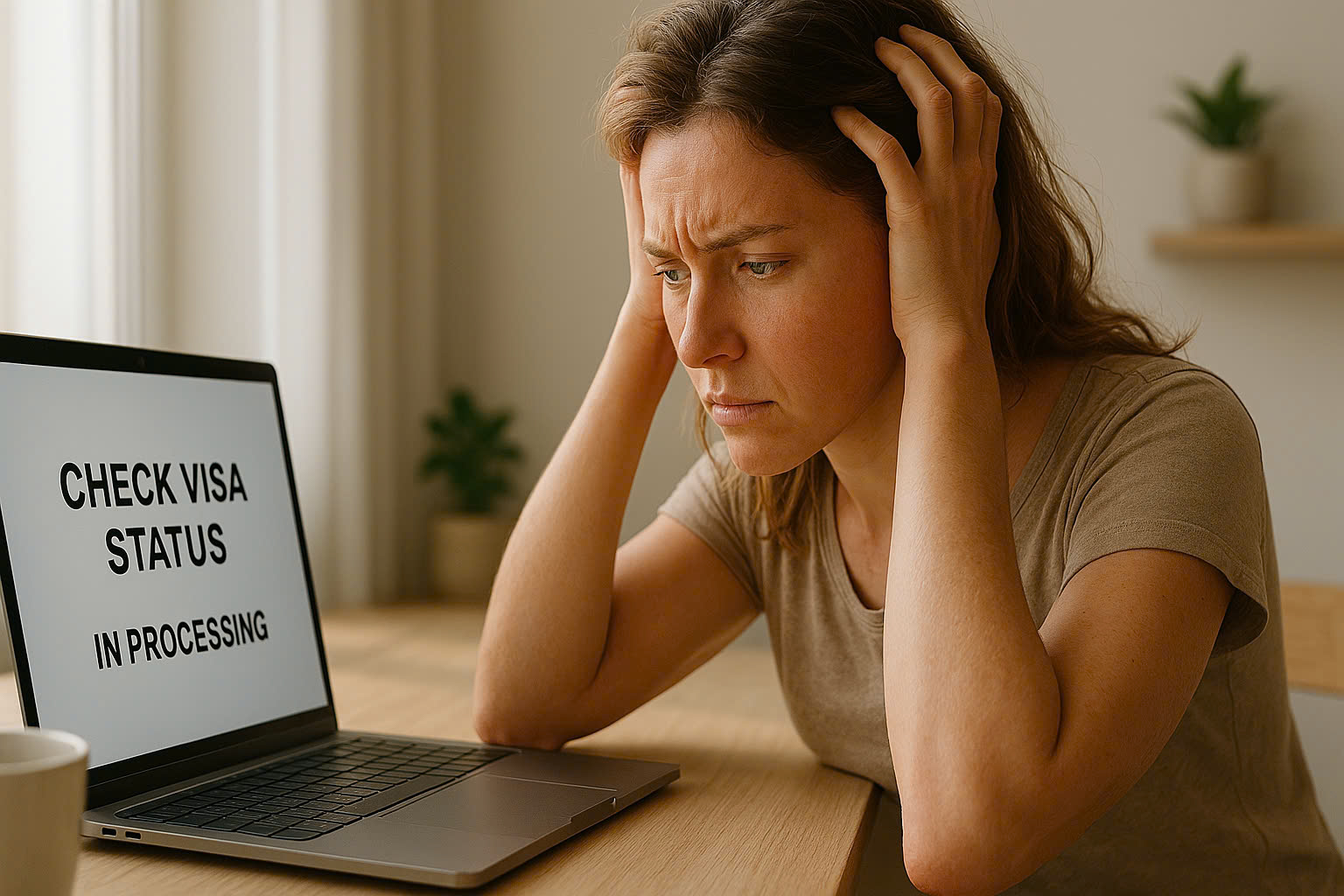
A pending e-visa application does not itself provide permission to board a flight or enter Vietnam. Until the e-visa has been issued, travelers should treat it as an unresolved application rather than a valid travel document.
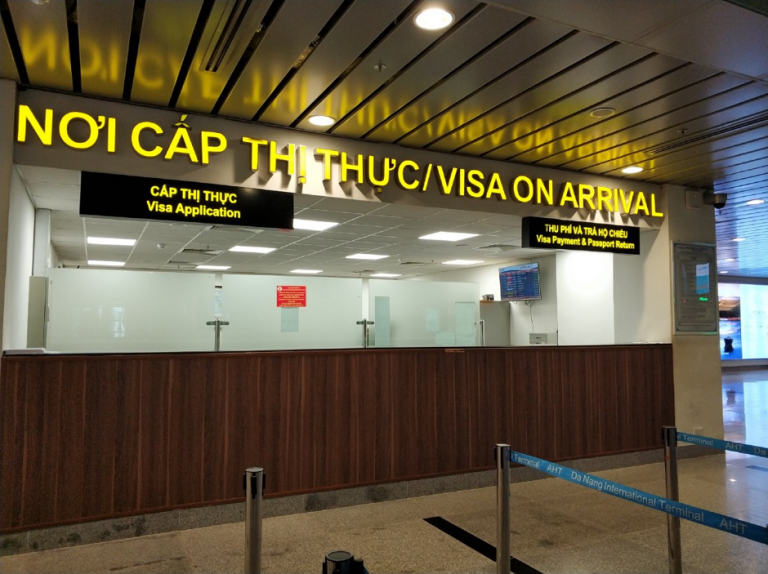
Depending on current Vietnamese immigration procedures and the traveler’s eligibility, it may be possible to pursue a separate visa arrangement supported by an immigration approval document. This is commonly described by travel service providers as a Vietnam Visa on Arrival or airport visa process.
The important point is that this is not the same as arriving in Vietnam without a visa and asking an airport officer to issue one. Arrangements normally need to be made before departure. Travelers may need prior authorization, a sponsoring or inviting organization, or other documentation accepted under the applicable immigration route.
The e-visa system itself recognizes two general application paths: foreigners outside Vietnam may apply personally, or an eligible requesting agency or organization may be involved in the process. Vietnam’s national immigration portal also lists electronic transactions involving visas issued through diplomatic missions and checkpoints. The exact procedure available to an individual traveler can depend on nationality, purpose of travel, point of entry, sponsorship, and the rules in force at the time.
For this reason, Americans should not assume that every advertised “Visa on Arrival” product is officially available in every situation. Before paying for an emergency service, confirm:
The e-visa and an alternative approval process may follow separate administrative routes. However, receiving an approval document does not necessarily cancel a pending e-visa application, and submitting a second request does not guarantee approval. At the border, the traveler must present valid documentation that matches the passport, travel dates, permitted entry point, and intended stay.
An urgent alternative may be worth considering when waiting longer could cause significant disruption. For example, a U.S. business traveler may need to attend a meeting in Ho Chi Minh City that cannot be postponed. Another traveler may be flying to Vietnam for a family event, a cruise departure, or a prepaid tour. In these situations, simply refreshing the e-visa status page may not be a sufficient plan.
A backup arrangement can be especially relevant when:
The value of a backup is not that it guarantees entry. Only the competent Vietnamese authorities can make a visa or admission decision. Its purpose is to create another possible route instead of relying entirely on an application whose result has not yet been issued.
American travelers should also calculate the true cost of waiting. Changing an international flight at the last minute can be expensive. A missed hotel reservation, domestic connection, guided tour, or business appointment may add even more. In some cases, exploring an urgent visa solution early may be less costly than waiting until airline check-in.
However, urgency should not lead to careless decisions. Travelers should avoid providers that promise impossible outcomes, refuse to explain the legal process, or claim that an email receipt alone is enough to enter Vietnam. A trustworthy service should explain what document will be issued, how it may be used, which airport is permitted, and what limitations apply.
The exact procedure can vary, but the process generally begins before the traveler leaves the United States. A legitimate provider first reviews the traveler’s passport details, intended arrival date, purpose of travel, and entry point. This screening is essential because not every request qualifies for every processing route.
The traveler may be asked to provide:
Once the information has been reviewed, the request may be submitted through the relevant organization or immigration procedure. When approved, the traveler receives an official authorization or approval document. The document must be checked carefully. The name, passport number, nationality, arrival details, and validity dates should match the traveler’s actual plans.
Travelers should print the approval document and carry both paper and electronic copies. They should also follow the provider’s instructions regarding arrival forms, photographs, passport validity, applicable stamping or visa fees, and the specific airport counter to visit.
At the departure airport in the United States, airline personnel may ask to see evidence that the traveler is authorized to enter Vietnam. Airlines can deny boarding when passengers do not appear to satisfy destination-document requirements. The U.S. Department of State likewise advises that a visa is required before travel for ordinary visits by U.S. citizens, subject to limited exceptions.
After landing, the traveler follows the instructions associated with the authorization. Where the airport visa procedure applies, this may include presenting the approval document and supporting materials at the designated counter before proceeding to passport control. The immigration officer retains authority over visa issuance and admission.
American travelers seeking a professional review of an urgent case can submit their trip and passport details through:
Submitting a request does not by itself guarantee approval. Travelers should wait for written confirmation of eligibility and carefully review the issued documents before traveling.
Emergency services are designed for travelers whose departure is close and who cannot wait through a standard timeline. Depending on eligibility, the time of submission, the availability of the relevant processing channel, and the working schedule of Vietnamese authorities, some providers may offer processing options measured in hours rather than days.
Services are sometimes advertised with turnaround targets such as two, four, six, or eight working hours. These timeframes should be understood as expedited service targets, not unconditional guarantees. Processing may be unavailable outside designated working hours, during weekends or public holidays, or when an application requires additional verification.
The time zone also matters. Vietnam operates on UTC+7, which is many hours ahead of the continental United States. A request submitted during the afternoon in New York or California may arrive outside normal Vietnamese business hours. Travelers should therefore provide their precise flight departure time, connecting airport, and expected arrival time rather than merely saying that the trip is “tomorrow.”
Before purchasing emergency processing, obtain clear answers to the following:
A careful document check can be as valuable as speed. A quickly issued approval containing an incorrect passport number or travel date may not solve the problem. The details should be verified before submission and checked again immediately after issuance.
Travelers with a rapidly approaching flight can request an urgent eligibility assessment at:
When contacting the service, include the departure date, flight time, arrival airport, current e-visa status, and a clear copy of the passport information page. Complete information allows the team to determine more quickly whether an available solution matches the itinerary.

Even after receiving a visa or approval document, travelers should not head to the airport without reviewing it. A final five-minute check can prevent a major problem at the airline counter or immigration checkpoint.
First, confirm that the passport number on the document is identical to the passport you will carry. Pay particular attention to characters that can be confused, such as the number zero and the letter O. Verify the full name, nationality, date of birth, visa validity, number of permitted entries, and authorized entry point.
Second, ensure that the visa becomes valid no later than your arrival date. A Vietnam e-visa can be valid for up to 90 days and may permit single or multiple entry, but travelers cannot enter before the “valid from” date or remain after the authorized period.
Third, check the actual airport code on your itinerary. “Ho Chi Minh City” generally refers to Tan Son Nhat International Airport, while “Hanoi” refers to Noi Bai International Airport. A connection through another country does not change the first Vietnamese immigration checkpoint.
Fourth, monitor new arrival procedures. As of April 15, 2026, foreign passport holders arriving at Tan Son Nhat International Airport are required to complete a pre-arrival declaration before arrival. The U.S. Department of State also notes a pre-arrival declaration requirement for non-Vietnamese passport holders entering Vietnam by air, to be completed no earlier than three days before arrival. Travelers should review the latest official instructions for their airport shortly before flying.
Finally, carry printed copies even when electronic versions are accepted. Phones can run out of power, airport Wi-Fi may be unreliable, and airline staff may prefer a paper document that can be examined quickly.
Can a U.S. citizen travel to Vietnam while an e-visa is still processing?
A pending application is not an issued visa. Unless the traveler qualifies for a specific exception or holds another valid entry document, they should not expect to board a flight or enter Vietnam based only on a processing receipt. U.S. citizens generally need a visa before travel.
Does applying for an airport visa automatically cancel a pending e-visa?
Not necessarily. These may be separate administrative processes. However, travelers should disclose the pending application when requesting assistance and follow the instructions issued by the relevant authority or qualified service provider.
What happens if my e-visa is approved after I arrange a backup?
Review both documents and use the one that validly matches your passport, entry date, airport, and travel plan. Do not assume that documents can be combined. When uncertain, ask the issuing provider or Vietnamese immigration authorities which document should be presented.
Is an approval letter the same as a visa?
Not always. An approval letter or authorization may support the completion of a visa procedure, but it may not itself be the final visa. Travelers must understand exactly what they have received and what must still be completed at the airport or another designated location.
Can I simply request a visa after landing without prior approval?
Travelers should not plan to arrive without the documentation required for the applicable visa route. Any airport visa procedure normally requires advance arrangements. Airlines may refuse boarding when the passenger cannot demonstrate appropriate entry authorization.
How long does the official Vietnam e-visa take?
The current official portal states that complete applications may be handled within five working days. Processing can take longer when information is incomplete, unclear, or requires further review. Apply well ahead of departure and avoid treating the minimum processing estimate as a guaranteed deadline.
How long can a Vietnam e-visa be valid?
Vietnam’s official portal states that an e-visa may be valid for up to 90 days and may allow single or multiple entry, depending on the visa issued.
Should I book a nonrefundable flight before receiving my visa?
Doing so creates financial risk. When possible, secure the visa first or choose flexible travel arrangements. If the flight is already booked and the visa remains pending, investigate legitimate options early rather than waiting until check-in.
Can a visa agency guarantee approval?
No private provider controls the final decision of Vietnamese immigration authorities. Be cautious of any company presenting approval as unconditional. A professional service can review documents, select an appropriate process, submit a request, and provide support, but the government retains decision-making authority.
A delayed e-visa does not necessarily mean that your trip is lost, but it does mean that you should act carefully. Start by checking the official application status and reviewing the information you submitted. Count working days rather than calendar days, consider Vietnamese holidays and time zones, and never treat a pending application as permission to travel.
When departure is close, a pre-arranged airport visa process may provide a practical backup for eligible travelers. The key word is pre-arranged. Do not fly to Vietnam expecting to resolve everything after landing. Confirm eligibility, obtain the correct authorization, verify the entry airport, and make sure the airline will recognize the documents you have been issued.
Most importantly, choose accuracy over promises. A trustworthy visa service should examine your itinerary, explain the available route, review your passport information, outline every remaining step, and communicate clearly about timing and limitations.
U.S. travelers who need their situation reviewed can submit an application through:
The earlier you seek assistance, the more time there is to correct errors, confirm documentation, and prepare a realistic alternative before your flight.
Few travel situations are more stressful than realizing you still need a visa only hours before an international flight. For American travelers heading to Vietnam, this happens more often than …
Your Vietnam trip is finally around the corner. Your flights are confirmed, your hotels are booked, and your travel plans are set. Maybe you’re already picturing yourself exploring the busy …
Picture this: you’re standing in line at the airport in Los Angeles or New York, excited about your upcoming trip to Vietnam. Your flights are booked, your hotel is confirmed, …
Your flight to Vietnam is coming up soon. The tickets are booked, your itinerary is ready, and you’re already imagining the incredible food, vibrant culture, and breathtaking landscapes waiting for …
Picture this: you’re a traveler from the United States getting ready to fly to Vietnam tomorrow. Your flight is confirmed, your hotel reservation is set, and your suitcase is already …
You’re flying to Vietnam tomorrow. Your suitcase is packed. Your hotel in Hanoi is booked. It’s Lunar New Year – the biggest holiday in Vietnam. And suddenly, you realize something …
Traveling to Vietnam is a wonderful experience, but unexpected situations may develop, necessitating the need for American citizens to seek an urgent visa. Whether it’s a last-minute business trip or …
Q1: Can US citizens apply for a Vietnam e-visa in 2026?
If you’re an American planning a trip to Vietnam in 2026, you’ve likely run into a confusing mix of outdated blog posts, contradicting travel forums, and websites that can’t seem …